

By 2025, nearly one in four workers globally will say they’re burned out - not just tired, but emotionally drained, detached, and ineffective at work. This isn’t just a personal problem. It’s a systemic one. And it’s costing businesses billions. The good news? Burnout isn’t inevitable. You can prevent it. You can recover from it. But only if you act - and act the right way.
What Burnout Really Feels Like (And Why It’s Not Just ‘Being Tired’)
Burnout isn’t a buzzword. It’s a clinical condition recognized by the World Health Organization since 2019. It’s not about having a bad day. It’s about chronic stress that never lets up. The three signs are clear: you’re exhausted, even after sleep; you feel numb or cynical about your job; and you’re no longer getting anything done - not because you’re lazy, but because your brain has shut down.
Think about it: you used to look forward to Monday. Now you scroll through emails before you even get out of bed. You used to finish tasks with pride. Now you just check boxes, hoping no one notices you’re running on fumes. That’s burnout. And it’s not your fault.
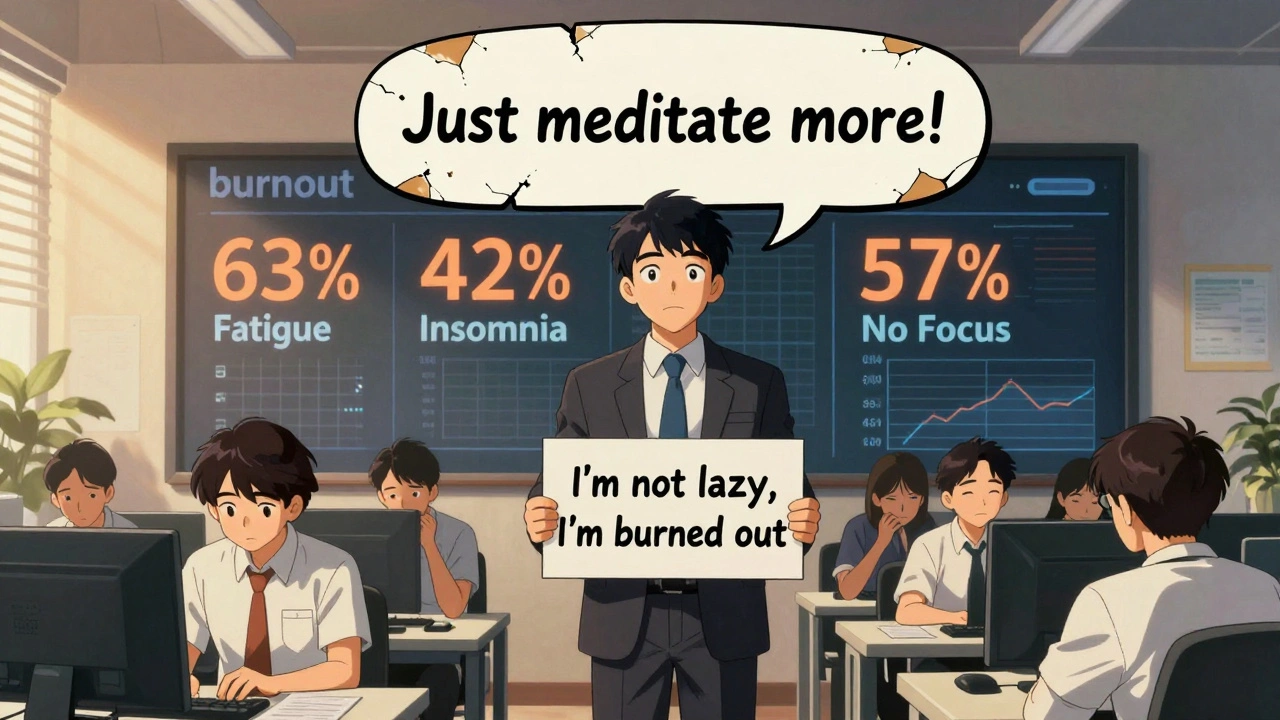
According to Gallup’s 2023 report, 63% of burned-out workers report chronic fatigue. 42% struggle with insomnia. 57% say they can’t focus. These aren’t vague feelings. These are measurable symptoms. And they’re getting worse. The American Psychological Association found that 77% of workers felt stress in the last month - and over half said it was affecting their health, motivation, and mood.
Why Your Boss’s ‘Self-Care Tips’ Won’t Fix This
You’ve probably been told to meditate more, take a bubble bath, or drink more water. And while those things help, they’re like putting a bandage on a broken leg. The real problem isn’t your mindset - it’s your workload, your lack of control, and your broken workplace culture.
Research shows that only 20% of burnout causes can be solved by individual self-care. The rest? That’s on the organization. If you’re working 60-hour weeks with no clear priorities, being micromanaged, or working in a toxic environment, no amount of yoga will fix that.
Dr. Christina Maslach, who created the gold-standard burnout measurement tool, put it bluntly: ‘Burnout is not an individual failure - it’s a systems failure.’
That’s why companies spending millions on mindfulness apps while keeping the same impossible deadlines are wasting their money. Real change needs policy, not posters.
How Managers Can Actually Prevent Burnout (Not Just Talk About It)
Managers are the single biggest factor in whether someone burns out. Gallup found they account for 70% of the difference in employee engagement. That means if your manager doesn’t care, you’re likely to burn out - no matter how great your job title is.
So what do good managers do differently?
- They have weekly 1:1s that actually talk about wellbeing - not just project updates. Companies that do this see 35% less burnout.
- They focus on strengths, not just tasks. Teams where managers regularly recognize strengths have 41% lower burnout rates.
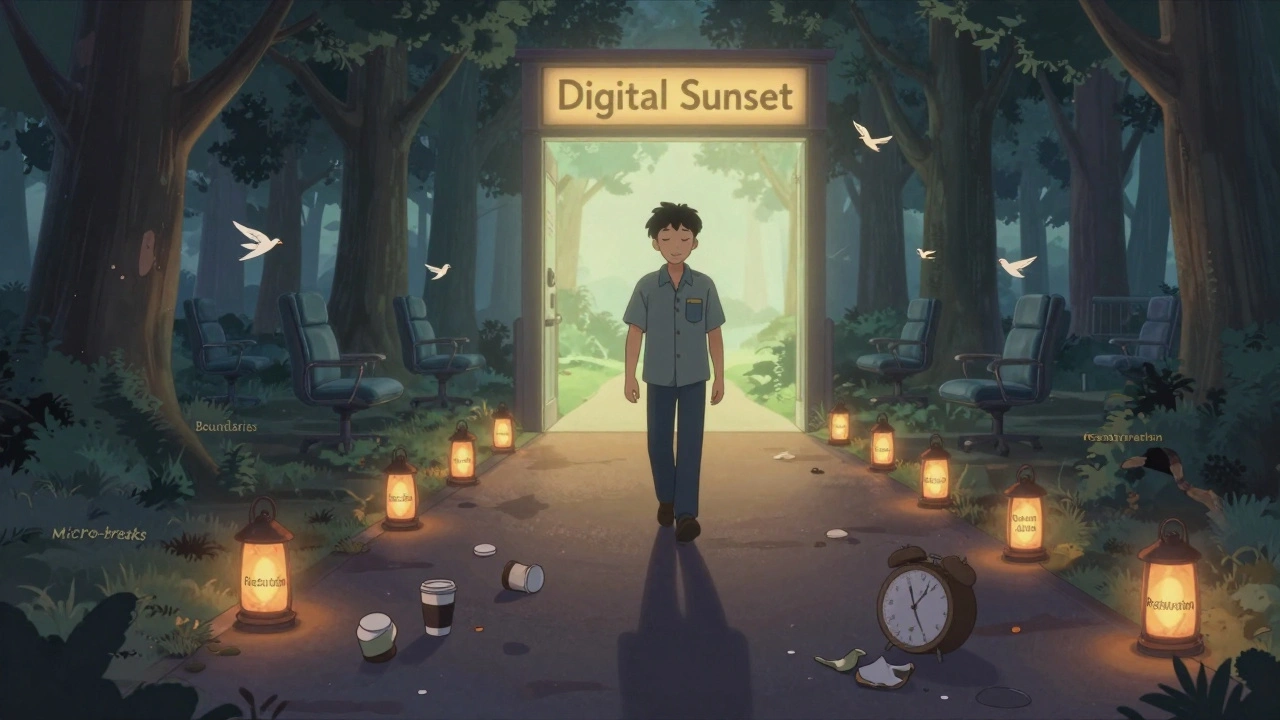
- They protect boundaries. At companies like Microsoft and Salesforce, enforcing ‘digital sunset’ policies - where systems automatically shut down after hours - cut after-hours work by 31% and burnout by 26%.
- They build psychological safety. Google’s Project Aristotle found teams with high psychological safety had 47% less burnout. That means people feel safe saying ‘I’m overwhelmed’ without fear.
And here’s the kicker: managers who make wellbeing part of their formal performance reviews (not just a nice-to-have) see 44% higher success rates in burnout prevention programs. It’s not about being nice. It’s about being accountable.
What You Can Do Right Now to Stop the Spiral
You don’t have to wait for your company to fix everything. There are concrete, science-backed steps you can take today.
- Set hard boundaries. No emails after 6 PM. No Slack after dinner. People who do this report 39% less burnout, according to the APA.
- Use time-blocking. Schedule your day in 90-minute chunks. Work for 90 minutes. Then take a 15-minute break. This cuts burnout symptoms by 22% and boosts task completion by 28%.
- Take micro-breaks. Every 90 minutes, step away. Walk around the block. Stretch. Look out the window. Harvard Business Review found this increases productivity by 13% and lowers burnout markers by 17%.
- Build a ‘bookending’ routine. MIT’s study of remote workers showed that a 15-minute walk before and after work reduced stress by 22%. It signals to your brain: work is over. You’re done.
- Move more. Walking meetings are used by 68% of Fortune 500 companies. They cut sedentary time by 27 minutes a day - and reduce mental fatigue.
These aren’t ‘hacks.’ They’re survival tools. And they work - if you stick with them.
Recovering from Burnout Isn’t About ‘Taking a Vacation’
If you’re already burned out, a long weekend won’t fix it. Recovery needs structure.
Gallup’s three-phase model works:
- Recognition. Admit it. Use tools like the Maslach Burnout Inventory or just ask yourself: ‘Do I feel energized by my work?’ If the answer is no, you’re in recovery mode.
- Intervention. Ask for a temporary reduction in workload. Shift tasks. Get help. Don’t wait until you’re in crisis. Companies that adjust roles early see 50% faster recovery.
- Restoration. This is the part most people skip. You need protected time - not just to rest, but to rebuild. That means no checking emails. No ‘just one quick thing.’
Research from Spring Health shows employees who use mental health benefits within 14 days of noticing symptoms recover 82% faster than those who wait. And a 48- to 72-hour digital detox - no screens, no work talk - improves emotional exhaustion by 63%.
Also, try this: write down what you’ve actually done each day, not what’s left to do. Tracking accomplishments - not to-do lists - helps rebuild your sense of competence. Keystone Partners found this speeds up return-to-productivity by over three weeks.
The Future of Work Won’t Let You Burn Out Anymore
Change is coming - fast. By late 2025, 65% of Fortune 500 companies will use AI to predict burnout before it happens. These systems analyze email patterns, calendar density, and meeting frequency to flag at-risk employees with 82% accuracy.
More companies are testing 4-day workweeks. Basecamp and Shopify already have. Pollack Peacebuilding predicts 37% of tech firms will adopt them by 2025.
And regulations are catching up. The EU’s ‘right to disconnect’ law, in effect since August 2024, has already cut after-hours communication by 37% in France. The U.S. is likely to follow.
The most advanced companies are now measuring burnout risk like they measure sales targets - using data from sick days, EAP usage, and productivity dips to create risk scores. Companies like American Express and Procter & Gamble are already seeing 38% fewer burnout cases because they’re acting before people crash.
It’s Not About Being Stronger - It’s About Building a Healthier System
Burnout isn’t a personal weakness. It’s a sign that something in the system is broken. And if you’re reading this, you’re not alone. Millions are feeling the same way.
The solution isn’t more resilience. It’s less pressure. More control. Better boundaries. Fairer workloads. Managers who care. And workplaces that treat mental health like physical health - not as an afterthought.
You don’t have to wait for perfection. Start with one thing today. Block your calendar. Say no to a meeting. Walk before work. Turn off notifications after hours. These small acts aren’t just self-care - they’re acts of rebellion against a system that values output over people.
And if your company won’t change? Maybe it’s time to ask: is this job worth your health?
What’s the difference between stress and burnout?
Stress is short-term pressure - like meeting a deadline or handling a crisis. You feel overwhelmed, but you bounce back. Burnout is chronic. It’s when stress never ends. You feel empty, detached, and ineffective - even after rest. Stress can be managed. Burnout requires systemic change.
Can I recover from burnout without leaving my job?
Yes - but only if your workplace makes real changes. Recovery needs workload adjustments, protected time, psychological safety, and boundaries. If your manager ignores your needs or expects you to ‘just push through,’ recovery is unlikely. Many people do recover while staying - but only when the system starts supporting them.
How do I know if I’m burned out or just lazy?
Burnout isn’t laziness. Lazy people avoid work because they don’t care. Burned-out people still care - they just can’t do it anymore. You might still feel guilty for not working, even though you’re exhausted. You might cry over small things. You might dread opening your laptop. That’s not laziness. That’s your nervous system shutting down to protect you.
Are mindfulness apps helpful for burnout?
They can help with symptoms - like sleep or anxiety - but they don’t fix the cause. If you’re working 70 hours a week with no control, meditation won’t undo that. Apps are a bandage. Real change needs policy: better workload management, boundaries, and manager training. Use apps for support, not as a solution.
What’s the quickest way to reduce burnout at work?
Start with boundaries. Turn off work notifications after hours. Say no to one extra task this week. Block 15 minutes between meetings to breathe. These small actions reset your nervous system. Research shows people who enforce boundaries see 39% less burnout. It’s not glamorous - but it’s the fastest, most reliable step.
Is burnout becoming more common?
Yes. Since 2020, burnout rates have climbed sharply. Remote work blurred boundaries. ‘Hustle culture’ glorified overwork. And many companies cut support staff while increasing demands. Gallup found 23% of workers feel burned out ‘very often or always’ - up from 18% in 2020. It’s not just you. It’s the system.
Should I quit my job if I’m burned out?
Not immediately. First, try to fix the environment. Talk to your manager. Request a temporary role change. Use mental health benefits. If nothing changes after 6-8 weeks, then yes - leaving might be the healthiest choice. But don’t quit in panic. Plan. Protect your finances. And remember: burnout doesn’t mean you’re bad at your job. It means the job is bad for you.
Richard Eite
December 10, 2025 AT 07:10Ronald Ezamaru
December 10, 2025 AT 13:22om guru
December 11, 2025 AT 01:57Iris Carmen
December 12, 2025 AT 02:15Ryan Brady
December 12, 2025 AT 23:34Raja Herbal
December 13, 2025 AT 19:52Stacy Tolbert
December 14, 2025 AT 15:33Ruth Witte
December 16, 2025 AT 05:34Delaine Kiara
December 16, 2025 AT 15:30Katherine Rodgers
December 16, 2025 AT 16:13Shubham Mathur
December 17, 2025 AT 16:30Noah Raines
December 17, 2025 AT 20:57Rich Paul
December 18, 2025 AT 11:33