
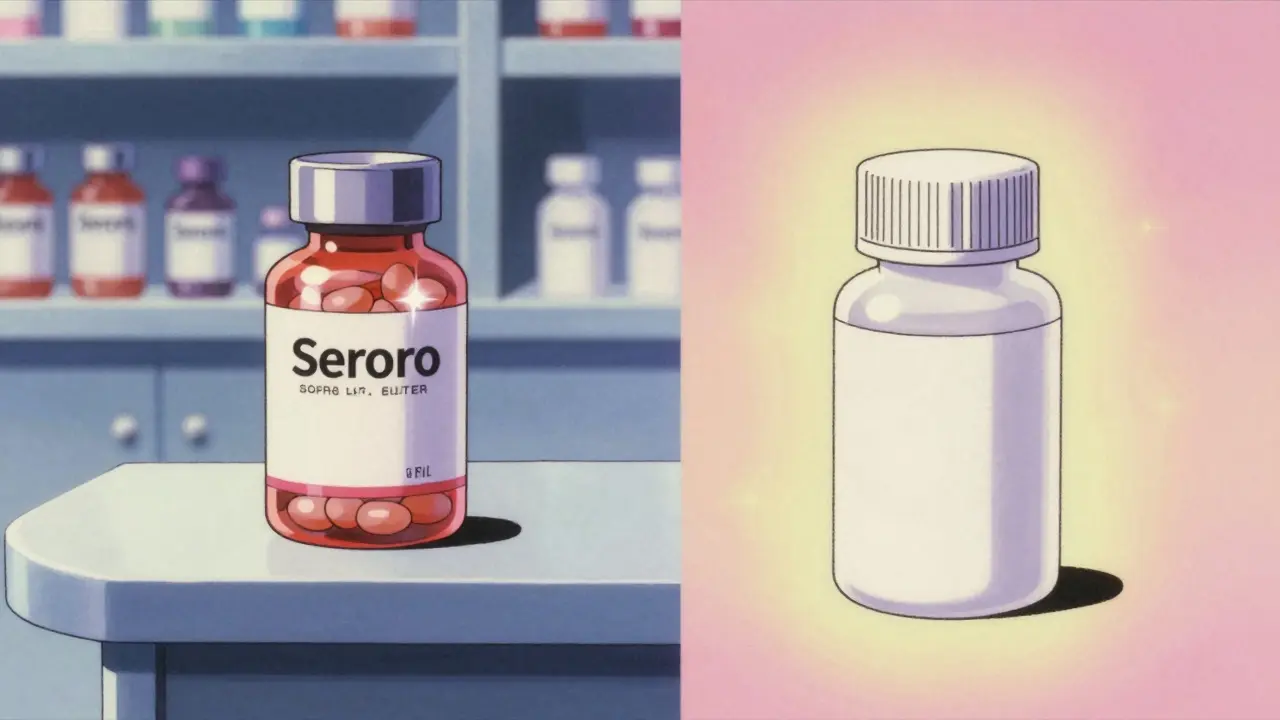
Ever wonder why your pharmacist suggests a generic version of a drug that costs a fraction of the brand-name price? It seems too good to be true-the same medicine, the same results, but way less money. The reality is that generic medications is a category of drugs that contain the same active ingredients, dosage, and strength as brand-name drugs but are sold without the original trademark. They aren't "knock-offs" or inferior versions; they are chemically identical tools for health that happen to be much cheaper.
For patients, the difference can be the choice between skipping a dose or staying healthy. For insurers, it's the difference between a sustainable budget and a financial crisis. But the price drop isn't magic-it's the result of specific laws, a lack of research costs, and the raw power of market competition.
The Secret Behind the Price Drop
The biggest reason generics cost less is simple: the hard work has already been done. When a pharmaceutical company creates a new drug, they spend billions on research, development, and clinical trials to prove the drug is safe and effective. This initial investment is why brand-name drugs are so expensive; the company needs to recoup those costs and make a profit.
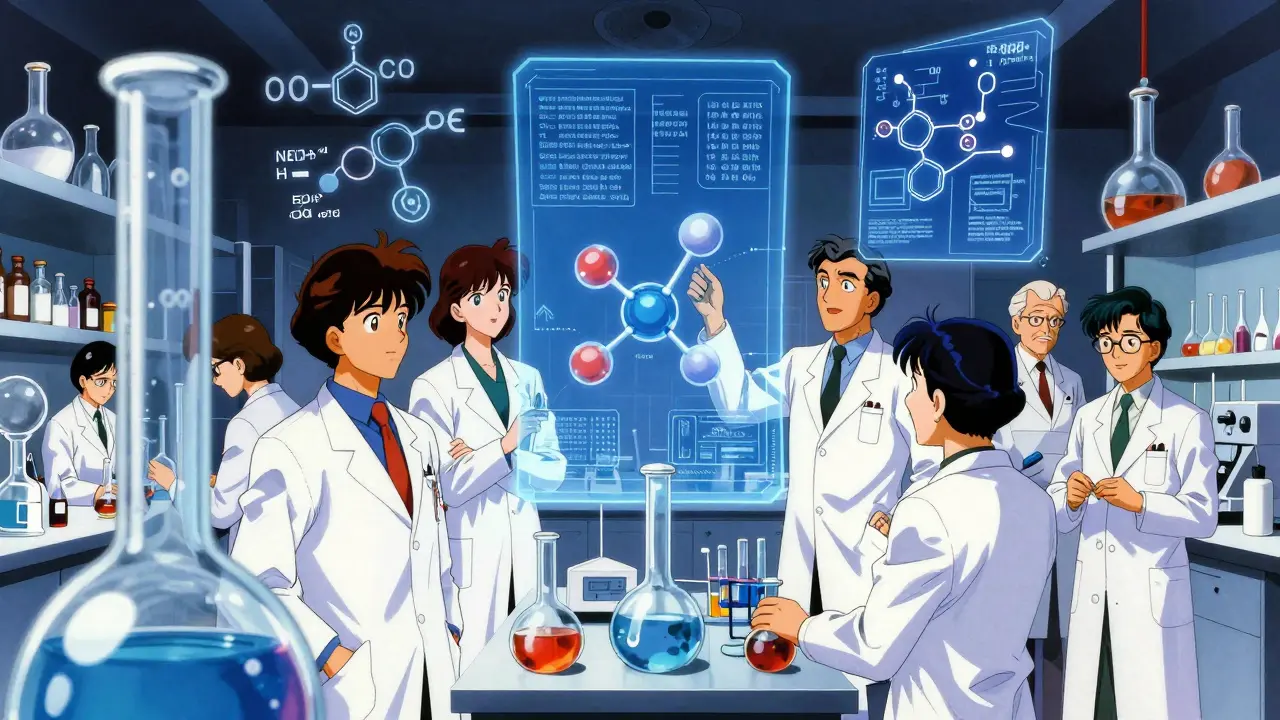
Generic manufacturers don't have those overhead costs. They don't need to run massive new clinical trials. Instead, they use the Abbreviated New Drug Application (or ANDA) process. Through this pathway, they only have to prove bioequivalence-meaning the drug works in the body the same way as the original. Because they skip the decade of research and the expensive trials, they can sell the drug at a massive discount.
According to the Federal Trade Commission, this lack of R&D spending allows generics to typically cost 80-85% less than their brand-name counterparts. Imagine the difference between buying the first-ever version of a piece of technology and buying a generic version once the patent expires; the blueprint is already there, and the cost to produce it is just the cost of the materials and labor.
How Competition Slashes Prices
One generic company on the market is a good start, but a crowd of them is where the real savings happen. When a patent expires, it opens the door for multiple companies to produce the same drug. This creates a bidding war where the only way to win more customers is to lower the price.
The FDA has noted that once a few generic competitors enter the market, prices usually drop to 15-20% of the brand-name price within the first year. As more players join, prices keep sliding. Take a look at the dramatic shift in real-world examples:
| Drug (Active Ingredient) | Brand-Name Price (Approx.) | Generic Price (Approx.) | Estimated Savings |
|---|---|---|---|
| Lurasidone (Latuda) | $1,400 (30-day) | < $60 (30-day) | Over $4.4 Billion (Total) |
| Pemetrexed (Alimta) | $88 / mL | < $10 / mL | Millions of dollars |
This competitive pressure is why generics now account for about 90% of all prescriptions filled in the U.S., yet they only make up about 1.5% of total healthcare spending. It's a massive win for the system's efficiency.
The Role of the Hatch-Waxman Act
We wouldn't have this system without the Hatch-Waxman Act, a law passed in 1984. Before this, the process for getting a generic drug approved was too slow and expensive, which meant brand-name companies held onto their monopolies for too long. This act created a balance: it gave brand-name companies a way to extend their patents if they invested in new uses for the drug, but it created the "shortcut" (the ANDA process) for generics to enter the market quickly once those patents ended.
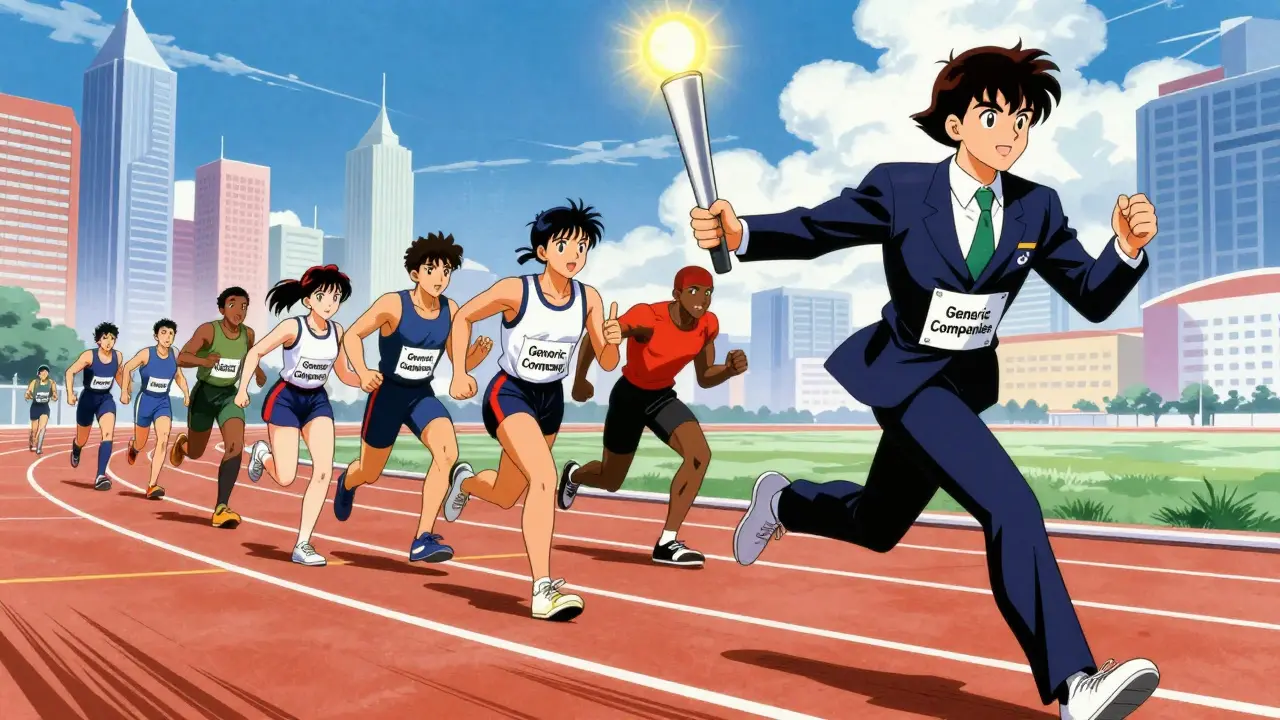
This legislation turned the pharmaceutical market into a relay race. The brand company runs the first lap (innovation), and once they hit the finish line (patent expiration), the generic companies take over to ensure the medicine becomes accessible to everyone.
Why Some Generics Still Feel Expensive
If generics are so cheap, why do some patients still see high bills? This is where the industry gets messy. Not all generics are priced the same, and some "generic" drugs can still be pricey if there are only one or two manufacturers.
There is also a practice called "spread pricing" used by Pharmacy Benefit Managers (or PBMs), which are the middlemen who manage drug lists for insurance companies. A PBM might negotiate a low price with a pharmacy but charge the insurer a much higher price, pocketing the difference. This can sometimes lead to higher-priced generics being prioritized over cheaper alternatives.
Additionally, some brand-name companies use "evergreening" tactics. This is when they make a tiny, non-therapeutic change to a drug-like changing it from a tablet to a capsule-and file for a new patent to keep generics off the market for a few more years. It's a legal loophole that keeps prices high and blocks competition.
Practical Tips for Saving More on Your Meds
You don't have to just accept the price your insurance gives you. Many people find they can save more by being proactive. For example, patients with chronic conditions who actively compare generic prices can save an average of $287 a year.
Here is a quick checklist to lower your costs:
- Ask for "Substitution Allowed": Ensure your doctor doesn't check the "dispense as written" box, which prevents the pharmacist from giving you a cheaper generic.
- Use Price Comparison Tools: Apps like GoodRx or SingleCare can show you if a different pharmacy nearby has the same generic for half the price.
- Consider Transparent Pricing: Companies like Mark Cuban Cost Plus Drug Company skip the PBM middlemen and sell generics at a small markup over the actual cost.
- Check Your Formulary: Ask your insurer for the "preferred generic" list. Switching to a different but therapeutically equivalent generic can sometimes drop your copay from $50 to $5.
The Future: Biosimilars and New Savings
The next frontier of savings is in Biosimilars, which are essentially the generic versions of biologic drugs. Biologics are complex medicines made from living cells (like insulin or monoclonal antibodies) and are far harder to copy than simple chemical pills. Because they are so complex, they aren't called "generics," but "biosimilars."
As more of these complex drugs lose their patent protection, analysts expect biosimilars to generate an additional $150 billion in savings between 2023 and 2027. Combined with the Inflation Reduction Act, which is set to save Medicare beneficiaries billions, the trend is moving toward more competition and lower costs.
Are generic drugs as safe as brand-name drugs?
Yes. The FDA requires generic drugs to have the same active ingredients, strength, purity, and performance as the brand-name version. They must be bioequivalent, meaning they deliver the same amount of active ingredient into the bloodstream in the same amount of time.
Why does my insurance sometimes refuse to cover a generic?
This is usually due to the insurance company's "formulary" (their list of covered drugs). Sometimes they have a deal with a specific manufacturer, or the drug in question is a "preferred generic" that is cheaper for the insurer to cover than others.
What is the difference between a generic and a biosimilar?
Generics are chemically identical copies of simple chemical drugs. Biosimilars are nearly identical copies of complex biological drugs. Because biologicals are made from living organisms, they can't be perfectly identical, but biosimilars are designed to have no clinically meaningful difference in safety or effectiveness.
Can I get a generic drug if my doctor wrote the prescription for a brand name?
In most cases, yes. Unless your doctor explicitly wrote "Dispense as Written" (DAW) on the prescription, pharmacists are generally allowed and encouraged to substitute the generic version to save the patient money.
Do generics ever cause different side effects?
The active ingredient is the same, but the "inactive ingredients" (fillers, dyes, and binders) can differ. While rare, some people may have a sensitivity or allergy to a specific filler in a generic version that wasn't in the brand-name version.
Maggie Graziano
April 19, 2026 AT 08:33big pharma just wants control over who gets healthy
Nikki Grote
April 20, 2026 AT 10:54The mention of PBMs is spot on. The rebate wall is a huge issue where manufacturers actually pay PBMs to keep cheaper generics off the formulary to protect the high-margin brand drug revenue. It's a systemic failure of the transparency pipeline that creates an artificial barrier to access for the patient.
Colleen Tankard
April 22, 2026 AT 06:15Mark Cuban's pharmacy is a literal lifesaver 💊✨ honestly such a game changer for anyone tired of the insurance runaround 💖
Sophia Rice
April 23, 2026 AT 13:57I always try and ask for the generic version but sometimes the pharamcist says the doctor wrote a specfic brand. its so anoying when that happens!
Anmol Garg
April 24, 2026 AT 07:51It's interesting to think about this as a cycle of innovation and accessibility. The initial high price is the cost of discovery, but the eventual drop is the gift of that discovery to the rest of humanity. There is a certain poetic justice in the way patents eventually expire to let the world benefit from the breakthrough.
Anna BB
April 25, 2026 AT 04:06Such a helpful guide!!! I've always wondered about the difference between these... it's so reassuring to know they are safe... we really need more of this transparency in healthcare!!!
Ben Ferguson
April 26, 2026 AT 19:31Oh man, I remember the absolute nightmare I went through trying to find a reasonable price for my blood pressure meds before I found out about the generic options, and it was just this endless cycle of calling different pharmacies and feeling like I was being scammed by the system because the prices varied so wildly from one street corner to the next, which is just absolutely wild when you think about the fact that it's the exact same chemical compound coming from the same manufacturing source!
ira fitriani
April 28, 2026 AT 04:50YESSS! Everyone needs to use GoodRx! 🚀 It is literally wild how much you can save just by switching pharmacies across town! DON'T LET THEM OVERCHARGE YOU! 💥💰
Theresa Griffin MEP
April 29, 2026 AT 09:56The evergreening practice is utterly unacceptable. Legal loopholes should not dictate public health access. Immediate legislative reform is required to prevent these tactical patent extensions.
Rock Stone
April 29, 2026 AT 18:00Just take a breath and check your formulary folks. It's a bit of a chore but it pays off in the long run.
Bonnie Piersall
April 30, 2026 AT 11:32This is some top-tier advice. Navigating the pharmacy maze is like trying to solve a Rubik's cube in the dark, but having a checklist makes it way less of a circus.
Michael Lewis
May 1, 2026 AT 21:29Stop letting the PBMs eat your wallet! Get proactive and demand the cheapest generic available. Be your own advocate because the system won't do it for you!
Nell O'Leary
May 3, 2026 AT 02:42Adding to the point about biosimilars, the immunogenicity profiles can vary slightly due to the complex tertiary structure of these proteins, which is why the regulatory pathway is more rigorous than a standard small-molecule generic 🧪🔬 hope this helps clarify the nuance! 😊