
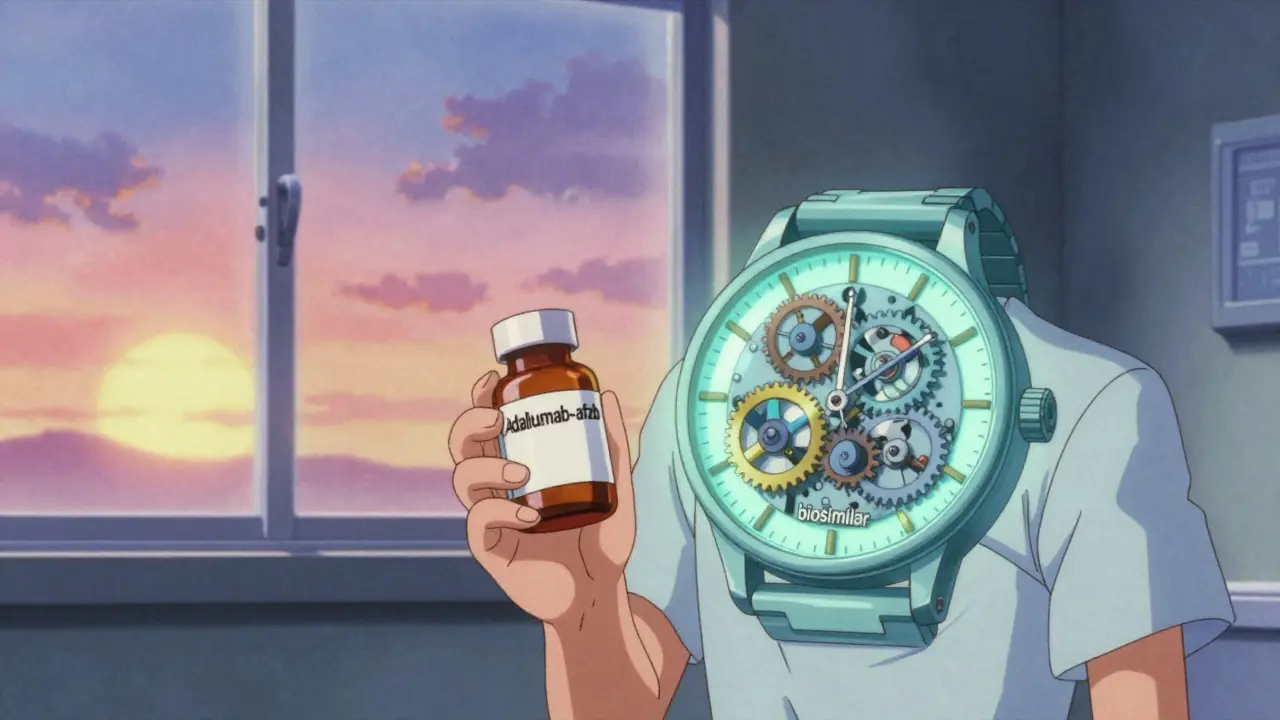
When your doctor talks about a biosimilar, it might sound like just another fancy drug name. But here’s the truth: it’s not a copy of a pill you’ve taken before. It’s something entirely different-and it could save you money without cutting corners on your health.
What exactly is a biosimilar?
A biosimilar is a medicine that works almost exactly like an already-approved biologic drug. Think of it like this: if a biologic is a complex handmade watch, a biosimilar is another watch made by a different craftsman using the same blueprints, tools, and materials. It’s not identical down to the last gear-but it keeps perfect time. Biologics aren’t made in a lab like regular pills. They come from living cells-human, animal, or bacterial-engineered to produce proteins that treat serious conditions like rheumatoid arthritis, Crohn’s disease, cancer, and diabetes. Because they’re made by living systems, no two batches are ever exactly the same. That’s why a biosimilar can’t be a perfect copy. But it doesn’t need to be. The U.S. Food and Drug Administration (FDA) requires it to be highly similar with no meaningful difference in how safe or effective it is.How is a biosimilar different from a generic drug?
This is where things get confusing. Most people know generics-they’re the cheaper versions of drugs like ibuprofen or metformin. Generics are chemical copies. They’re made from simple molecules, and scientists can prove they’re identical to the original. Biosimilars? Not even close. Biologics are huge, complex proteins with shapes that matter as much as their chemical makeup. Even tiny changes in how they’re made-like the type of cell used, the temperature during production, or how they’re purified-can change how they behave in your body. So a biosimilar isn’t a copy. It’s a very close match, proven through years of testing. The FDA doesn’t just look at the final product. They check its structure, how it binds to targets in your body, how it’s absorbed, and even how your immune system reacts to it. Then they run clinical trials comparing it directly to the original biologic. If the results show no difference in safety or effectiveness, it gets approved.Are biosimilars safe?
Yes. And this isn’t just theory. Biosimilars have been used in Europe for over 15 years-with millions of patients. No new safety issues popped up. In the U.S., since the first one (Zarxio, a biosimilar to Neupogen) was approved in 2015, over 40 have been cleared by the FDA. Thirty-two are currently on the market. Each one had to pass the same strict standards as the original. For example, Renflexis, a biosimilar for rheumatoid arthritis, was tested in a clinical trial with 541 patients. The results? Just as safe and effective as the brand-name drug. Even when patients switch from the original biologic to a biosimilar, studies show no increased risk. The Arthritis Foundation and the American Cancer Society both confirm: switching is safe. Your body won’t suddenly react badly just because the name changed.Why do biosimilars cost less?
Because they don’t need to repeat every single costly study. The original biologic took over a decade and billions of dollars to develop. The biosimilar manufacturer doesn’t have to start from scratch. They use the existing data on safety and effectiveness to prove their version works just as well. That cuts development time and cost. As a result, biosimilars usually cost 15% to 30% less than the original. That’s not as big a discount as generics (which can be 80% cheaper), but for drugs that cost $20,000 a year, even 20% off means thousands saved. Some insurance companies now require you to try a biosimilar first before covering the brand-name drug. It’s not a punishment-it’s a way to help you save money without losing treatment quality.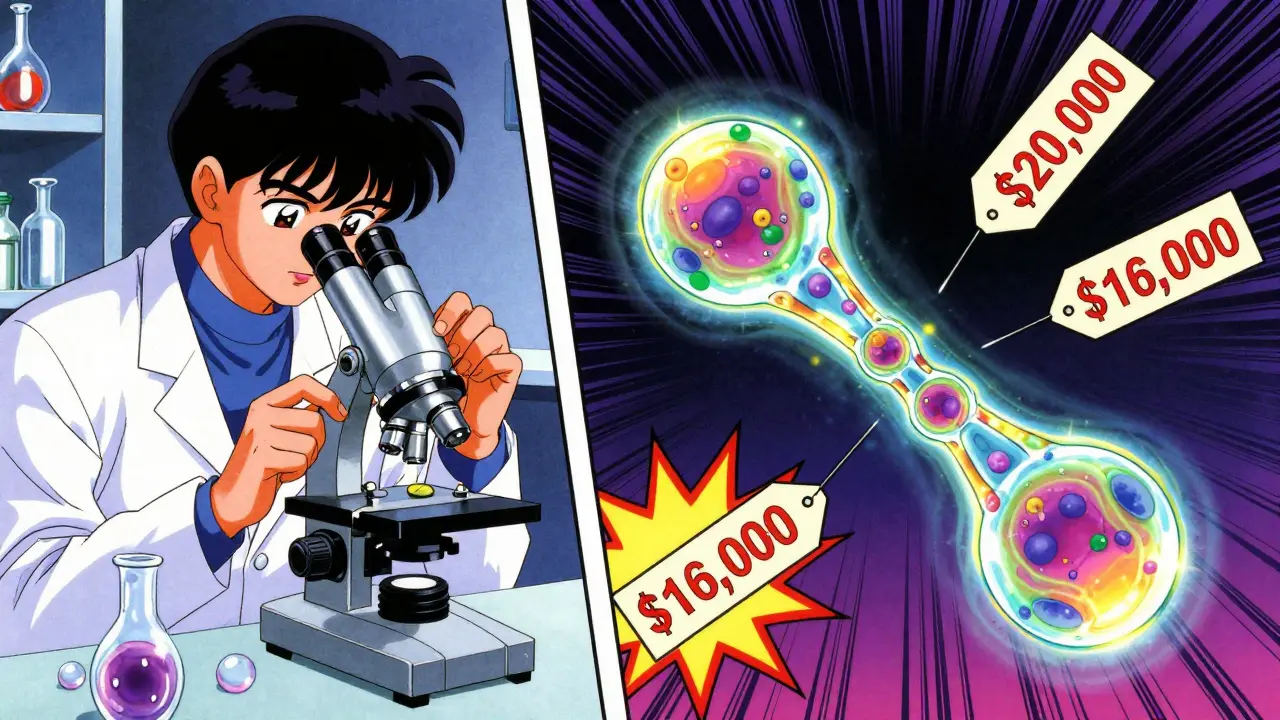
What do biosimilars treat?
They’re used for serious, long-term conditions where biologics are the gold standard:- Autoimmune diseases: rheumatoid arthritis, psoriasis, Crohn’s disease, ulcerative colitis
- Cancer: breast cancer (trastuzumab), colon cancer (bevacizumab), lymphoma (rituximab)
- Diabetes: insulin glargine
- Eye disease: macular degeneration
- Kidney disease: anemia from chronic kidney failure
How do you know if you’re getting a biosimilar?
The name gives it away. The generic name is the same as the original, but it ends in a four-letter suffix. For example:- Original: adalimumab (Humira)
- Biosimilar: adalimumab-afzb (Amjevita)
- Original: infliximab (Remicade)
- Biosimilar: infliximab-dyyb (Renflexis)
What about “interchangeable” biosimilars?
There’s a special category called “interchangeable.” These are biosimilars that the FDA says can be swapped for the original drug without your doctor’s approval-just like generics. The first one approved was Semglee, an interchangeable version of insulin glargine, in 2021. Not all biosimilars are interchangeable yet. But the FDA is working on it. More will likely get that status as more data comes in.
What should you do as a patient?
If your doctor suggests a biosimilar, ask:- Is this the same as my current treatment in terms of safety and results?
- Will I need to change how I take it?
- Is this covered by my insurance?
What’s next for biosimilars?
The market is growing fast. In the U.S., biosimilars made up about 10% of the biologic drug market in 2023. In Europe, it’s 25%. Experts predict the global market will hit $30 billion by 2028. That means more choices, lower prices, and better access. For patients who’ve struggled to afford life-saving treatments, that’s not just a win-it’s a lifeline. The FDA continues to improve how biosimilars are reviewed and approved. They’re also working to make sure patients and doctors understand them better. Educational tools, like their “Biosimilars: What Patients Need to Know” infographic, are helping clear up confusion.Final thought: You’re not taking a risk-you’re making a smart choice
Biosimilars aren’t about cutting corners. They’re about making high-quality care more affordable. If you’re prescribed one, you’re not getting a lesser drug. You’re getting the same treatment, backed by the same science, at a lower price. Talk to your doctor. Ask questions. But don’t let fear stop you. You’ve already done the hard part-you’re managing a serious condition. A biosimilar can help you keep going, without breaking the bank.Are biosimilars the same as generics?
No. Generics are exact chemical copies of simple, small-molecule drugs like aspirin or metformin. Biosimilars are highly similar versions of complex biologic drugs made from living cells. Because biologics are so intricate, biosimilars can’t be exact copies-but they’re proven to work the same way in your body.
Are biosimilars safe to use?
Yes. Every biosimilar approved by the FDA has gone through rigorous testing, including lab studies, animal tests, and clinical trials in hundreds of patients. They must show no meaningful difference in safety or effectiveness compared to the original biologic. Millions of patients in Europe and the U.S. have used them without new safety concerns.
Can I switch from my biologic to a biosimilar?
Yes. Multiple studies show switching from a brand-name biologic to a biosimilar is safe and doesn’t reduce effectiveness. The Arthritis Foundation and American Cancer Society both support switching when recommended by your doctor. Your body won’t react differently just because the name changed.
Why are biosimilars cheaper than the original biologics?
Because biosimilar makers don’t have to repeat all the expensive early research. They use the original drug’s safety and effectiveness data to prove their version works just as well. This cuts development costs and time, allowing them to offer lower prices-typically 15% to 30% less.
How do I know if I’m getting a biosimilar?
Check the name. Biosimilars have the same generic name as the original biologic, but end in a four-letter suffix. For example, the biosimilar for Humira (adalimumab) is called adalimumab-afzb. Your prescription or pharmacy label will show this exact name.
Do biosimilars have the same side effects as the original?
Yes. Before approval, biosimilars must show they have the same potential side effects as the original biologic. This includes things like injection site reactions, increased infection risk, or allergic responses. The FDA requires this data to be identical.
Are biosimilars used in the UK?
Yes. The UK’s National Health Service (NHS) has been using biosimilars since the early 2010s. Many common biologics for arthritis and Crohn’s disease now have biosimilar versions available. The NHS encourages their use to reduce costs and improve access to treatment.
If you’re on a biologic and hear about a biosimilar, don’t panic. Ask questions. Understand your options. And know this: you’re not settling for less. You’re choosing a smart, proven, and affordable way to keep your treatment on track.
Sue Stone
January 22, 2026 AT 15:17So basically, biosimilars are like the store-brand peanut butter of biologics? Tastes the same, costs less, and doesn’t make you go broke. I’m all for it.
Janet King
January 24, 2026 AT 08:32Biosimilars undergo rigorous analytical, preclinical, and clinical testing to demonstrate similarity in structure, function, safety, and efficacy. The FDA’s approval pathway is not a shortcut-it is a scientifically robust process designed to ensure patient safety without compromising therapeutic outcomes.
Anna Pryde-Smith
January 26, 2026 AT 01:13Let me get this straight-pharma companies are letting us switch to cheaper versions of drugs that cost $20,000 a year and calling it ‘progress’? Meanwhile, my copay went up 12% last year. This isn’t saving us-it’s a corporate shell game. I’ve seen too many people get screwed by ‘similar’ drugs that weren’t actually similar. Don’t let them fool you.
Oladeji Omobolaji
January 27, 2026 AT 22:18Back home in Nigeria, we don’t even get the original biologics half the time. If biosimilars mean more people can get treatment, then I say bring them on. Quality doesn’t always mean expensive-it means accessible.
Stacy Thomes
January 28, 2026 AT 11:54THIS IS HUGE. If you’re scared to switch, you’re not alone-but you’re also not alone in feeling better. I switched from Humira to Amjevita last year. Same results. Half the cost. I cried when I saw my insurance statement. You’re not giving up-you’re winning.
dana torgersen
January 29, 2026 AT 13:12you know… biosimilars… are like… the universe… kinda… whispering… ‘hey, you don’t need the original brand… you just need it to WORK…’… right?… I mean… if a watch… made by someone else… keeps perfect time… why… pay extra… for the… logo…?… :)
Dawson Taylor
January 30, 2026 AT 12:41Regulatory equivalence does not imply interchangeability. Clinical data must be evaluated on a case-by-case basis. The FDA’s criteria are stringent, but real-world outcomes vary by patient population and comorbidities.
Kerry Moore
February 1, 2026 AT 01:11As someone who has been on biologics for over a decade, I appreciate the clarity of this post. The comparison to a handmade watch is apt. I was skeptical at first, but after reviewing the clinical trial data and speaking with my rheumatologist, I switched to a biosimilar. My condition remains stable, and the financial relief has been profound. It’s not about compromise-it’s about sustainability in care.
Vanessa Barber
February 1, 2026 AT 05:33Yeah, sure. ‘Same effectiveness.’ Just like how ‘diet’ soda is ‘same taste.’ Until your body starts acting weird and you realize the ingredients list is longer than your grocery receipt.
Andrew Smirnykh
February 2, 2026 AT 10:54In my country, we’ve had biosimilars for years. The cultural shift wasn’t easy-many feared they were ‘lesser.’ But over time, trust built through transparency and consistent outcomes. Education matters more than marketing. This post helps bridge that gap.
Laura Rice
February 4, 2026 AT 05:49OMG I JUST SWITCHED TO A BIOSIMILAR AND I’M SO HAPPY!! My mom has RA and she was crying about the cost-now she’s back to gardening and even made me cookies! It’s not magic, it’s science-and it’s working!!
Sallie Jane Barnes
February 4, 2026 AT 18:27I respect your concerns, but please don’t let fear override facts. The FDA doesn’t approve biosimilars lightly. My son has Crohn’s and switched last year. No flare-ups, no side effects, and we saved over $15,000 annually. That’s not a gimmick-that’s dignity.
charley lopez
February 4, 2026 AT 20:21The pharmacokinetic and pharmacodynamic profiles of biosimilars must demonstrate non-inferiority within predefined equivalence margins. Immunogenicity risk profiles are assessed via anti-drug antibody titers and neutralizing capacity assays. Post-marketing surveillance remains critical for long-term safety monitoring.