
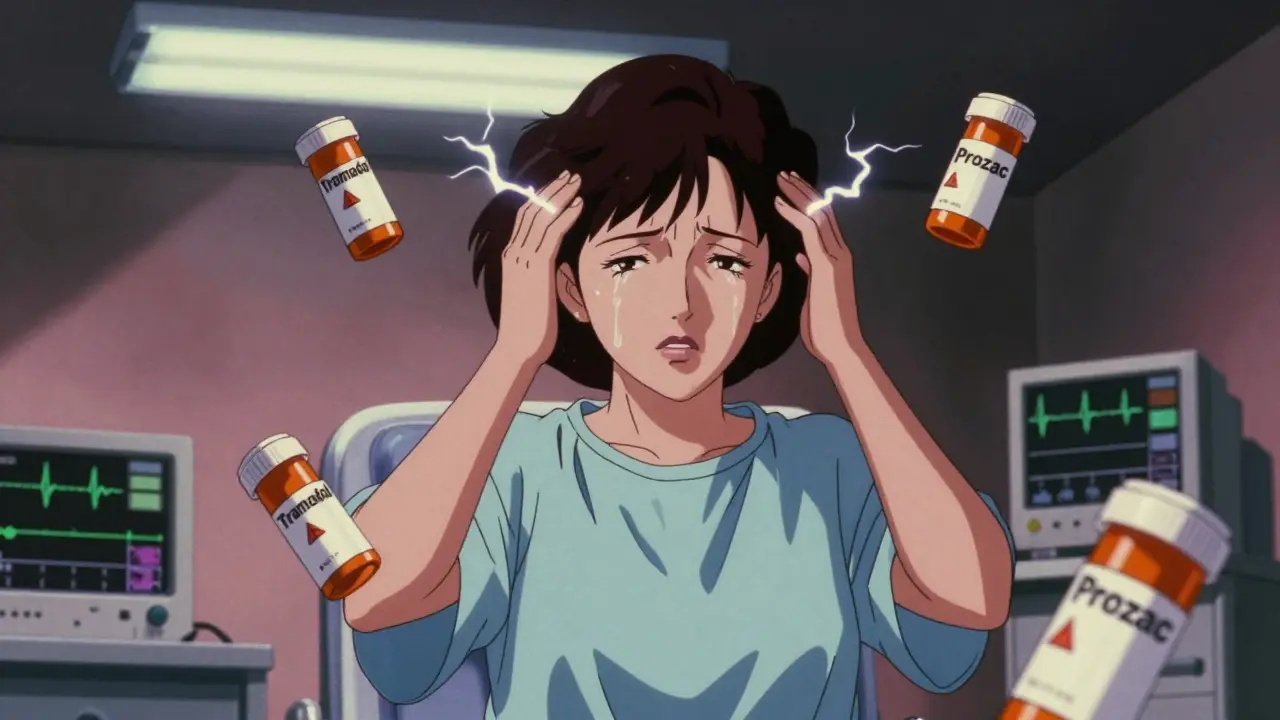
Tramadol Seizure Risk Checker
Assess Your Personal Risk
Answer these questions to determine your seizure risk when taking tramadol
Your Risk Assessment
Tramadol is often prescribed as a safer alternative to stronger opioids for moderate to severe pain. But here’s the thing: even at normal doses, it can trigger seizures - and not just in overdose cases. If you’re taking tramadol, especially with other medications or if you have certain health conditions, your risk might be higher than you think. The real danger isn’t always obvious, and many people don’t realize they’re in danger until it’s too late.
Who’s Most at Risk for Tramadol-Induced Seizures?
Not everyone who takes tramadol will have a seizure. But some groups are far more vulnerable. The data shows clear patterns. People with a history of seizures are nearly four times more likely to have another one when taking tramadol. That’s not a small increase - it’s a red flag. If you’ve ever had epilepsy, a past seizure, or even a single episode of unexplained loss of consciousness, tramadol could be a dangerous choice.
Another high-risk group? Older adults. Specifically, those over 65. Their bodies don’t process drugs the same way they used to. Kidney and liver function decline with age, and tramadol is cleared mostly through the kidneys. The FDA updated its guidelines in 2022 to say that people with reduced kidney function should never exceed 300 mg per day - and those with severe kidney disease shouldn’t take it at all. Yet, many doctors still prescribe the old 400 mg max, especially to seniors who aren’t told about the risks.
The Hidden Danger: Antidepressants Mixed With Tramadol
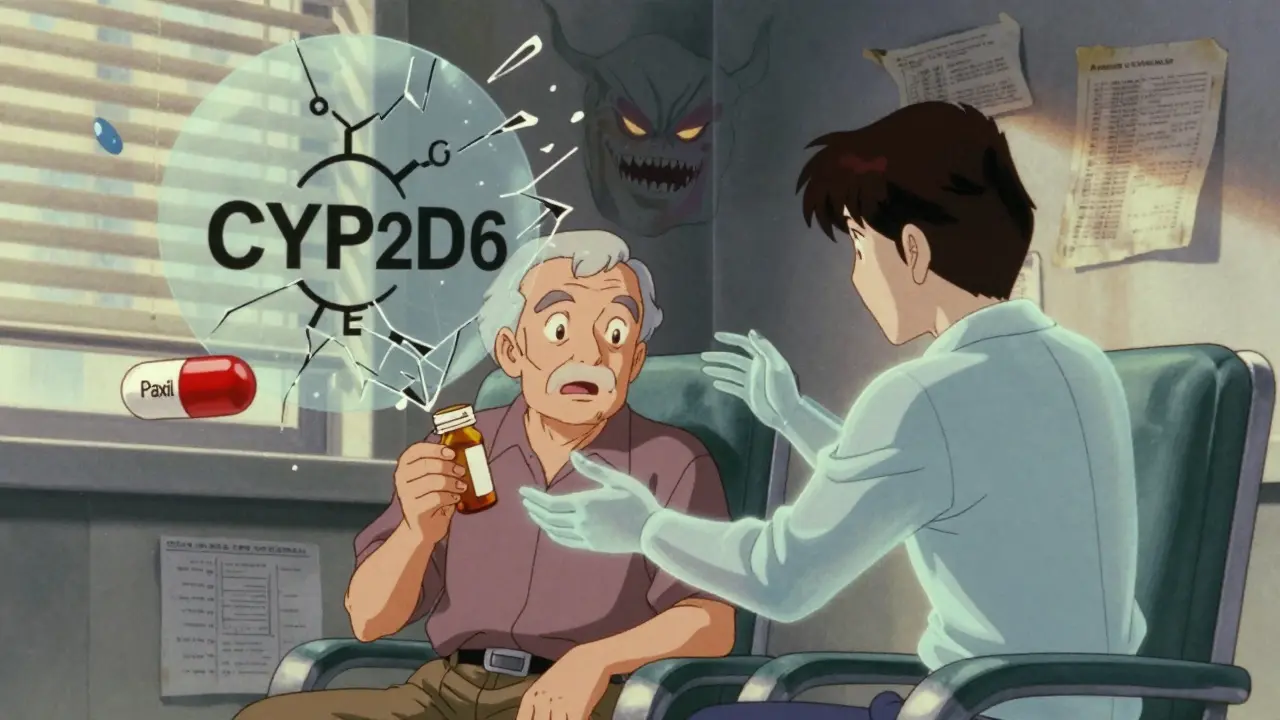
One of the most dangerous, yet under-discussed, combinations is tramadol with certain antidepressants. It’s not just any antidepressant - it’s the ones that block the CYP2D6 enzyme. That includes common SSRIs like fluoxetine (Prozac) and paroxetine (Paxil), and older tricyclics like amitriptyline. These drugs are prescribed for depression, anxiety, or nerve pain. But when taken with tramadol, they interfere with how the body breaks it down.
Here’s why that matters: tramadol needs to be converted into an active form (M1 metabolite) by the CYP2D6 enzyme to work well as a painkiller. When that enzyme is blocked, tramadol builds up in your system. More tramadol = higher seizure risk. A 2023 study of over 70,000 nursing home residents found that those taking tramadol with CYP2D6-inhibiting antidepressants had a 9% higher seizure rate than those taking tramadol with non-inhibiting ones. That might sound small, but in a population of millions, that’s thousands of preventable seizures every year.
What’s worse? The risk doesn’t go away if you start the antidepressant first, then add tramadol later. The interaction happens either way. And it’s not theoretical - real patients have lost control of their bodies because their doctors didn’t connect the dots. One Reddit user, 32, had their first seizure after starting tramadol with sertraline. Now they’re on lifelong anti-seizure meds.
Dose Matters - But Not the Way You Think
You might assume seizures only happen with overdoses. That’s not true. While high doses (like 2,000 mg or more) definitely increase risk, seizures have been documented at therapeutic doses - even 100 mg taken twice daily. What matters more than the absolute number is how your body handles it. Some people metabolize tramadol slowly. Others are ultra-rapid metabolizers. That’s why blood levels don’t always predict seizures. Two people can take the same dose, and only one has a seizure.
Studies show a clear link between dose and seizure frequency. People who had multiple seizures were taking much higher doses - median 2,800 mg - compared to those with a single seizure (median 850 mg). But even at 400 mg daily, the risk is real. The FDA capped the daily limit at 400 mg for healthy adults, but that’s not safe for everyone. In older adults or those with kidney issues, even 300 mg is pushing it.
Other High-Risk Groups You Might Not Know About
Young adult males are another group showing up in emergency room data. In one large study, 85% of tramadol-related seizure cases were men, with a median age of 23. This isn’t necessarily because they’re taking more - it’s likely tied to recreational use. Some people crush and snort tramadol to get high, or combine it with alcohol or other stimulants. That’s a recipe for disaster. Alcohol lowers the seizure threshold. Mixing it with tramadol can trigger seizures even at low doses.
People with head injuries, a history of alcohol or drug withdrawal, or metabolic disorders like liver disease are also at higher risk. Tramadol can destabilize brain activity in already vulnerable systems. And if you’re taking other drugs that lower the seizure threshold - like certain antipsychotics, stimulants, or even some antibiotics - your risk multiplies.
What Should You Do If You’re Taking Tramadol?
If you’re on tramadol, ask yourself these questions:
- Do I have a history of seizures or epilepsy?
- Am I taking any antidepressants - especially fluoxetine, paroxetine, or amitriptyline?
- Am I over 65? Do I have kidney problems?
- Am I taking more than 300 mg per day?
- Have I ever had unexplained blackouts, twitching, or strange sensations before?
If you answered yes to any of these, talk to your doctor - not tomorrow, not next week. Now. There are safer alternatives. Acetaminophen (Tylenol) works for many types of pain. NSAIDs like ibuprofen (if your kidneys are okay) are another option. For nerve pain, gabapentin or pregabalin are often better than tramadol. And if you absolutely need an opioid, hydrocodone or oxycodone - without the CYP2D6 interaction - may be safer choices.
Your pharmacist can also help. Many now flag dangerous drug combinations automatically. If your pharmacy hasn’t warned you about tramadol and your antidepressant, ask why.
What’s Changing in Medical Guidelines?
The American Geriatrics Society now lists tramadol as a potentially inappropriate medication for older adults - especially when combined with serotonergic drugs. The European Medicines Agency and the FDA have both strengthened their warnings in recent years. The 2023 update to the FDA label now explicitly warns about seizure risk with antidepressants and renal impairment.
Doctors are starting to pay attention. But not all of them. Many still see tramadol as “low-risk” because it’s not a traditional opioid. That’s outdated thinking. Tramadol’s dual action - opioid plus serotonin reuptake inhibition - makes it uniquely dangerous in combinations. A 2023 study confirmed: hydrocodone, another opioid, doesn’t carry the same seizure risk with antidepressants. That proves the problem isn’t opioids in general - it’s tramadol specifically.
What’s Next? Testing for Genetic Risk
Future care may involve genetic testing. Some people are born with a version of the CYP2D6 gene that makes them poor metabolizers - meaning they break down tramadol very slowly. Others are ultra-rapid metabolizers, which can lead to toxic buildup. A 2023 study from the University of Toronto found poor metabolizers had 3.2 times higher tramadol levels than normal metabolizers on the same dose. That could explain why some people have seizures at low doses while others don’t.
Right now, genetic testing isn’t routine. But if you’ve had a seizure on tramadol, or if your family has a history of bad reactions to medications, it’s worth asking about. The National Institute on Neurological Disorders and Stroke has already funded $2.4 million in research to predict individual seizure risk - meaning this is a growing priority in medicine.
Bottom Line: Don’t Assume It’s Safe
Tramadol isn’t a harmless painkiller. It’s a drug with hidden risks that many doctors still overlook. If you’re taking it - especially with antidepressants, if you’re older, or if you’ve ever had a seizure - you need to know the facts. Don’t wait for a warning label to save you. Ask your doctor: Is tramadol really the safest option for me? There are better choices out there. Your brain deserves that kind of care.
Can tramadol cause seizures even at normal doses?
Yes. Tramadol can trigger seizures even at prescribed doses, especially in people with risk factors like a history of seizures, kidney problems, or when taken with certain antidepressants. Seizures have been reported in patients taking as little as 100 mg twice daily.
Which antidepressants increase seizure risk with tramadol?
Antidepressants that inhibit the CYP2D6 enzyme raise the risk significantly. These include fluoxetine (Prozac), paroxetine (Paxil), bupropion (Wellbutrin), and tricyclics like amitriptyline. Avoid combining tramadol with these. Safer alternatives include citalopram or escitalopram, which don’t interfere with tramadol metabolism.
Is tramadol safe for older adults?
No - not without caution. The American Geriatrics Society lists tramadol as potentially inappropriate for older adults due to seizure risk. Kidney function declines with age, and the FDA recommends a maximum daily dose of 300 mg for seniors, not 400 mg. Many doctors still prescribe higher doses, increasing danger.
What should I do if I’ve had a seizure on tramadol?
Stop taking tramadol immediately and contact your doctor. You may need to switch to a different pain medication and possibly start anti-seizure treatment. Report the incident to your pharmacist and the FDA’s MedWatch program. Your case could help warn others.
Are there safer alternatives to tramadol for pain?
Yes. For mild to moderate pain, acetaminophen (Tylenol) or NSAIDs like ibuprofen are often safer. For nerve pain, gabapentin or pregabalin are preferred. If an opioid is needed, hydrocodone or oxycodone (without CYP2D6 interactions) may be better choices than tramadol, especially for older adults or those on antidepressants.
Ian Ring
January 3, 2026 AT 17:11Just got prescribed tramadol last week for my back pain... and now I'm reading this and sweating. I'm on sertraline too. 😳 I'm calling my pharmacist first thing tomorrow. Thanks for the wake-up call.
erica yabut
January 4, 2026 AT 11:36Oh, sweet merciful heavens. So we're just supposed to trust Big Pharma’s ‘safer opioid’ marketing? Please. Tramadol is a pharmacological Frankenstein-half opioid, half SSRI, all liability. The fact that it's still on formularies while hydrocodone gets scrutinized is a travesty of medical logic. Someone’s getting paid to keep this nonsense alive.
Tru Vista
January 4, 2026 AT 21:21Tramadol + cyp2d6 inhibitors = bad. FDA says so. Kidney issues? even worse. Over 65? avoid. That's it. No need to overthink. Just stop.
Vincent Sunio
January 5, 2026 AT 04:35The assertion that tramadol is uniquely dangerous in combination with serotonergic agents is not merely supported by data-it is empirically demonstrable. The CYP2D6 metabolic pathway is not a peripheral consideration; it is the central pharmacokinetic determinant of seizure risk. To conflate this with general opioid safety is a profound conceptual error, and one that continues to endanger patients.
JUNE OHM
January 6, 2026 AT 21:20They don't want you to know this. Big Pharma + the AMA are hiding this. Why? Because they make billions off tramadol. They'd rather you have a seizure than admit it's unsafe. 🇺🇸🇺🇸🇺🇸 #TramadolCoverUp
Philip Leth
January 7, 2026 AT 01:55I'm from Nigeria and we use tramadol like candy here. People crush it, mix it with soda, call it ‘sugar’. I’ve seen friends seize in front of me. Nobody knew why. This post? It’s the first time someone explained it right. Thank you.
Shanahan Crowell
January 8, 2026 AT 21:56Thank you for sharing this-seriously. I’ve been on tramadol for 3 years and never knew about the CYP2D6 issue. I’m on fluoxetine too. I’m switching meds tomorrow. You just might’ve saved my life. 🙏
Kerry Howarth
January 9, 2026 AT 05:40Good post. If you’re on antidepressants, ask your doctor for a pharmacogenomic test. It’s not expensive, and it could prevent disaster. Simple blood test. Worth it.
Tiffany Channell
January 11, 2026 AT 02:38Everyone’s panicking over tramadol like it’s poison. Meanwhile, people are dying from NSAID-induced GI bleeds every day. This is fearmongering dressed as medical advice. If you’re paranoid, don’t take anything. But don’t scare others into abandoning effective pain management.
Haley Parizo
January 12, 2026 AT 12:20Here’s the uncomfortable truth: medicine doesn’t care about individual risk-it cares about population averages. That’s why you’re still getting prescribed this. They don’t test you. They don’t warn you. They assume you’re the average. But you’re not. You’re the one who seizes. And when you do, they’ll say ‘it was rare.’ But rare doesn’t mean impossible. And you’re not rare-you’re real.