

Sleep Medication Impact Calculator
Medication Assessment
Select medications that affect your sleep and we'll calculate your personalized sleep impact score.
Medication Timing
Light Exposure
Your Sleep Impact Score: 0
Your Key Sleep Factors
- Medications:
- Timing:
- Light Exposure:
Personalized Recommendations
It’s 3 a.m. again. You’re wide awake, heart pounding, mind racing-even though you took your pill exactly as prescribed. You’re not alone. Thousands of people on medications for depression, high blood pressure, or even insomnia are stuck in the same loop: taking something to help, only to feel worse at night. The problem isn’t you. It’s the medication. And the fix isn’t another pill-it’s sleep hygiene.
Why Your Medication Is Ruining Your Sleep
Not all medications affect sleep the same way. Some make you too alert. Others knock you out but leave you groggy all day. A few even cause strange behaviors you don’t remember-like sleep-eating or sleep-driving. The science is clear: antidepressants like fluoxetine (Prozac) can be stimulating, while others in the same class, like paroxetine (Paxil), make you drowsy. Beta blockers like metoprolol cut your body’s natural melatonin by nearly 40%, throwing off your internal clock. And yes, even sleep aids like zolpidem (Ambien) can leave you feeling drunk the next morning. The FDA added a black box warning to these drugs in 2019 after reports of dangerous side effects. One study found that 68% of people on sleep medications report next-day drowsiness. Over half struggle to concentrate. Nearly half say their memory is fuzzy. That’s not normal aging. That’s drug residue.Sleep Hygiene Isn’t Just ‘Good Habits’-It’s a Medical Tool
Sleep hygiene isn’t about candles and lavender. It’s a clinical protocol backed by decades of research. Developed at the Mayo Clinic in the 1970s and now endorsed by the American Academy of Sleep Medicine, it’s the first-line defense against medication-induced sleep problems. The goal? To train your body to sleep-even when your meds are working against you. The most powerful tool? Consistency. Not just bedtime. Wake time. Set your alarm for the same time every day-even on weekends. Within 30 minutes, max. Why? Because your circadian rhythm is fragile. Medications mess with it. A fixed wake time tells your brain when to release cortisol, when to shut down melatonin, and when to feel alert. A 2022 JAMA study showed people who stuck to this rule improved their sleep efficiency by over 58% in just four weeks.Light Is Your Secret Weapon
If you’re on beta blockers, your body is already making less melatonin. So you can’t afford to waste what’s left. After 8 p.m., turn off every blue light source: phones, TVs, laptops, even LED bulbs. Use red or amber night lights if you need to move around. Blue light blocks melatonin even more-your meds are already doing that. Don’t make it worse. Then, do the opposite in the morning. Get 30 minutes of bright light-ideally 10,000 lux-within 15 minutes of waking. This can be natural sunlight or a light therapy box. It signals your brain: “Daytime. Time to be awake.” This reverses the melatonin suppression caused by your blood pressure meds. People who do this report feeling more alert, less foggy, and less dependent on stimulants like coffee.Timing Your Medication Matters More Than You Think
Taking zolpidem at 11 p.m. when you plan to wake up at 7 a.m.? That’s a recipe for next-day impairment. The FDA’s own trials showed a 32% drop in grogginess when people took it only if they had 7-8 hours of guaranteed sleep. If you’re waking up at 6 a.m., don’t take it after 10 p.m. If you’re on a long-acting benzodiazepine like temazepam, you’re likely still feeling it at noon. For stimulant medications-like ADHD drugs or some antidepressants-take them before noon. Even if you feel fine, they’re still in your system 8-10 hours later. And never mix sleep meds with alcohol. It’s not just dangerous. It’s deadly.
Diet Can Help-Or Hurt
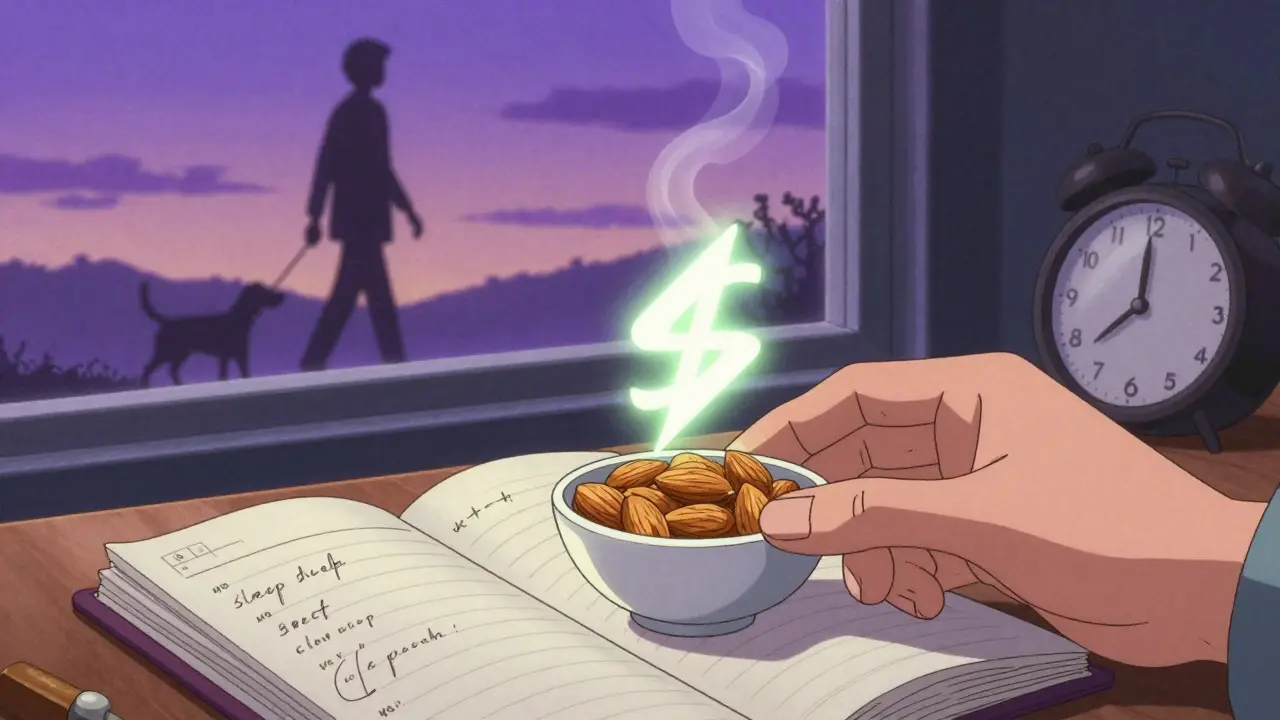
Some foods make medication side effects worse. Aged cheese, cured meats, soy sauce-these are high in tyramine. If you’re on blood pressure meds, tyramine can spike your pressure and keep you awake. Avoid them after 6 p.m. On the flip side, magnesium helps. A 2020 study found that taking 500 mg of magnesium daily reduced insomnia severity by 34.7 points on a standard scale. Good sources? Almonds, spinach, black beans, avocado. Eat a small handful of almonds before bed. It’s simple. It’s safe. And it works.Exercise-But Not Too Late
You’ve heard “exercise helps sleep.” But if you’re on stimulant meds, timing is everything. Working out at 7 p.m. might seem fine. But your body is still revved up. Your heart rate is elevated. Your cortisol is high. Your brain is wired. That’s why the University of Pennsylvania recommends finishing exercise at least 4 hours before bed. Morning walks, lunchtime yoga, afternoon strength training-these are ideal. Even 20 minutes of walking after lunch improves sleep quality more than a pill for many people on antidepressants.When You’re Already on Sleep Meds
If you’re already taking a sleep medication, don’t quit cold turkey. Talk to your doctor. But do start these habits now. A 2022 study from Big Health tracked 2,315 people using the Sleepio CBT-I program. Within six weeks, 71% reported less next-day fog. Their medication didn’t change. Their habits did. Try this: Keep a 3-day sleep log. Write down:- What time you took your meds
- What time you got into bed
- What time you woke up
- How you felt the next day (0-10 scale for grogginess, focus, memory)
The Bigger Picture: Why This Matters
Long-term use of sleep medications carries real risks. A 2015 study of nearly 90,000 people found a 138% higher risk of dementia in those using benzodiazepines or Z-drugs for more than three months. Another study showed a 1.83 times higher dementia risk with long-term use. That’s not a small risk. That’s life-changing. Meanwhile, digital CBT-I programs-like Sleepio and Somryst-are now covered by most insurance plans. They’re proven to work better than pills. And they don’t come with black box warnings. The FDA now requires all prescribers to give patients sleep hygiene education before approving long-term sleep meds. Twenty-eight U.S. states require it. The European Medicines Agency limits benzodiazepine prescriptions to 4 weeks. The message is clear: Sleep hygiene isn’t optional. It’s essential.Start Today-Not Tomorrow
You don’t need to overhaul your life. Just pick one thing. Set your alarm for the same time every day. Turn off screens after 8 p.m. Eat a handful of almonds before bed. Walk for 20 minutes after lunch. Do that for 21 days. That’s how long it takes to rewire your brain’s sleep clock. Medications may be part of your life. But they don’t have to control your nights.Good sleep isn’t a luxury. It’s a medical necessity. And you don’t need another prescription to get it.
Can sleep hygiene replace my sleep medication?
Sleep hygiene won’t instantly replace your medication, but it can reduce your reliance on it. Many people find they need lower doses-or can stop entirely-after following consistent sleep hygiene for 6-8 weeks. Always work with your doctor before making changes. The goal is to use the least amount of medication possible while still getting restful sleep.
Why does my blood pressure medication keep me awake?
Beta blockers like metoprolol and atenolol lower melatonin production by up to 37%. Melatonin is your body’s natural sleep signal. Less of it means your brain doesn’t get the cue to wind down. Taking your beta blocker in the morning instead of at night can help. Pair that with morning light therapy to reset your internal clock.
I take zolpidem but still feel groggy. What’s going on?
Zolpidem has a narrow therapeutic window. If you don’t get 7-8 hours of uninterrupted sleep after taking it, the drug doesn’t fully clear your system. That’s why you feel hungover. The FDA recommends taking it only if you can sleep for at least 7 hours. Also, avoid alcohol and heavy meals before bed-they slow how fast your body processes it.
Is it safe to take magnesium with my other meds?
Magnesium is generally safe and well-tolerated, even with most medications. But if you’re on kidney medications or certain antibiotics, talk to your doctor first. For most people, 500 mg of magnesium glycinate or citrate before bed helps reduce insomnia without interactions. Food sources like spinach and almonds are even safer.
How long does it take for sleep hygiene to work?
You might notice small improvements in 3-5 days-like falling asleep faster or waking less often. But real, lasting change takes 21 days. That’s how long it takes your brain to relearn your sleep rhythm. Stick with it. Track your progress. The data shows 71% of people see major improvement in next-day fog within 6 weeks.
Are digital CBT-I programs worth it?
Yes. Programs like Sleepio and Somryst are backed by clinical trials and now covered by most insurance plans. They’re more effective than sleep meds for long-term results and carry zero risk of dependence or dementia. If you’re on medication for sleep, this is the best next step.
Jodi Harding
January 16, 2026 AT 20:04This hit me like a truck. I’ve been on Prozac for 5 years and thought my insomnia was just ‘me.’ Turns out, it’s the damn pill. I started setting my alarm for 6:30 every day-weekends included-and within 10 days, I fell asleep faster. No more 3 a.m. panic spirals. 🙌
Kristin Dailey
January 18, 2026 AT 11:10Why are we letting Big Pharma tell us how to sleep? We used to just go to bed when tired. Now we need a 12-step program just to turn off our brains. This is what happens when you outsource your biology to a pill.
Pat Dean
January 20, 2026 AT 03:58Oh wow, another ‘sleep hygiene’ cult post. You think eating almonds and turning off your phone is going to fix what SSRIs and beta blockers do? Wake up. The system is rigged. Your meds are being pushed because they’re profitable-not because they’re safe. You’re being manipulated.
Jake Moore
January 20, 2026 AT 19:15Love this breakdown. Seriously. I’m a nurse and I see this every day-people on 3 sleep meds, exhausted, and no one ever talks about timing or light exposure. Start with the alarm. Do it for 3 days. Then come back and thank me. You’ll be shocked how much better you feel.
Joni O
January 22, 2026 AT 10:29OMG YES. I did the 21-day alarm thing and it changed EVERYTHING. I used to take Ambien and wake up like a zombie. Now I just take magnesium and read under a red lamp. I still take my BP med, but I moved it to morning. I’m not cured, but I’m not dying anymore 😭
Ryan Otto
January 23, 2026 AT 11:53Let me be clear: This is a manufactured crisis. The FDA’s ‘black box’ warning is a PR move to deflect blame from their own regulatory failures. The real issue? Genetic predisposition to melatonin suppression. You’re not broken. Your DNA is. And no amount of ‘light therapy’ will fix that. The system is designed to keep you compliant.
Max Sinclair
January 25, 2026 AT 04:51Thank you for writing this. I’ve been too scared to talk about my meds messing with my sleep. This feels like permission to try something else. I’m starting with the almonds and the fixed wake-up time. No pressure, no guilt. Just one small step. That’s all I need right now.
Praseetha Pn
January 25, 2026 AT 14:07Almonds? Really? You think a snack fixes what Big Pharma engineered? The real truth? Your meds are laced with neurotoxins to keep you docile. The government knows. The WHO knows. That’s why they’re pushing ‘sleep hygiene’-it’s a distraction. Try grounding yourself barefoot on concrete at 4 a.m. That’s the real fix. I’ve been doing it for 7 years. My sleep is perfect. No pills. No lies.
Dayanara Villafuerte
January 27, 2026 AT 06:46Y’all are overcomplicating this. 😴 I took my beta blocker at 8 a.m., turned off screens at 9 p.m., ate 10 almonds, and walked after lunch. 3 days later? I slept like a baby. No magic. Just science. Also, stop buying those ‘sleep gummies’-they’re just sugar with a fancy label. 🙃
Andrew Qu
January 28, 2026 AT 17:13I’ve helped over 200 people reset their sleep clocks. The biggest mistake? Trying to do everything at once. Pick one thing. Just one. Do it for 21 days. Don’t check progress daily. Don’t obsess. Just show up. Your body will thank you. You don’t need to fix everything-you just need to start.
kenneth pillet
January 29, 2026 AT 02:40took my atenolol at night for 3 years. switched to morning. slept better. no drama. no new apps. no supplements. just moved the pill. also stopped checking my phone after 9. thats it. im not special. just followed the basics.
Danny Gray
January 29, 2026 AT 16:37What if the real problem isn’t the medication… but the fact that we’re all just too damn busy? We’re not sleeping because we’re addicted to productivity. The pills are just the symptom. You’re not fighting your meds-you’re fighting capitalism. Try quitting your job. See how well you sleep then.
Tyler Myers
January 30, 2026 AT 02:57Anyone who believes this sleep hygiene crap is naive. You think the FDA cares if you get sleep? They care about liability. They care about lawsuits. They care about stock prices. Your ‘natural rhythm’ is a myth sold by wellness influencers. The truth? You’re a lab rat. And this post is just the next flavor of the month.
Zoe Brooks
January 31, 2026 AT 03:15I used to think sleep was something you earned. Now I know it’s something you protect. Like a garden. You don’t just water it once and call it done. You show up. You pull weeds. You adjust the sun. This isn’t about pills. It’s about respect-for your body, your brain, your life.
Wendy Claughton
January 31, 2026 AT 09:32Thank you for this. 🌿 I’ve been crying at night for months, thinking I was broken. I started the 6:30 alarm last week. I’m still tired. But I’m not terrified anymore. I feel… hopeful. Like maybe, just maybe, I can take back my nights. I’m not fixed. But I’m not lost either. 💙