

Serotonin Syndrome Risk Assessment Tool
Select all medications or substances currently being taken.
Check any symptoms experienced within the last 24 hours.
Analysis Result
Recommended Action Plan
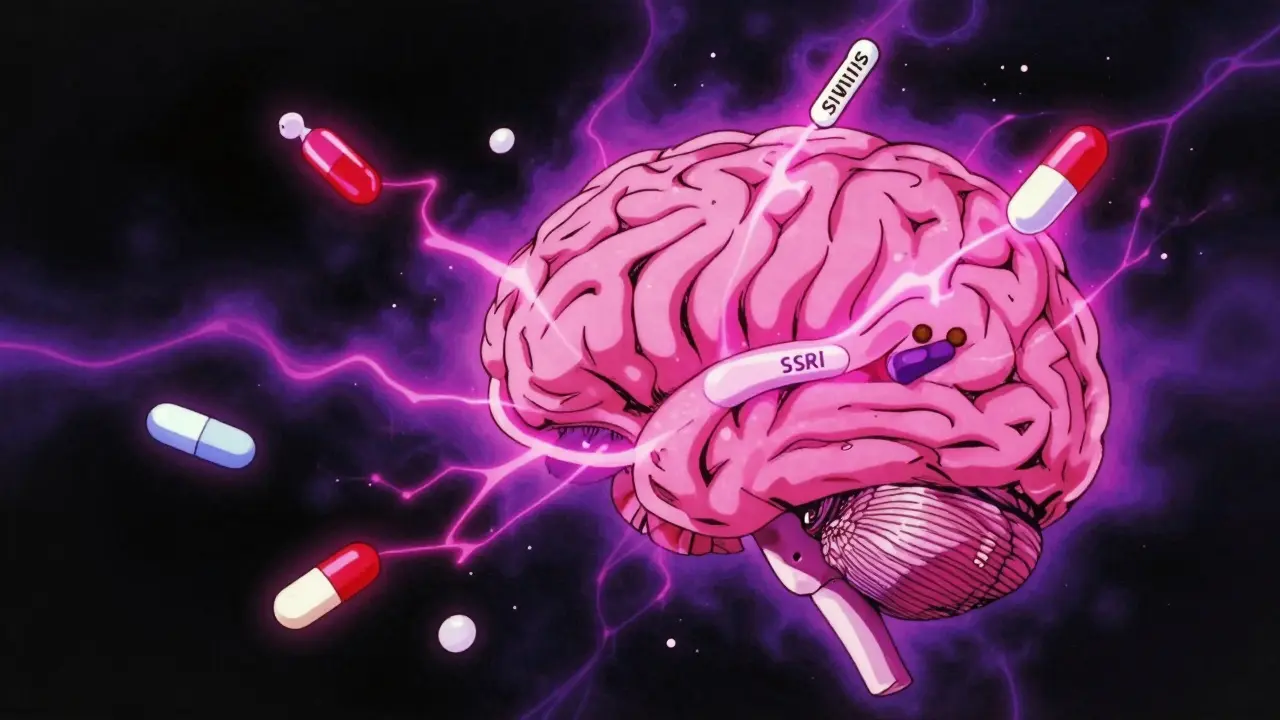
You take your morning antidepressant. You pop a migraine pill later in the day. Two hours pass, and suddenly you feel like you’re vibrating from the inside out. Your heart races. You sweat through your shirt without moving. This isn’t just anxiety or a bad flu. It could be serotonin syndrome, a potentially life-threatening reaction to medications that boost serotonin levels.
Serotonin is a neurotransmitter that helps regulate mood, sleep, and digestion. When it accumulates to toxic levels in your brain and body, it causes a cascade of severe symptoms. According to data from the Centers for Disease Control and Prevention (CDC), hospitalizations for this condition rose by 34% between 2011 and 2021 as antidepressant use became more common. Understanding what triggers this reaction, how to spot the warning signs, and what to do in an emergency can save your life or the life of someone you care about.
What Is Serotonin Syndrome?
Serotonin syndrome is a serious condition caused by excessive serotonergic activity in the central nervous system. It was first clinically recognized in 1960 when patients taking monoamine oxidase inhibitors (MAOIs) combined with tryptophan supplements developed severe symptoms. Today, it remains a critical medical concern because it can progress rapidly to hyperthermia exceeding 106°F (41.1°C), organ failure, and death if not treated immediately.
The intensity of the symptoms correlates directly with how much excess serotonin is present. While mild cases might resolve quickly once the offending drug is stopped, severe cases carry a mortality rate between 2% and 12%, according to NCBI StatPearls. The key takeaway? Speed matters. Recognizing the signs early prevents the situation from becoming fatal.
Common Causes and Dangerous Combinations
Most cases of serotonin syndrome happen when people take two or more drugs that affect serotonin levels simultaneously. About 80% of cases involve multiple serotonergic agents. The risk is highest within 24 hours of starting a new medication or increasing a dose.
Here are the primary culprits:
- Selective Serotonin Reuptake Inhibitors (SSRIs): Common antidepressants like fluoxetine (Prozac), sertraline (Zoloft), citalopram (Celexa), and escitalopram (Lexapro).
- Serotonin-Norepinephrine Reuptake Inhibitors (SNRIs): Drugs like venlafaxine (Effexor) and duloxetine (Cymbalta).
- Monoamine Oxidase Inhibitors (MAOIs): Older antidepressants such as phenelzine (Nardil) and tranylcypromine (Parnate). These are particularly dangerous when mixed with other serotonergic drugs.
- Opioids: Certain painkillers like tramadol (Ultram), fentanyl, and meperidine have serotonergic properties.
- Migraine Medications: Triptans like sumatriptan can trigger the syndrome when combined with antidepressants.
- Over-the-Counter Supplements: St. John’s Wort is a well-known herbal supplement that significantly increases serotonin levels.
- Illicit Substances: MDMA (ecstasy), cocaine, and LSD can cause acute serotonin toxicity.
A specific mechanism involves enzyme inhibition. For example, if you are stable on an SSRI but then start taking erythromycin (an antibiotic that inhibits CYP3A4 enzymes), your body may stop breaking down the antidepressant fast enough, leading to toxic buildup. A case report documented a 12-year-old developing serotonin syndrome after being prescribed erythromycin while already taking sertraline.
Recognizing the Symptoms: The Hunter Criteria
Diagnosing serotonin syndrome relies on the presence of three main categories of symptoms: neuromuscular abnormalities, autonomic hyperactivity, and mental state changes. Doctors often use the Hunter Serotonin Toxicity Criteria, which has 84% sensitivity and 97% specificity for diagnosis.
To meet these criteria, you must be taking a serotonergic agent and exhibit at least one of the following combinations:
- Spontaneous clonus: Rhythmic muscle contractions that happen without stimulation.
- Inducible clonus plus agitation or diaphoresis: Muscle spasms triggered by stretching the ankle, accompanied by restlessness or heavy sweating.
- Ocular clonus plus agitation or diaphoresis: Rapid eye movements combined with restlessness or sweating.
- Tremor plus hyperreflexia: Shaking hands or limbs along with overactive reflexes (knee-jerk reactions that are too strong).
- Hypertonia plus temperature above 100.4°F (38°C) plus ocular or inducible clonus: Muscle stiffness, fever, and eye/muscle twitching.
Neuromuscular symptoms are often the first to appear. Tremors-described as a "shaking or jittery feeling"-are the most common initial sign. Other physical signs include heavy sweating unrelated to exercise, shivering, diarrhea (occurring in about 70% of cases), and uncoordinated movements (ataxia).
Emergency Response: What To Do Now
If you suspect serotonin syndrome, time is critical. Failure to recognize the condition within the first six hours of symptom onset increases mortality risk by 300%. Here is the step-by-step emergency protocol:
1. Stop All Serotonergic Agents Immediately
The universal first step is discontinuing all medications that increase serotonin. Do not wait for a doctor’s appointment. If you are unsure which pills to stop, bring all your medication bottles to the emergency room.
2. Seek Immediate Medical Attention
Call 911 or go to the nearest ER. Tell the triage nurse specifically: "I am worried about serotonin syndrome." Mention every drug, supplement, and illicit substance taken in the last 48 hours.
3. Supportive Care in the Hospital
For mild cases, doctors may administer benzodiazepines like lorazepam (Ativan) to control agitation and tremors. Patients are monitored until symptoms resolve, which typically takes 24-72 hours.
4. Treatment for Moderate to Severe Cases
If symptoms are severe, hospitalization is required. Treatments include:
- Cyproheptadine (Periactin): A serotonin antagonist given orally or via nasogastric tube. The standard dose is 12 mg initially, followed by 2 mg every 2 hours, up to a maximum of 32 mg in 24 hours.
- Aggressive Cooling: External cooling methods to reduce hyperthermia, which can exceed 106°F.
- Intravenous Fluids: To maintain hydration and blood pressure.
- Intubation: Mechanical ventilation may be needed if respiratory failure occurs.

Differentiating From Other Conditions
Serotonin syndrome is frequently misdiagnosed. It looks similar to Neuroleptic Malignant Syndrome (NMS), malignant hyperthermia, or anticholinergic toxicity. However, the treatments differ drastically. Giving the wrong medication can worsen the condition.
| Feature | Serotonin Syndrome | Neuroleptic Malignant Syndrome (NMS) |
|---|---|---|
| Onset | Rapid (hours to days) | Slower (days to weeks) |
| Muscle Tone | Hyperreflexia, myoclonus, tremors | Lead-pipe rigidity (stiffness) |
| Reflexes | Overactive (hyperreflexia) | Normal or decreased |
| Caused By | Serotonergic drugs (SSRIs, MAOIs) | Antipsychotics (dopamine blockers) |
| Key Symptom | Clonus (rhythmic twitching) | Rigidity and high fever |
Distinguishing these conditions is vital. NMS is treated with dopamine agonists, while serotonin syndrome requires serotonin antagonists like cyproheptadine. Misdiagnosis leads to inappropriate treatment and higher risks.
Prevention Strategies
You can significantly reduce your risk by practicing strict medication reconciliation. The American Academy of Family Physicians recommends reviewing all medications, including over-the-counter products and supplements, during every patient encounter.
Follow these safety rules:
- Wait Periods: If switching from an MAOI to an SSRI, wait 14 days. If stopping fluoxetine (Prozac) before starting an MAOI, wait five weeks due to its long half-life.
- Check Interactions: Use pharmacy software or ask your pharmacist about interactions before adding new drugs like antibiotics or painkillers.
- Monitor Early Signs: Be aware of subtle changes like increased jitteriness, sweating, or diarrhea when starting a new antidepressant.
- Educate Yourself: Resources like the National Alliance on Mental Illness (NAMI) provide checklists that improve early recognition by 78% in pilot studies.
Electronic health record alerts have reduced incidence by 22%, but they also generate false positives. Don’t rely solely on digital warnings; understand your own medication profile.
How quickly does serotonin syndrome develop?
Symptoms typically appear within 24 hours of initiating a new serotonergic medication or increasing the dose. In some cases, especially with rapid absorption drugs, symptoms can start within a few hours.
Can you recover from serotonin syndrome?
Yes, most patients recover fully with prompt treatment. Mild cases resolve within 24-72 hours after stopping the offending drugs. Severe cases may require intensive care but have a good prognosis if recognized early.
Is St. John’s Wort safe to take with antidepressants?
No. St. John’s Wort increases serotonin levels and can trigger serotonin syndrome when combined with SSRIs, SNRIs, or MAOIs. Always consult your doctor before adding herbal supplements to your regimen.
What is the difference between serotonin syndrome and normal side effects?
Normal side effects like mild nausea or headache usually stabilize over time. Serotonin syndrome involves progressive neuromuscular symptoms like tremors, clonus, hyperreflexia, and autonomic instability like high fever and rapid heart rate. It worsens rather than improves.
Which opioids cause serotonin syndrome?
Opioids with serotonergic activity include tramadol, fentanyl, meperidine, methadone, and dextromethorphan (found in some cough syrups). Avoid combining these with antidepressants unless closely monitored by a specialist.