
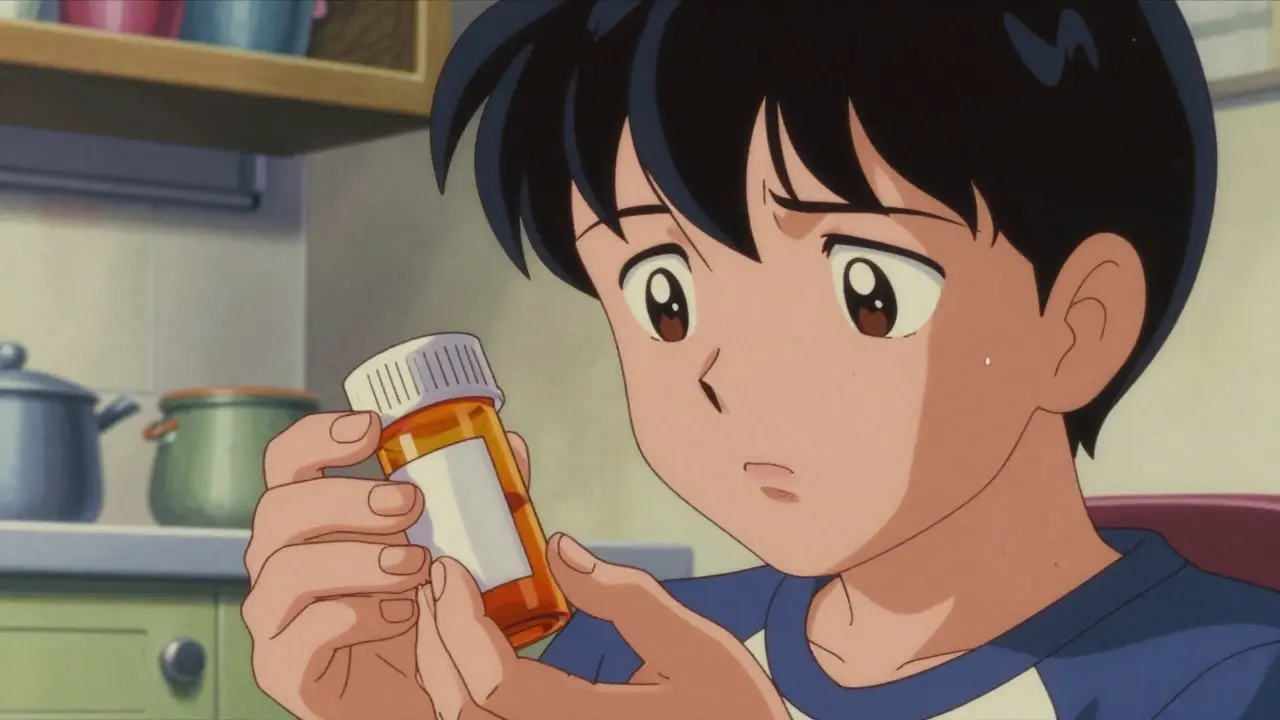
The Safety Threshold: What is an Expiration Date?
An Expiration Date is a scientifically determined date that marks when a medication's potency and safety can no longer be guaranteed by the manufacturer. It's essentially a "best before" date for your health. Pharmaceutical companies conduct rigorous stability testing to see how long a drug stays effective under specific storage conditions. Once you hit that date, the active ingredients may break down, meaning the drug might not work as well-or at all.
On your label, this is often listed as the "Discard By" date. For most non-sterile medications, pharmacies set this at one year from the day it was dispensed. However, if you have refrigerated products, that window is usually much shorter-often only 30 days. The FDA is very clear here: you should not use medication after the use-by date listed on the label. While some studies show many drugs stay potent for a while after the date, pharmacists cannot legally dispense them, and you shouldn't risk your health on a guess.
The Paperwork Deadline: What is a Refill-By Date?
Unlike the expiration date, a Refill-By Date (also known as a Refill-Through Date) is an administrative deadline that determines the final date you can request more medication before you need a brand new prescription from your doctor. This date has nothing to do with whether the pills in your bottle are still "good." Instead, it's about the legal authorization provided by your healthcare provider.
Think of it like a coupon with an expiration date. The product is still fine, but the "deal" (your permission to get more) has expired. Most standard prescriptions allow refills for one year from the original fill date. However, if you are taking controlled substances, such as those under DEA Schedule II regulations, these rules are much stricter, and refills often expire in just six months. If you miss this window, you can't just walk into the pharmacy; you'll have to wait for your doctor to send a new authorization, which can take several business days and leave you without your medication.
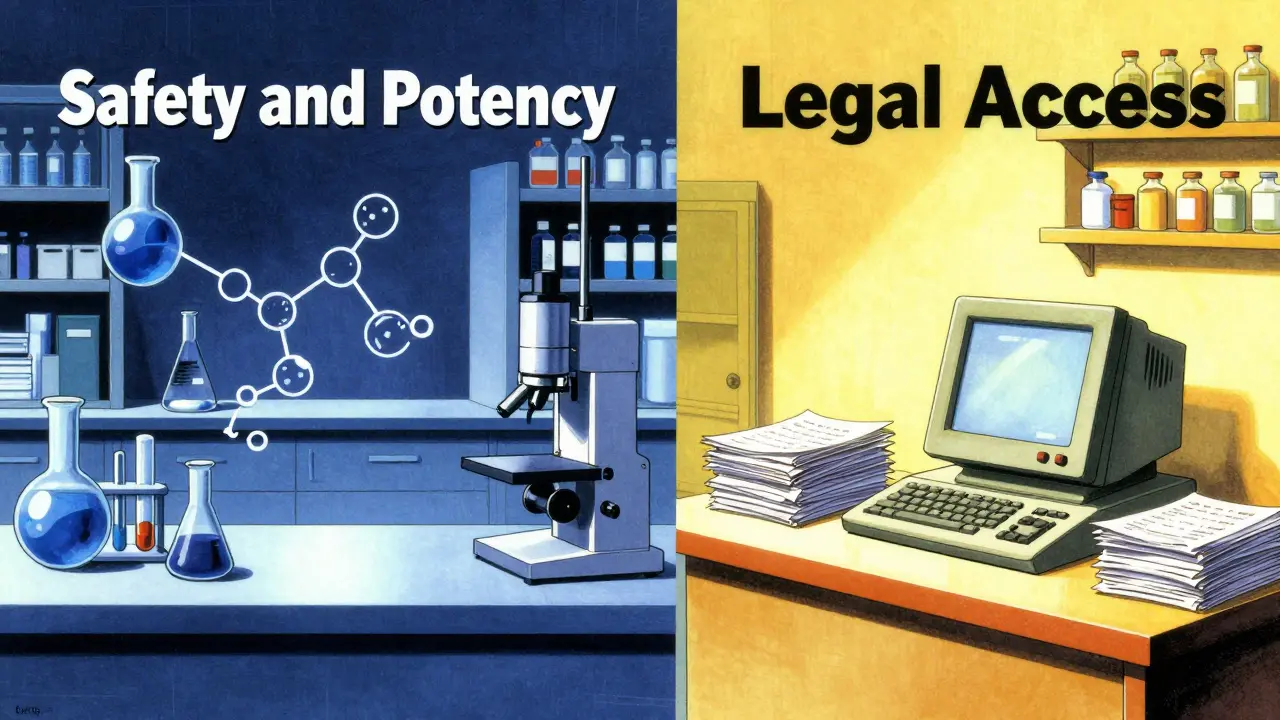
Key Differences at a Glance
If you're still feeling a bit hazy, the easiest way to remember is: Expiration = Safety and Refill-By = Access. One tells you if the medicine is safe to swallow; the other tells you if the pharmacy is allowed to give you more.
| Feature | Expiration Date | Refill-By Date |
|---|---|---|
| Core Purpose | Ensures chemical potency and safety | Manages legal prescription authorization |
| Determined By | FDA stability testing & pharmacists | Prescribing doctor & state laws |
| Typical Duration | 1 year (non-sterile) or 30 days (refrigerated) | Typically 1 year (6 months for controlled substances) |
| Result of Passing Date | Medication may be ineffective or unsafe | Pharmacy cannot refill without a new script |
Why This Confusion Happens (and Why It Matters)
It sounds simple, but in the heat of a busy day, it's easy to glaze over a label. Many people see a date, assume it means the medicine is "spoiled," and toss it. This is a huge problem for people with chronic conditions. For instance, someone managing hypertension might accidentally discard their meds because the refill window closed, even though the pills themselves were still safe. This leads to "medication gaps," where a patient goes several days without treatment while waiting for a doctor's office to respond to a refill request.
This isn't just a personal annoyance-it's a systemic issue. A significant number of treatment interruptions occur because beneficiaries, especially those on Medicare Part D, find that their insurance refill cycles don't align with the dates on their bottles. When you combine that with confusing terminology, it's a recipe for stress.
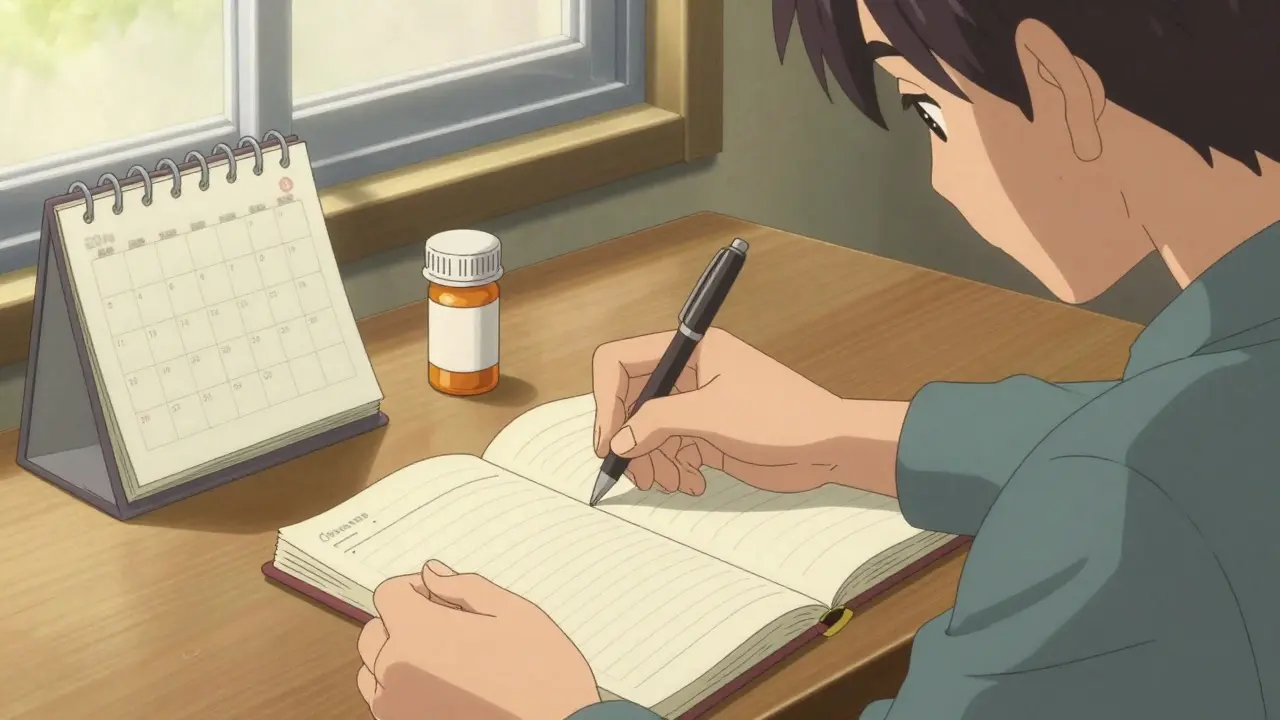
Pro Tips for Managing Your Meds
You don't have to be a pharmacy expert to get this right. A few simple habits can prevent you from running out of medicine or using something expired. Try these strategies:
- Set Two Reminders: Don't just track when you're low on pills. Set a calendar alert for 7 days before your Refill-By Date. This gives you a buffer to contact your doctor if a new prescription is needed.
- Maintain a Simple Log: Keep a notebook or a digital list with the medication name, the date you got it, and the specific "Discard By" date.
- Ask for Clarification: When you pick up a new script, ask the pharmacist, "Which date here is for the drug's safety, and which is for the refill limit?" They spend a significant amount of time verifying these dates, so they're happy to point them out.
- Use Technology: Some major pharmacies are starting to use color-coded labels-often red for safety-critical expiration dates and blue for administrative dates. If your pharmacy does this, memorize the color code.
What to Do When Dates Clash
What happens if your refill date has passed, but you still have a month's worth of medication that hasn't expired? In this case, the medication is still safe to take, but you are effectively "out of refills." You should contact your doctor immediately to request a renewal. Do not wait until you are on your last two pills, as processing a new authorization can take a few days.
On the flip side, if your refills are still active but the medication has reached its expiration date, stop using it. Even if you have refills remaining, the chemical stability of the drug is no longer guaranteed. This is the time to call the pharmacy and get a fresh supply, even if you haven't finished the previous bottle.
Can I still take medicine if the refill date has passed but the expiration date hasn't?
Yes. The refill date only affects whether the pharmacy can give you more medicine. If the expiration date (or "Discard By" date) has not passed, the medication is still considered safe and effective to use.
Is the expiration date on the bottle the same as the one on the original manufacturer's box?
Not necessarily. While the manufacturer provides a general shelf-life, pharmacists often apply a "pharmacy-dispensed" expiration date. For example, if a drug is moved from a bulk bottle into a small plastic vial, it may have a shorter lifespan (often one year) than it did in the original factory packaging.
Why do some prescriptions expire in 6 months instead of a year?
This usually happens with controlled substances. Due to DEA regulations and the higher risk of misuse, the authorization period for these medications is often shorter to ensure patients are being monitored more frequently by their doctors.
What should I do if I accidentally threw away unexpired medicine because the refills expired?
Unfortunately, once medication is discarded, it cannot be recovered. Your best bet is to contact your doctor for a new prescription. To avoid this in the future, always check for the "Discard By" date specifically before tossing any medication.
How often should I check these dates?
It's a good habit to check your labels every time you start a new bottle or every few months for long-term prescriptions. This ensures you aren't caught off guard by an expired authorization or an outdated medication.
Caroline Duvoe
April 21, 2026 AT 15:42basically just common sense lol 🙄
Mayur Pankhi Saikia
April 22, 2026 AT 21:35Silly me, but the sheer lack of nuance in the stability tests mentioned here is simply... appalling!!! Does the author truly believe the average person lacks the basic cognitive capacity to distinguish a date?? Ridiculous...!!
Divyanshu Giri
April 24, 2026 AT 04:44Keep it simple and stay winning! Just double check those dates and you are golden 🚀
Ajinkya Joshi
April 24, 2026 AT 17:41Wow, a whole guide on how to read a label. Truly a masterclass in stating the obvious. I'm sure this will revolutionize healthcare as we know it.
Sarah Watters
April 26, 2026 AT 01:32The FDA stability testing is just a cover for the big pharma cycle of planned obsolescence. They want you tossing meds that are still good just so you buy more from their corporate overlords. It's all about the profit margins and keeping us under their thumb.
Dan Wizard
April 27, 2026 AT 00:50I find it quite fascinating that the dispensing process itself can actually alter the chemical shelf-life of a medication simply by moving it from a bulk container to a plastic vial, and it makes me wonder if there are other environmental factors we should be considering when storing our medicines at home to ensure they remain as potent as possible for the duration of their use.
Anastasios Kyriacou
April 27, 2026 AT 16:16too much reading for something i can just ask the guy at the counter anyway lol
Olayinka Ibukunoluwa Mercy
April 29, 2026 AT 10:27This is such a helpful reminder for everyone!!! Please, make sure you take a moment to double-check your bottles today... it could really save you from a lot of stress later on!!! 🌟💖
Rick Brewster
April 30, 2026 AT 10:28one must ponder the inherent duality of time as expressed through the administrative and the chemical... a mere date is not just a number but a boundary between utility and waste and yet we stumble over these thresholds because our minds are too cluttered with the mundane aspects of existence to perceive the truely elemental nature of such a distinction lol
RAJESH MARAVI
May 2, 2026 AT 07:22LMAO imagine actually following the FDA's rules like a sheep!! The logic is totally flawed and this whole system is a joke... honestly just keep the pills forever lol!!
Ally Warren
May 2, 2026 AT 16:49The intersection of legal authorization and biological efficacy is where the human experience of illness becomes a bureaucratic process. It's a reflection of how we prioritize systemic order over individual intuition.
Anantha Lakshmi
May 4, 2026 AT 00:23Exactly! Let's just all stay organized and help each other out 🌈✨
Odicha ude Somtochukwu
May 4, 2026 AT 18:44It is indeed most prudent to follow these guidelines to avoid any disruption in one's health regimen... Proper adherence to these dates ensures a seamless transition between prescriptions!!