
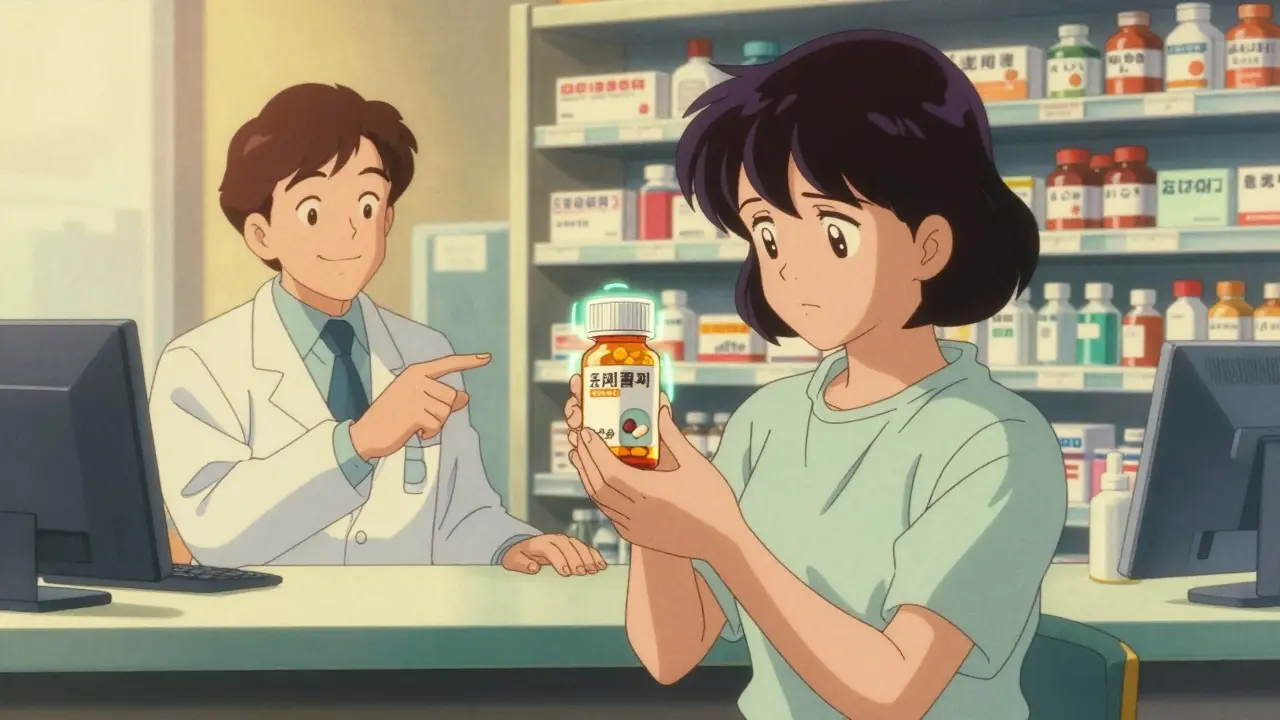
When you pick up a prescription and see a different-looking pill than what you’re used to, it’s natural to wonder: Is this the same thing? If you’ve ever felt confused, nervous, or even skeptical about a generic drug, you’re not alone. Many people assume generics are cheaper because they’re less effective. That’s not true-and here’s what you need to know before you leave the pharmacy.
Generics aren’t "second-best"-they’re exact copies
The FDA doesn’t just approve generic drugs lightly. Every generic medication must contain the same active ingredient, in the same strength, same dosage form (tablet, capsule, liquid), and same route of administration (oral, injectable, etc.) as the brand-name version. That’s not a suggestion-it’s a legal requirement. The FDA calls this "therapeutic equivalence." In simple terms, if your brand-name drug works, the generic will work the same way.Here’s the science behind it: generics must prove they deliver the same amount of medicine into your bloodstream within a very tight range-between 80% and 125% of the brand-name drug. That’s not a wide gap. It’s stricter than the variation you’d see between two batches of the same brand-name pill. Think of it like two identical recipes: one made by a big company, the other by a smaller one. Same ingredients, same process, same result.
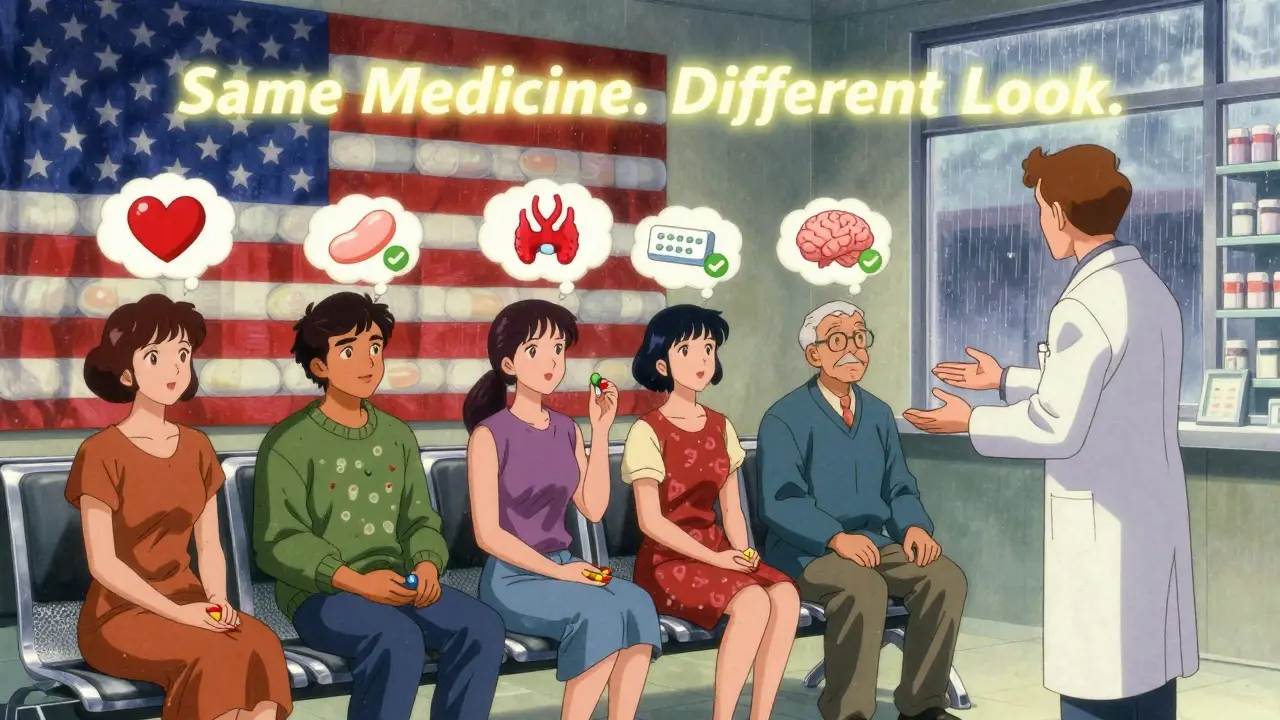
What’s different? The color, shape, or packaging. Those are inactive ingredients-dyes, fillers, or coatings-that don’t affect how the medicine works. But they can cause confusion. A 2019 survey found that 31% of patients stopped taking their medication simply because it looked different. That’s why good pharmacy counseling starts with showing you the pill, explaining why it changed, and confirming you understand it’s still the same treatment.
What your pharmacist is legally required to tell you
In the U.S., federal law (OBRA '90) requires pharmacists to counsel patients when dispensing medications, especially when switching to a generic. This isn’t optional-it’s part of getting paid by Medicaid and Medicare. Here’s what they must cover:- That this is a generic version of your previous medication
- The generic name and brand name (e.g., "atorvastatin" instead of "Lipitor")
- How and when to take it
- Potential side effects
- Why it’s cheaper
- That it works just as well
And here’s the part most people miss: they must check if you understand. This is called the "teach-back" method. Your pharmacist might ask: "Can you tell me how you’ll take this pill?" If you say, "I’ll take one at night," they’ll know you got it. If you say, "I think I take it with food?"-they’ll clarify before you walk out.
They also have to document it. Most pharmacies now use a checkbox on your prescription record that says: "Counseling provided-patient accepted." If they didn’t check it, they didn’t meet federal requirements. You have the right to ask: "Did you explain this to me?"
When you should be extra careful
Not all drugs are the same when it comes to switching. Some medications have a "narrow therapeutic index"-meaning there’s a very small difference between a dose that works and one that’s too much or too little. For these, even tiny changes in how your body absorbs the drug can matter.Examples include:
- Warfarin (blood thinner)
- Levothyroxine (thyroid hormone)
- Phenytoin (seizure medication)
- Lithium (mood stabilizer)
In 24 states, pharmacists can’t automatically switch these to generics without your doctor’s approval. Even then, your doctor should monitor your blood levels closely after the switch. If you take one of these, always ask: "Is this substitution safe for my medication?" Don’t assume it’s fine just because it’s labeled "generic."
What no one tells you: inactive ingredients matter
While the active ingredient is identical, the fillers aren’t. A generic version might use lactose, cornstarch, or artificial coloring where the brand used something else. For most people, this doesn’t matter. But if you have allergies or sensitivities, it can.One patient on Drugs.com reported a reaction to a generic blood pressure pill because it contained lactose-something their brand-name version didn’t have. They didn’t know to ask. That’s why good counseling includes this question: "Do you have any known allergies to dyes, gluten, lactose, or sulfites?" If you do, say so. Your pharmacist will check the inactive ingredients list and tell you if the generic is safe for you.
There are 14 high-risk medication classes where inactive ingredients are most likely to cause issues, according to updated 2023 guidelines. If you’re on any of these, don’t hesitate to ask: "What’s in this pill besides the medicine?"
Why this matters: savings and adherence
Switching to generics saves money-for you and the healthcare system. In 2021, 90.8% of all prescriptions filled in the U.S. were generics. That saved $1.9 trillion between 2009 and 2019. But here’s the catch: if you don’t take your medicine because you’re unsure about it, the savings disappear.A 2018 study of over 12 million patients found that when people were properly counseled about generics, their medication adherence improved by 8.2%. That means more people took their pills on time, fewer ended up in the hospital, and fewer needed expensive treatments later.
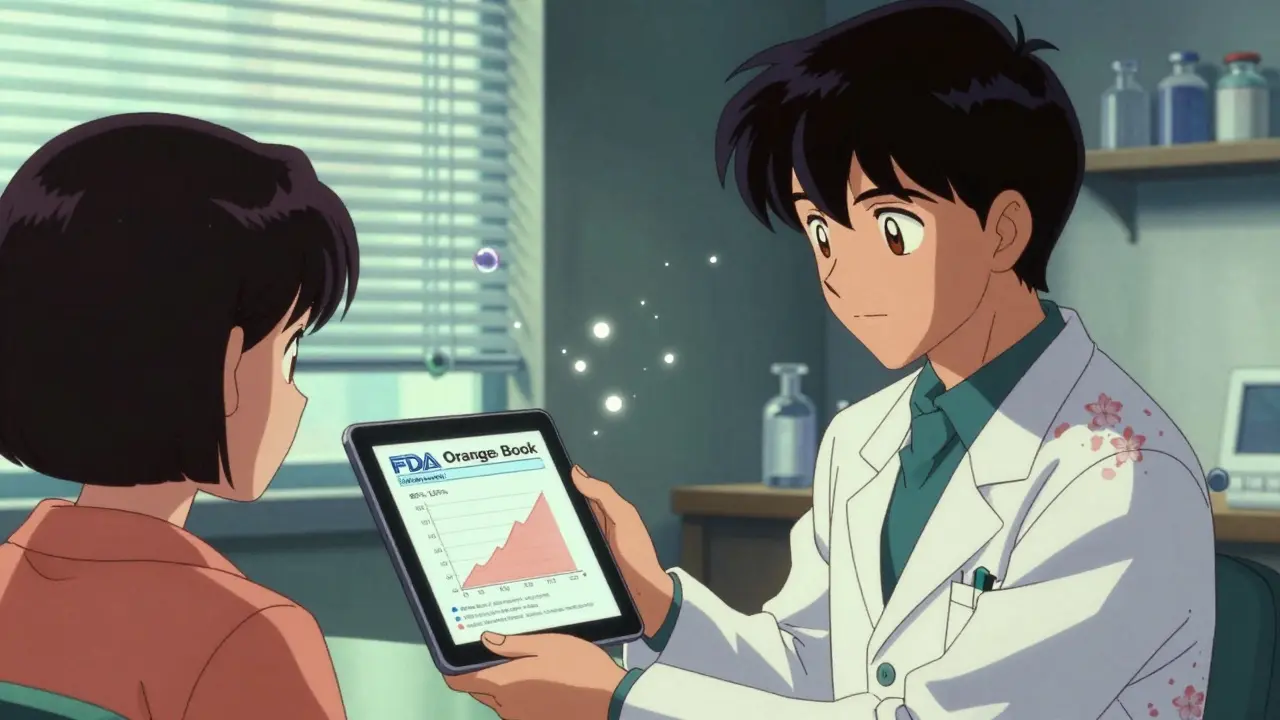
One patient, SarahJ, posted on PatientsLikeMe: "My pharmacist took 10 minutes to explain how generics work and showed me the FDA Orange Book entry for my medication. I switched to the generic and saved $300/month without any difference in effectiveness." That’s what good counseling looks like.
What to do if you’re unsure
If you walk away from the pharmacy still confused, don’t guess. Go back. Call. Ask your doctor. You have rights:- You can refuse a generic substitution-even if it’s cheaper.
- You can ask for the brand-name version if you’ve had a bad reaction to a generic before.
- You can request a printed handout or video explanation (some pharmacies now offer these).
- You can ask to see the FDA’s Orange Book entry for your drug. Yes, it’s real. Your pharmacist has access to it.
And if you’re in a state that requires consent before substitution (like California, Texas, or Florida), the pharmacist must get your verbal or written approval before switching. If they didn’t, they broke the law.
What’s changed in 2025
In January 2022, the FDA updated its Orange Book to give clearer ratings for generics-"AB" means fully equivalent. Pharmacists now use this to explain exactly which generic you’re getting. In 2023, CMS required pharmacies to offer counseling in the patient’s top 100 languages. Video-based education tools are now being tested in 23 states-and early results show 37% more patients feel confident about generics after watching a short video.Bottom line: The science hasn’t changed. Generics work. But your understanding does. The more you ask, the better you’ll manage your health-and save money doing it.
Are generic drugs really as good as brand-name drugs?
Yes. The FDA requires generics to have the same active ingredient, strength, dosage form, and route of administration as the brand-name drug. They must also prove they deliver the same amount of medicine into your bloodstream within a strict range (80-125%). Over 40 years of data and 147 clinical studies confirm that generics work just as well in 99.5% of cases.
Why does my generic pill look different?
The color, shape, or size of a generic pill is determined by its inactive ingredients-like dyes or fillers-which are not required to match the brand. These don’t affect how the medicine works. But they can confuse patients. A good pharmacist will explain this upfront. If you’re unsure, ask: "Is this the same medicine, just a different look?"
Can I ask for the brand-name drug instead of the generic?
Yes. You have the right to refuse a generic substitution. If you’ve had a bad reaction to a generic before, or if you’re unsure, tell your pharmacist. Your doctor can write "Dispense as Written" or "Do Not Substitute" on the prescription. Be aware: your insurance may require you to pay more if you choose the brand-name version.
What if I’m allergic to certain ingredients?
Always tell your pharmacist about allergies to lactose, gluten, dyes, or sulfites. While the active ingredient in a generic is identical to the brand, the inactive ingredients (fillers, coatings) can differ. Some generics contain ingredients the brand doesn’t. Pharmacists now check for 14 high-risk medication classes where this matters most. Ask: "What’s in this pill besides the medicine?"
Do pharmacists have to explain generics before I pick them up?
Yes, by federal law. Under OBRA '90, pharmacists must counsel patients on generic substitutions. This includes explaining the difference between brand and generic names, how to take the drug, potential side effects, and confirming you understand. They must also document whether counseling occurred and whether you accepted or refused the generic. If they didn’t, you can report it.
Andrew Poulin
March 7, 2026 AT 07:30Generics work. Same active ingredient. Same results. Stop overthinking it.
Pharmacist showed me the FDA data. Done. Moved on.
Weston Potgieter
March 8, 2026 AT 10:59Let’s be real-most of these generics are made in China or India. The FDA ‘approval’ is a joke. You think they test every batch? Nah. They rubber stamp it and call it a day. I’ve seen people get weird reactions. Not because of the drug-because of the filler crap they stick in there. Lactose? Gluten? You’re telling me that’s not a problem for someone with sensitivities? Yeah right.
And don’t get me started on the ‘teach-back’ method. Half the pharmacists are on their phone while they nod along. It’s theater. Not care.
Vikas Verma
March 8, 2026 AT 12:44Generic medications represent a paradigm shift in cost-effective therapeutics. The bioequivalence parameters mandated by regulatory authorities ensure clinical equivalence with precision. In India, where we manage 40% of global generic production, we adhere to WHO-GMP standards with 99.7% compliance. The key is not skepticism but education. Pharmacists must be empowered as frontline educators-not just dispensers.
For patients on narrow-therapeutic-index drugs, therapeutic drug monitoring is non-negotiable. Always request lab validation post-switch. Knowledge is power. And power saves lives.
Sean Callahan
March 9, 2026 AT 01:02i just had a panic attack because my pill looked different and i thought i was getting the wrong stuff again. i called my doc and he was like ‘bro it’s generic’ and i was like ‘but it’s not purple anymore??’
now i just stare at the pill for 5 mins before taking it. i’m fine. i think. maybe. idk.
William Minks
March 10, 2026 AT 16:09Good stuff. 🙌
My grandma switched to generic metformin and saved $400 a year. No side effects. Just better budgeting. 🥰
Jeff Mirisola
March 10, 2026 AT 20:35People freak out over pill color like it’s a magic spell. It’s medicine. Not a tattoo.
But seriously-this post nails it. The counseling part? That’s the real win. If your pharmacist doesn’t explain, ask. Demand it. You’re not being difficult-you’re being responsible.
Susan Purney Mark
March 11, 2026 AT 05:21Thank you for writing this. 🌸
I had a patient once who cried because she thought her blood pressure meds stopped working after switching to generic. Turns out, she just didn’t recognize the pill. We sat down, showed her the FDA page side-by-side, and she hugged me. That’s why this matters.
Always ask. Always check. You’re worth the clarity.
Pranay Roy
March 11, 2026 AT 22:57Generics? More like government-approved placebo experiments. The FDA doesn’t test for long-term effects. They test for 28 days. That’s it. Big Pharma and the government are in cahoots to push generics so they can cut costs on Medicare. You think your thyroid med is working? You’re being dosed with 80% of what you need. You think you’re fine? You’re not. You’re just numb.
And don’t even get me started on the ‘inactive ingredients’-they’re not inactive. They’re silent toxins. Glyphosate. MSG. Nanoparticles. You’re being slowly poisoned and nobody’s telling you.
Joe Prism
March 13, 2026 AT 07:47It’s funny how we trust a brand name like it’s a sacrament. But if you think about it-the pill doesn’t care who made it. The molecule doesn’t know if it was made in Ohio or Odisha.
Our fear isn’t about science. It’s about control. We want to know who’s behind the thing we swallow. But maybe the truth is simpler: the science doesn’t need a logo.
Bridget Verwey
March 14, 2026 AT 10:12Oh wow, a whole article about generics and not a single mention of how insurance companies force the switch? Nice.
‘Oh, but it’s the same!’ Yeah, right. Until your deductible goes up 300% because ‘you chose the brand.’
Thanks for the PSA, but let’s not pretend this is about health. It’s about profit. And you? You’re the one paying for it.
PS: I still won’t take a generic for my anxiety meds. No, I don’t have a ‘reaction.’ I just don’t trust the 3am warehouse worker who packed it. 😌
phyllis bourassa
March 15, 2026 AT 01:25Ugh. I had a generic levothyroxine once. Felt like I was slowly turning into a zombie. Went back to brand. Still pay $120/month. Worth it. Your ‘science’ doesn’t fix how you feel. And if your pharmacist can’t even pronounce ‘thyroxine’ right, why should I trust them?
Also-lactose? In a thyroid pill? Really? Who designed this? A toddler?
Ferdinand Aton
March 16, 2026 AT 16:47Wait, so you’re telling me the FDA says generics are identical… but then they say ‘wait, some are AB, some are BX’? So which is it?
Also, why does my generic Adderall make me feel like I’m underwater? Brand works fine. So… maybe they’re not the same?
Just sayin’. Not all pills are created equal. Even if the label says they are.
Ian Kiplagat
March 18, 2026 AT 00:53Interesting. 🇬🇧
Here, we call them ‘generic’ too-but we also have the ‘blue book’ which lists which ones are actually interchangeable. Not all generics are equal. Some are just cheaper copies with no real testing. Still… 90% work fine. Just know your options.
Amina Aminkhuslen
March 19, 2026 AT 02:32Generics? Please. I once took a generic statin and my liver went full meltdown. Took 3 months to recover. Brand? Zero issues. So yeah-science says ‘same.’ My body says ‘hell no.’
And don’t tell me to ‘trust the data.’ I trust my own damn pulse.