

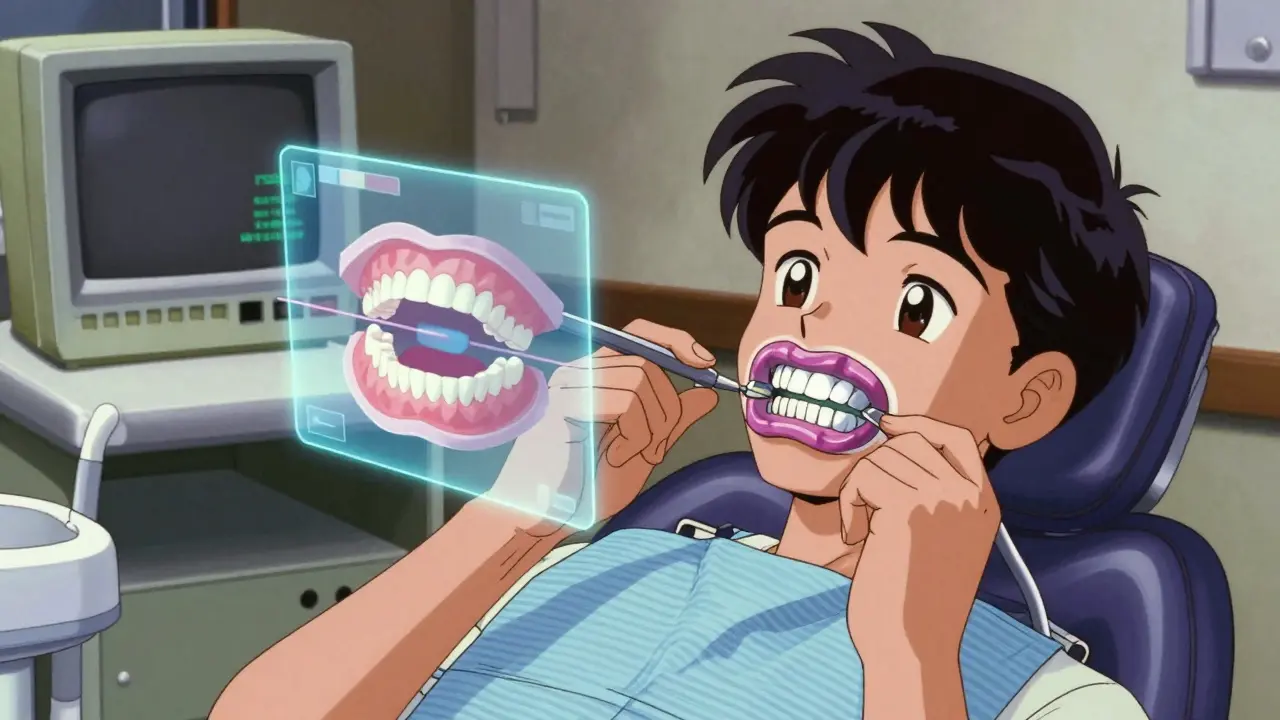
Snoring isn’t just annoying-it’s a sign something’s off in your airway. If you’ve tried pillows, nasal strips, or sleeping on your side with little success, you might be wondering if there’s a better way. Enter oral appliance therapy-specifically, mandibular advancement devices (MADs). These aren’t fancy mouthguards you buy at the drugstore. They’re custom-fitted dental tools designed to move your lower jaw forward just enough to keep your airway open while you sleep. And for millions of people, they’ve changed everything.
How Mandibular Advancement Stops Snoring
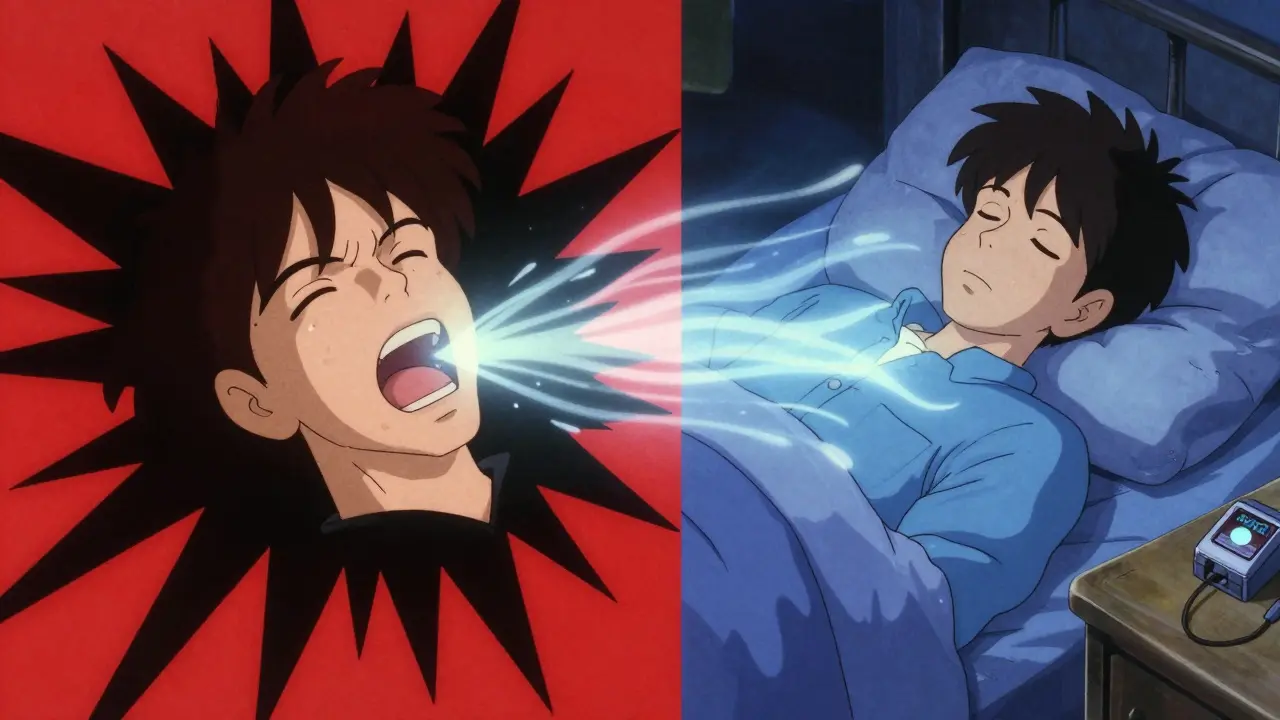
When you sleep, your muscles relax-including those holding your tongue and soft palate in place. Without that support, these tissues can flop backward and vibrate as air passes through. That’s the sound of snoring. A mandibular advancement device works by gently pushing your lower jaw (mandible) forward, which pulls the tongue and soft tissues away from the back of your throat. Think of it like pulling a doorstop forward so the door doesn’t slam shut. The result? A wider, more stable airway and less vibration.
Research shows this isn’t just theory. Studies using sound meters confirm that MADs reduce snoring intensity by 50% to 75% in people who use them consistently. One 2014 study found thermoplastic MADs cut snoring frequency by 63.2% compared to placebo devices. The effect is dose-dependent: the more you advance the jaw (within safe limits), the better the result. Most effective devices allow 8-10 mm of forward movement, which is about 75% of a person’s maximum jaw protrusion.
Custom vs. Over-the-Counter: What Really Works
Not all oral appliances are created equal. There are two main types: custom-fitted and over-the-counter (OTC).
Custom MADs are made by a dentist using dental impressions or digital scans of your mouth. They’re built from semi-rigid acrylic with titanium connectors for durability and precise control. Brands like SomnoDent MAS and TAP 3 are prescription-only and cost between $1,800 and $2,500. These devices let you adjust the jaw position in small increments-0.5 to 1.0 mm at a time-so your dentist can fine-tune the fit for maximum comfort and effectiveness.
OTC options like Zyppah or Good Morning Snore Solution cost around $99. They’re made from thermoplastic that you soften in hot water and bite into to mold. While convenient, they offer only fixed advancement (usually 3-5 mm) and lack the precision of custom devices. A 2015 meta-analysis found custom MADs reduced snoring by 72.3%, while OTC versions only managed 48.6%. If you’re serious about results, the extra cost and trip to the dentist matter.
Who Is a Good Candidate?
Mandibular advancement devices work best for people with mild-to-moderate obstructive sleep apnea-or those who snore without full-blown apnea. But they’re not for everyone.
You’re a good fit if:
- You have at least 6-8 natural teeth in both your upper and lower jaws
- Your temporomandibular joint (TMJ) doesn’t cause pain or clicking
- You don’t have advanced gum disease or loose teeth
- Your snoring is worse when you sleep on your back (positional snoring)
On the flip side, MADs often fail in people with severe anatomical blockages. A 2021 study found that 38.6% of patients with Mallampati class IV airways (very limited throat visibility) saw no improvement. If you’ve been told you have a “small airway” or have tried CPAP and hated it, MADs might be your next step. But if your snoring is accompanied by gasping, choking, or daytime exhaustion, you need a sleep study first. You could have untreated sleep apnea-and MADs alone won’t fix that.
What to Expect When You Start Using One
Getting used to wearing a device in your mouth while you sleep takes time. Most people need 10-14 days to adjust. Here’s what to expect:
- Day 1-7: Excessive saliva, mild jaw soreness, and a feeling of pressure in your teeth. This is normal.
- Week 2-4: Jaw pain fades, but you might still wake up with a slightly tired jaw. Your dentist will likely schedule a follow-up to adjust the advancement.
- Month 1: Most users report consistent nightly use. The 2021 Oral Sleep Appliance Network study found 76.4% of users were wearing their device every night by day 30.
Many dentists recommend wearing the device for an hour or two during the day before bedtime to get used to the feeling. Warm water immersion can help soften thermoplastic components if you’re struggling with fit. Cleaning is simple: brush it daily with a soft toothbrush and mild soap. Never use hot water or bleach-this can warp the material.
Side Effects and Long-Term Risks
Most people tolerate MADs well. But there are risks.
Short-term side effects include:
- Temporary jaw pain or stiffness (reported by 68.3% of users in early use)
- Excessive saliva (42.7%)
- Tooth discomfort or sensitivity (28.9%)
Long-term use can lead to more serious issues. About 25% of users develop permanent changes in their bite over time. Dr. Avram Gold from SUNY warned in 2023 that “approximately 25% of long-term users develop irreversible occlusal changes requiring dental correction.” Some users report their teeth shifting, gaps forming, or even needing orthodontic treatment after 5+ years of use. That’s why regular dental check-ups every 6 months are non-negotiable.
Another concern: MADs don’t cure snoring-they manage it. If you skip a night, snoring usually returns within 48 hours. That’s why adherence is everything. The 2018 SAVE trial showed 76.4% of MAD users stuck with it after a year, compared to just 45.2% for CPAP users. For many, that trade-off-slightly less effectiveness but far better compliance-is worth it.
How It Compares to Other Treatments
Let’s put MADs in context:
| Treatment | Snoring Reduction | Adherence Rate (12 Months) | Cost (USD) | Best For |
|---|---|---|---|---|
| Mandibular Advancement Device (Custom) | 65-75% | 76.4% | $1,800-$2,500 | Mild-to-moderate snoring, CPAP-intolerant |
| Over-the-Counter MAD | 40-50% | 61.2% | $80-$120 | Light snorers, budget-conscious |
| CPAP Machine | 85-95% | 45.2% | $500-$3,000 (with insurance) | Severe OSA, high-risk patients |
| Nasal Dilators | 20-30% | 58.1% | $10-$30 | Nasal congestion-only snoring |
| Positional Therapy | 35-45% | 52.7% | $0-$150 | Back-sleepers only |
CPAP is still the gold standard for stopping snoring completely. But if you can’t stand the mask, the noise, or the feeling of being tethered to a machine, MADs are the next best thing. They’re quiet, portable, and don’t require electricity. That’s why they’re becoming the go-to for travelers, shift workers, and people who just want to sleep through the night without disruption.
The Future of Mandibular Advancement
Technology is catching up. In 2023, the FDA cleared the SomnoDent EVO 3, a MAD with built-in sensors that track snoring and jaw position in real time, syncing data to a smartphone app. By 2024, Sleep Solutions Inc. plans to launch an AI-driven device that adjusts advancement automatically based on your breathing patterns. Researchers are even exploring genetic markers to predict who’ll respond best to MADs-meaning future devices might be personalized not just to your mouth, but to your biology.
For now, the evidence is clear: for the right person, mandibular advancement works. It’s not magic. It’s science. And it’s helping over 1.8 million Americans sleep better every night.
Getting Started: What You Need to Do
If you’re considering a MAD, here’s the realistic path:
- Take a home sleep test or visit a sleep clinic to rule out severe sleep apnea.
- See a dentist who specializes in sleep medicine. They’ll check your teeth, gums, and jaw joint.
- Get custom impressions or a digital scan-don’t skip this step.
- Wait 4-6 weeks for your device to be made and fitted.
- Start with minimal advancement and increase by 1 mm every 3-5 days until snoring stops or you hit your comfort limit.
- Return for follow-ups at 2 weeks, 4 weeks, and then every 6 months.
Insurance rarely covers it-only 38% of U.S. plans do as of 2023. But if you’ve tried everything else and your partner is begging you to do something, the upfront cost might be the best investment you’ve ever made.
Can I use a mouthguard from the drugstore to stop snoring?
Over-the-counter mouthguards designed for teeth grinding are not the same as mandibular advancement devices. They don’t move your jaw forward and won’t help with snoring. Even OTC MADs sold as snoring devices are less effective than custom ones. For real results, you need a device that can be adjusted and fitted by a dental professional.
Do I need a sleep study before getting a MAD?
Yes. Snoring can be a symptom of obstructive sleep apnea (OSA), which carries serious health risks. A sleep study-either at home or in a lab-helps determine if your snoring is isolated or part of a more serious condition. If you have moderate-to-severe OSA, a MAD alone may not be enough. You might need CPAP or another treatment.
How long does it take to see results?
Most people notice a reduction in snoring within the first week. But full adjustment takes 4-6 weeks. Your dentist will gradually increase the jaw advancement over this period to find the sweet spot between effectiveness and comfort. Don’t rush it-pushing too far too fast can cause jaw pain or damage.
Will I need to use this forever?
Yes. MADs don’t fix the underlying cause of snoring-they manage it. If you stop wearing the device, your jaw will return to its resting position, and snoring will come back within 48 hours. It’s a long-term solution, not a cure. But for many, that’s enough: consistent use means quiet nights, better sleep, and a happier partner.
Are there any alternatives if I can’t afford a custom MAD?
If cost is a barrier, try OTC MADs first-they’re far cheaper and still help some people. You can also combine them with positional therapy (sleeping on your side) or nasal strips. But don’t expect the same results as a custom device. If your snoring is loud or accompanied by daytime fatigue, consider asking your doctor about sleep study programs. Some clinics offer payment plans or sliding scale fees for testing and treatment.
Michelle Jackson
March 17, 2026 AT 02:40Sanjana Rajan
March 18, 2026 AT 18:27gemeika hernandez
March 20, 2026 AT 13:07Ryan Voeltner
March 21, 2026 AT 02:32becca roberts
March 21, 2026 AT 16:28Andrew Mamone
March 21, 2026 AT 20:26Kyle Young
March 22, 2026 AT 08:49Emily Hager
March 24, 2026 AT 08:14MALYN RICABLANCA
March 24, 2026 AT 16:19Aileen Nasywa Shabira
March 24, 2026 AT 20:51lawanna major
March 26, 2026 AT 03:39Kendrick Heyward
March 26, 2026 AT 05:44MALYN RICABLANCA
March 26, 2026 AT 08:14