
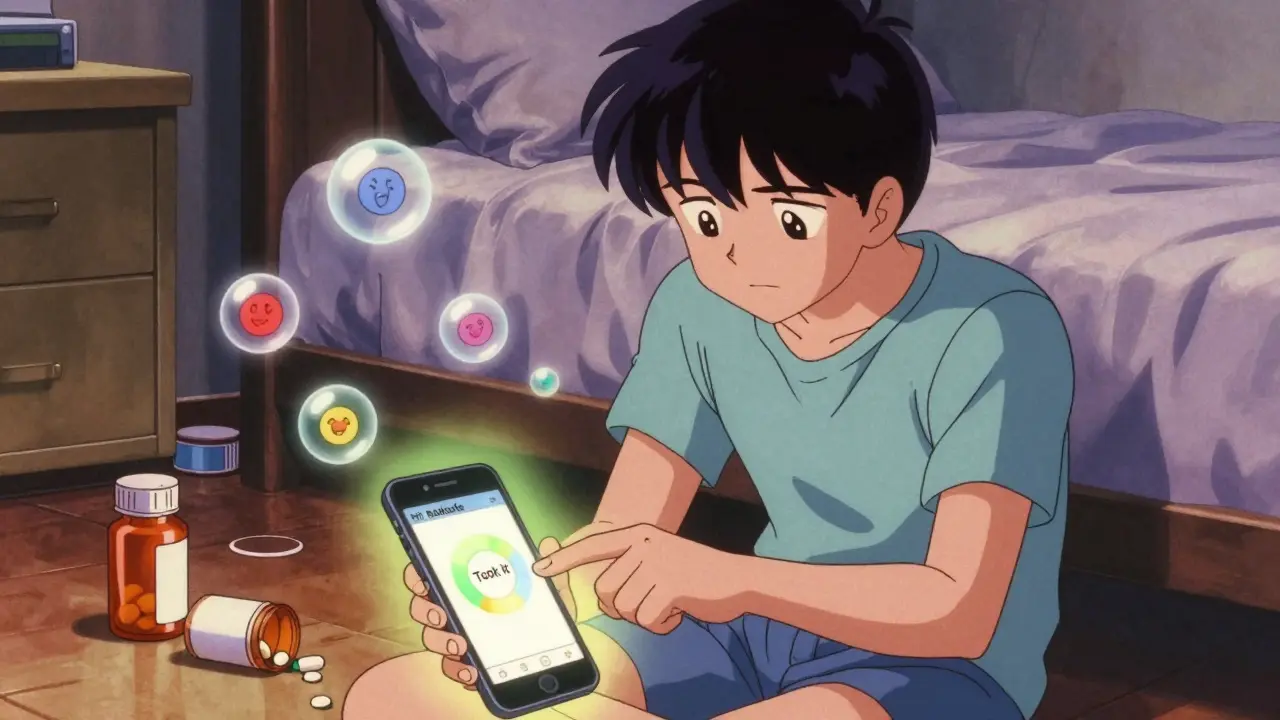
Missing a dose of your blood pressure pill. Forgetting your insulin. Skipping your antidepressant because you’re in a rush. These aren’t just small mistakes-they’re risks to your health. Around half of people with long-term conditions don’t take their meds as prescribed. That’s not laziness. It’s not carelessness. It’s just hard. Life gets busy. Schedules change. Pills pile up. And without a system, it’s easy to fall behind.
That’s where medication timers and apps come in. Not magic. Not a cure. But simple, powerful tools that fit right in your pocket. They don’t replace your doctor. They don’t make your pills work better. But they make it a lot harder to forget.
How These Apps Actually Help
These aren’t just alarm clocks with pill names. Modern medication apps do more than buzz when it’s time to take something. They track what you’ve taken, warn you about dangerous interactions, log side effects, and even sync with your pharmacy to remind you when it’s time to refill.
Take Medisafe, for example. It’s used by over 4 million people. You enter your meds-dosage, time, frequency-and it sends you a reminder. But it also asks: Did you take it? You tap yes or no. Over time, it builds a report. Your doctor can see it. You can see it. And if you miss a dose, it doesn’t just nag. It asks why. Was it too early? Too late? Did you run out? That feedback loop is what makes it stick.
Studies show these apps improve adherence by an average of 0.57 points on the Morisky scale-a real, measurable jump. In one trial, people with diabetes using an app saw their HbA1c drop from 8.2 to 6.9 in six months. That’s not luck. That’s consistency.
What Makes a Good Medication App?
Not all apps are built the same. Here’s what actually works:
- Customizable reminders-You need to be able to set different times for different pills. One at 7 a.m., another at 8 p.m., a third every 12 hours. No app should force you into a one-size-fits-all schedule.
- Medication log-You should be able to see at a glance what you’ve taken today, this week, this month. No scrolling through endless lists.
- Drug interaction checker-If you’re on five meds, you need to know if mixing them could cause trouble. Apps like MyTherapy scan your list and flag risks.
- Progress dashboard-Seeing your adherence rate go from 60% to 92% over three months? That’s motivation.
- Family access-If you’re helping an older parent or a child with a chronic illness, being able to get alerts when they miss a dose is a game-changer.
Apps that skip these features? They’re just alarms with extra buttons. You’ll delete them in a week.
Apps vs. Pill Organizers vs. SMS Reminders
People used to rely on those plastic pill boxes with days of the week. They’re cheap. But they don’t tell you if you took the pill. They don’t warn you if you’re out. And if you forget to fill them? You’re back to square one.
SMS reminders? Better than nothing. But they’re one-way. You get a text: “Take your metformin.” You don’t reply. No one knows if you did. And if you’re on multiple meds? You get 5-6 texts a day. That’s not helpful. That’s noise.
Electronic pill dispensers like MedMinder or Hero? They lock pills in compartments and open them at the right time. Great for some. But they cost $30-$50 a month. You need to plug them in. You need to load them. And if your Wi-Fi goes out? They stop working.
Smartphone apps? They cost $0-$5 a month. They work anywhere. They sync across devices. And they adapt. If you skip a dose, they adjust. If you change your schedule, you update it in seconds. No hardware. No setup. Just your phone.

Who Benefits the Most?
These tools don’t work for everyone-but they work for a lot of people.
People with complex regimens? Yes. Someone taking 8 pills a day for diabetes, high blood pressure, and cholesterol? An app is essential.
People with memory issues? Yes. Early-stage dementia, brain injury, or even just chronic fatigue? Apps can fill the gaps.
Younger adults with mental health meds? Yes. Depression, anxiety, bipolar disorder-adherence is often tied to motivation. Apps that offer encouragement, not just reminders, help.
Older adults? It’s mixed. Many love them. But if you’re not comfortable with smartphones, the setup can be frustrating. The average person under 45 learns an app in 18 minutes. People over 65? About 42 minutes. That’s not a dealbreaker-but it does mean you might need help from a family member or caregiver to get started.
People without smartphones? That’s the gap. Around 15-20% of low-income or rural patients don’t have reliable access. Apps won’t help them. And that’s a problem the industry still hasn’t solved.
Getting Started: A Simple 5-Step Plan
Here’s how to make this work-without the overwhelm:
- Choose one app. Try Medisafe, MyTherapy, or Round Health. All are free to start. Download one and stick with it.
- Gather your meds. Lay out all your pills. Write down the name, dose, and time for each. Don’t guess. Check the bottle.
- Enter your regimen. Type it into the app. Set reminders for each pill. Use different tones for different meds so you know which one you’re being reminded for.
- Test it for a week. Don’t just set it and forget it. See if the alerts come at the right time. Adjust if needed. Turn off notifications during sleep if they’re too loud.
- Share access. If you have someone helping you, give them permission to see your log. That way, they’ll know if you missed something.
It takes 10 to 25 minutes total. Less time than waiting in the pharmacy.
Pitfalls to Avoid
People quit these apps for the same reasons:
- Too many notifications-If you’re getting 10 alerts a day, you’ll turn them off. Use the app’s “quiet hours” feature. Silence alerts during sleep or meetings.
- Complex setup-Don’t try to add every med at once. Start with your top three. Add the rest later.
- Assuming it’ll fix everything-Apps help you remember. They don’t fix side effects, cost issues, or confusion about why you’re taking a pill. Talk to your pharmacist if you’re unsure.
- Ignoring the data-If the app shows you’ve missed 4 doses this week, don’t just shrug. Ask yourself: Why? Was it the time? The side effect? The refill? Fix the cause, not just the symptom.
Also, don’t rely on apps for emergency meds. If you’re on an epinephrine auto-injector or nitroglycerin, you still need to keep it handy and know how to use it without a phone.
What’s Next? AI, Voice, and Better Integration
The next wave is smarter. Medisafe’s “Adherence Coach,” launched in early 2024, uses AI to predict when you’re likely to miss a dose-and sends a gentle nudge before it happens. It’s 84% accurate in testing.
Google is testing a voice assistant called “Med Buddy” that lets you say, “Hey Google, did I take my blood thinner?” and get a reply. No typing. No tapping. Just speak.
And insurance companies are starting to pay for them. Over 40% of Medicare Advantage plans now cover these apps as a benefit. That means you might get them free-or even get a discount on your premiums for using one.
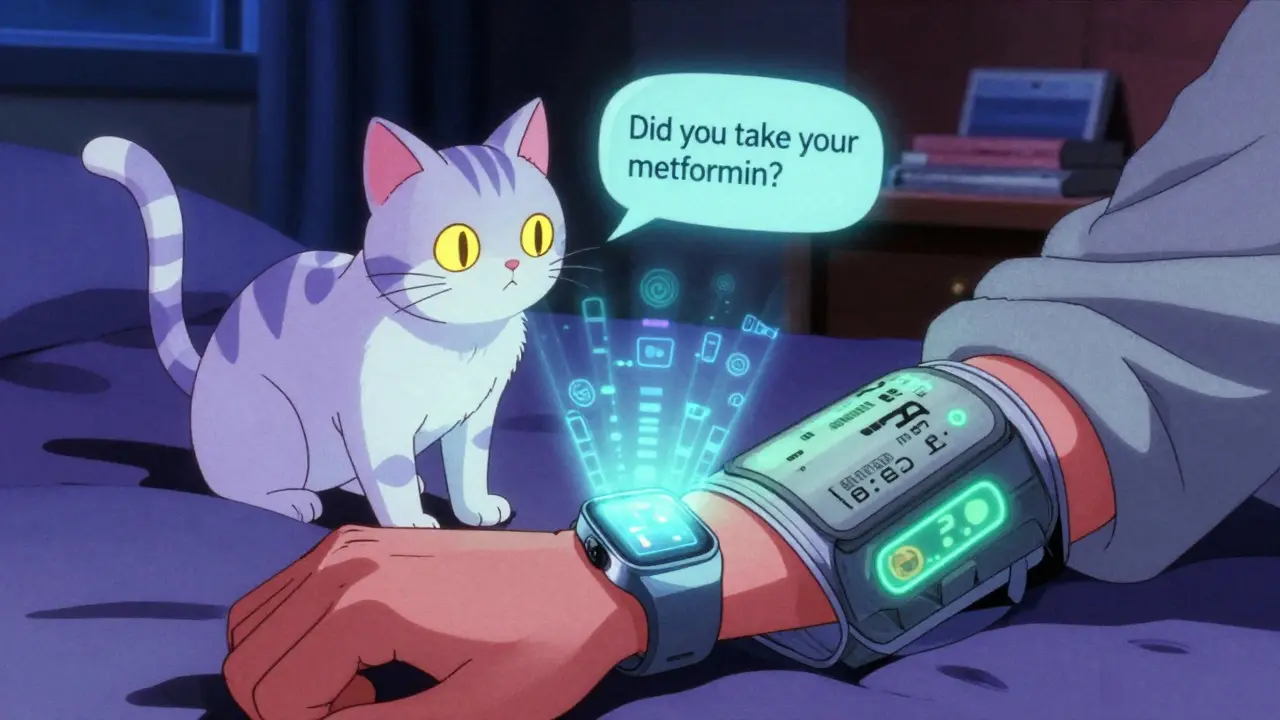
By 2027, experts predict most adherence tools will connect to your smartwatch, your glucose monitor, your blood pressure cuff. Imagine: your phone buzzes because your blood sugar spiked, and it asks, “Did you take your metformin this morning?” That’s the future-and it’s closer than you think.
Final Thought: It’s Not About Tech. It’s About Trust.
These tools work because they turn a lonely, confusing chore into something manageable. You’re not fighting your brain. You’re not fighting your schedule. You’re working with a tool that remembers what you forget.
But tech alone won’t fix adherence. You still need to care. You still need to want to feel better. The app just makes it easier to show up-for yourself.
Can medication apps really improve adherence?
Yes. Multiple studies, including 14 randomized trials published between 2023 and 2025, show that medication apps improve adherence by an average of 0.57 points on the Morisky scale. People using apps are significantly more likely to take their meds on time compared to those using pill organizers or SMS reminders alone.
Are medication apps free?
Most core apps-like Medisafe, MyTherapy, and Round Health-are free to download and use. They offer premium upgrades ($3-$5/month) for extra features like family access, advanced reports, or 24/7 chat support. But you don’t need to pay to get the core reminder and tracking functions.
What if I’m not good with technology?
It’s okay. Many people over 65 need a little help setting up their first app. Ask a family member, pharmacist, or community health worker to walk you through it. The setup takes 15-40 minutes. After that, it’s just tapping a button. Most users say it becomes second nature within a week.
Do these apps work for mental health medications?
Yes. In fact, studies show people taking antidepressants or antipsychotics benefit even more than those with physical conditions. Why? Because adherence is tied to motivation-and apps that offer encouragement, progress tracking, and gentle reminders help rebuild that connection.
Can my doctor see what I’m taking?
Some apps, like Medisafe, let you generate a report you can email or print to share with your doctor. A few even connect directly to electronic health records through secure systems like FHIR. But not all do. Always ask your doctor if they want you to share your data-and how.
Are these apps safe and private?
Leading apps use HIPAA-compliant encryption, biometric login, and secure cloud storage. But not all do. Stick with well-known apps (Medisafe, MyTherapy, Round Health) that clearly state their privacy policies. Avoid random apps with vague terms or no security info.
What if I travel or change my schedule?
Most apps let you edit your schedule on the fly. If you’re on a flight, change your time zone, or shift your routine, just open the app and update the times. The app will adjust reminders automatically. No need to start over.
Do I still need a pill organizer?
Not if you’re using a reliable app. But some people use both: the app for reminders and tracking, and a simple pill box for visual confirmation. That’s fine. Use what helps you feel secure.
Next Steps: What to Do Today
If you’re missing doses, don’t wait for the next appointment. Do this now:
- Download one app-Medisafe or MyTherapy.
- Open it. Tap “Add Medication.”
- Enter your first pill. Set the time.
- Turn on the reminder.
- Set a 5-minute timer. Do it for one more pill.
That’s it. You’ve started. The rest will follow. You don’t need to be perfect. You just need to be consistent. And these tools? They’re here to help you be that person.
Josh Potter
December 15, 2025 AT 13:15Evelyn Vélez Mejía
December 15, 2025 AT 18:07Victoria Rogers
December 15, 2025 AT 23:25Jane Wei
December 16, 2025 AT 05:17Nishant Desae
December 16, 2025 AT 14:31Meghan O'Shaughnessy
December 17, 2025 AT 21:45Kaylee Esdale
December 19, 2025 AT 01:29Jody Patrick
December 20, 2025 AT 18:19Radhika M
December 22, 2025 AT 11:17Philippa Skiadopoulou
December 22, 2025 AT 19:23Pawan Chaudhary
December 24, 2025 AT 18:19Jonathan Morris
December 25, 2025 AT 19:29Linda Caldwell
December 27, 2025 AT 12:11