

Steroid-Induced Hyperglycemia Insulin Estimator
This tool estimates initial rapid-acting insulin requirements based on clinical guidelines (JBDS/ADA). Always consult a healthcare professional before adjusting medication.
Recommendation Summary
Initial Rapid-Acting Insulin
Based on weight ( kg):
Units
Administer at the same time as the glucocorticoid dose.Correction Dose Needed
Current Glucose: mmol/L
Additional Units
Note for Existing Patients
Since you have existing diabetes, your Total Daily Dose may need to increase by . Ensure basal insulin is adjusted if fasting glucose remains >11.1 mmol/L.
Important Safety Warnings
- This is an estimation tool only. Clinical judgment is required.
- Monitor blood glucose at least 4 times daily.
- Reduce insulin proactively when tapering steroids to avoid hypoglycemia.
- Avoid sulfonylureas during steroid tapering due to high hypoglycemia risk.
Have you ever started a course of steroids for an inflammatory condition, only to watch your blood glucose numbers skyrocket? You are not alone. This phenomenon, known as Steroid-Induced Hyperglycemia (SIHG), is one of the most common metabolic complications in modern medicine. It affects roughly 40% of hospitalized patients receiving glucocorticoid therapy and can be just as tricky for outpatients managing their own care.
The challenge isn't just that your sugar goes up; it's that it goes up unpredictably, peaks at strange times, and then crashes when you stop the steroid. If you don't adjust your diabetes medications correctly, you risk dangerous highs during treatment and severe lows during the taper. This guide breaks down exactly how to navigate this complex interaction, drawing on the latest guidelines from the Joint British Diabetes Societies (JBDS) and the American Diabetes Association (ADA).
Understanding Why Steroids Spike Your Blood Sugar
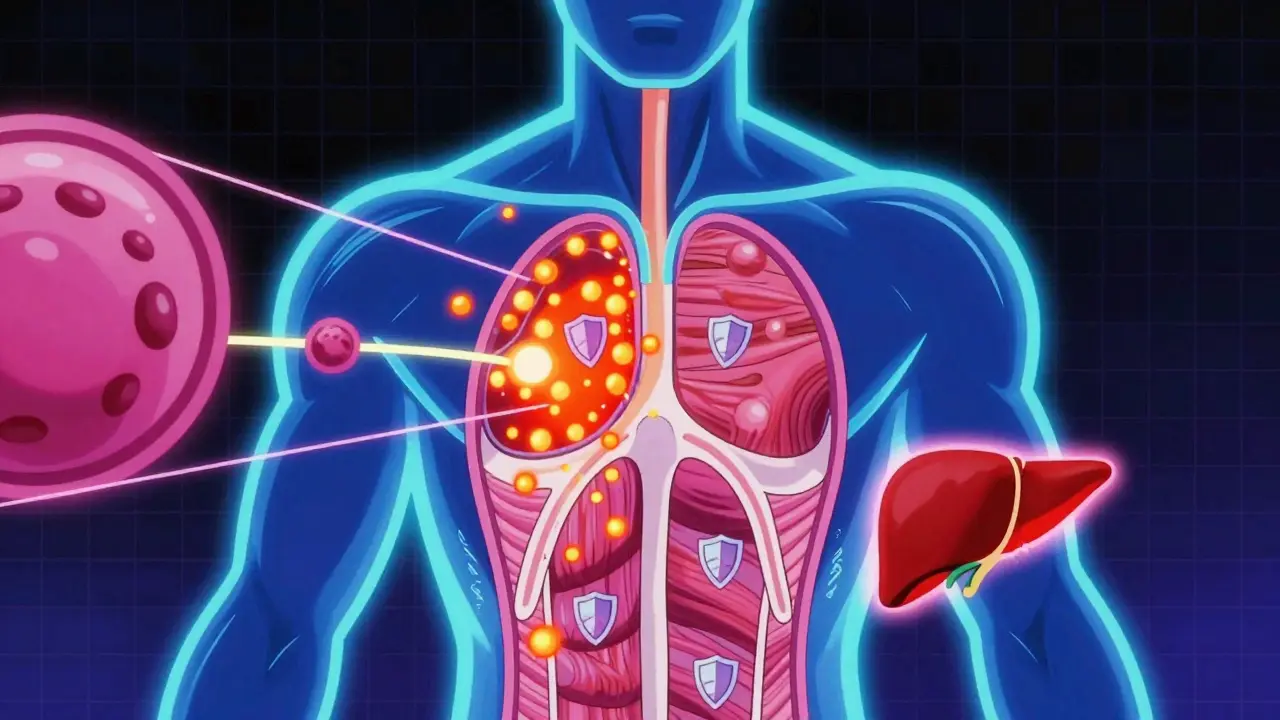
To manage the problem, you first need to understand the mechanism. Glucocorticoids like prednisone or dexamethasone do not just raise blood sugar randomly. They trigger three specific physiological changes:
- Insulin Resistance: Steroids make your muscle and fat cells less responsive to insulin, meaning glucose stays in the bloodstream instead of entering cells.
- Increased Gluconeogenesis: Your liver starts producing more glucose than usual, flooding your system with extra sugar.
- Impaired Beta-Cell Function: Steroids can temporarily suppress your pancreas's ability to release insulin.
This combination creates a perfect storm for hyperglycemia. The effect typically begins 4 to 8 hours after taking the steroid dose, peaks around 24 hours later, and can linger for several days even after you stop the medication. Understanding this timeline is crucial because it dictates when and how you should adjust your insulin or oral medications.
Matching Insulin to the Steroid Type
Not all steroids are created equal, and neither are all insulins. The key to effective management is matching the pharmacokinetic profile of the insulin to the half-life of the glucocorticoid. Using the wrong type can lead to periods of high blood sugar followed by dangerous hypoglycemia.
| Steroid Type | Half-Life | Recommended Insulin Strategy | Dosing Timing |
|---|---|---|---|
| Prednisone/Prednisolone | 18-36 hours | NPH Insulin or Long-Acting Analogues | Morning dose matches morning steroid peak |
| Dexamethasone | 36-72 hours | Long-Acting Analogues (Glargine/Detemir) | Morning dose required due to prolonged effect |
| Methylprednisolone | 12-36 hours | NPH or Intermediate-Acting Insulin | Adjust based on daily dosing schedule |
For example, if you are taking prednisone, which has a half-life of 18 to 36 hours, NPH insulin is often a good match because its duration of action aligns well with the steroid's peak effect. However, if you are on dexamethasone, which lasts much longer (36 to 72 hours), long-acting analogues like glargine or detemir are preferred. The Waterloo Wellington Diabetes Clinical Practice Guideline emphasizes that using short-acting insulin alone for long-acting steroids will leave you unprotected against late-night or next-morning hyperglycemia.
Calculating Initial Insulin Doses
If you are newly diagnosed with diabetes or have never needed insulin before, starting on steroids requires a careful calculation. The general rule of thumb, supported by clinical guidelines, is to start with a low dose and titrate up.
- Start Low: Initiate rapid-acting insulin at 0.1 IU per kilogram of body weight, administered at the same time as your glucocorticoid dose.
- Add Correction Doses: For pre-prandial glucose values between 11.1-16.7 mmol/L (200-300 mg/dL), add a correction dose of 0.04 IU/kg. For values ≥16.7 mmol/L (≥300 mg/dL), increase this to 0.08 IU/kg.
- Adjust Basal Insulin: If fasting glucose remains above 11.1 mmol/L for two to three consecutive days, increase your basal insulin by 10-20%. Some clinicians prefer a more conservative approach, increasing by 2 units at a time to avoid overshooting.
Remember, the goal is not perfection but safety. Targets during steroid therapy are often relaxed slightly to prevent hypoglycemia. The JBDS guideline suggests a target range of 6-10 mmol/L, with an acceptable range up to 12 mmol/L during acute phases.
Adjusting for Pre-Existing Diabetes
If you already manage diabetes, the rules change slightly. You likely won't need to start from zero, but you will need significant increases. Patients with Type 1 diabetes typically require a 30-50% increase in their total daily insulin dose, while those with Type 2 may need a 20-30% increase.
A critical strategy here is the "half-dose" method for repeat courses. If you know you need 20 additional units of insulin during a previous course of dexamethasone, start with only 10 units when the next course begins. Titrate slowly, assessing effectiveness before making further adjustments. This prevents the initial spike from becoming uncontrollable.
The Danger Zone: Tapering and Hypoglycemia
The most dangerous phase of steroid therapy is not when you take the highest dose, but when you stop. Dr. David Kendall of Diabetes UK warns that failing to reduce diabetes medications as steroids taper is the most common clinical error, leading to preventable hypoglycemia in 30-40% of cases.
Here is why this happens: As your steroid dose decreases, your insulin resistance drops rapidly. However, your increased insulin doses remain in your system. This mismatch can cause your blood sugar to plummet. To mitigate this risk:
- Reduce Insulin Proactively: Begin reducing your insulin doses 3-4 days before you expect your blood sugar to normalize, or immediately upon starting the steroid taper.
- Monitor Frequently: Check your blood glucose at least four times daily (pre-meal and bedtime). During the taper, consider checking every 2-4 hours.
- Avoid Sulfonylureas: These oral medications carry a high risk of delayed hypoglycemia during steroid tapering. A study at Johns Hopkins Hospital found that 27% of patients on sulfonylureas required emergency care for hypoglycemia compared to just 8% on insulin-only regimens.
Monitoring Technologies and Best Practices
Technology can be your best friend during this volatile period. Continuous Glucose Monitoring (CGM) is highly recommended for anyone on high-dose glucocorticoid therapy. Real-time CGM allows you to see trends rather than just snapshots, helping you anticipate highs and lows.
The JBDS 2021 guideline recommends wearing a CGM for a minimum of 48 hours during high-dose therapy. Aim for a "time in range" of >70% (between 3.9-10.0 mmol/L) and keep time below range (<3.9 mmol/L) under 4%. If you use an insulin pump, temporary basal rate increases of 25-50% may be necessary during peak steroid effects, but these must be carefully monitored to avoid post-taper crashes.
For those without CGM, capillary blood glucose monitoring is non-negotiable. You must check before meals and at bedtime. If you experience symptoms of hypoglycemia-shaking, sweating, confusion-treat it immediately with fast-acting carbohydrates and recheck in 15 minutes.
When to Seek Medical Help
While many cases of SIHG can be managed at home with careful monitoring and adjustment, some situations require immediate medical attention. Contact your healthcare provider if:
- Your blood glucose consistently exceeds 16.7 mmol/L (300 mg/dL) despite insulin adjustments.
- You experience frequent hypoglycemic episodes (blood glucose <3.9 mmol/L) that do not resolve with standard treatment.
- You develop signs of diabetic ketoacidosis (DKA), such as nausea, vomiting, abdominal pain, or fruity-smelling breath, particularly if you have Type 1 diabetes.
Hospitals now have standardized protocols for SIHG, with 68% of US hospitals using algorithm-driven care plans. If you are admitted, ensure your care team follows these guidelines to prevent the extended hospital stays associated with uncontrolled steroid-induced hyperglycemia.
How quickly does steroid-induced hyperglycemia occur?
Hyperglycemia typically begins 4 to 8 hours after taking a glucocorticoid dose, peaks around 24 hours later, and can persist for 3 to 4 days after discontinuing the medication. The exact timing depends on the specific steroid used and its half-life.
Can I continue my oral diabetes medications while on steroids?
In mild cases, oral agents like metformin or GLP-1 agonists may help, but they are often insufficient for moderate to high-dose steroid therapy. Sulfonylureas are generally discouraged due to the high risk of hypoglycemia during the steroid taper. Insulin is usually the preferred treatment for significant hyperglycemia.
Why is hypoglycemia a risk when stopping steroids?
As steroid doses decrease, insulin resistance drops rapidly. If insulin doses are not reduced in tandem, the excess insulin in your system can cause blood sugar to fall dangerously low. This is why proactive reduction of diabetes medications is critical during the taper phase.
What is the best way to monitor blood sugar during steroid therapy?
Continuous Glucose Monitoring (CGM) is ideal as it provides real-time trends and alerts. If CGM is not available, capillary blood glucose testing should be performed at least four times daily (before meals and at bedtime), with more frequent checks during dose changes or if hyperglycemia persists.
Do different steroids affect blood sugar differently?
Yes. Prednisone has a shorter half-life (18-36 hours) and may be matched with NPH insulin. Dexamethasone has a much longer half-life (36-72 hours) and requires long-acting insulin analogues like glargine to cover its prolonged effect on blood glucose levels.