
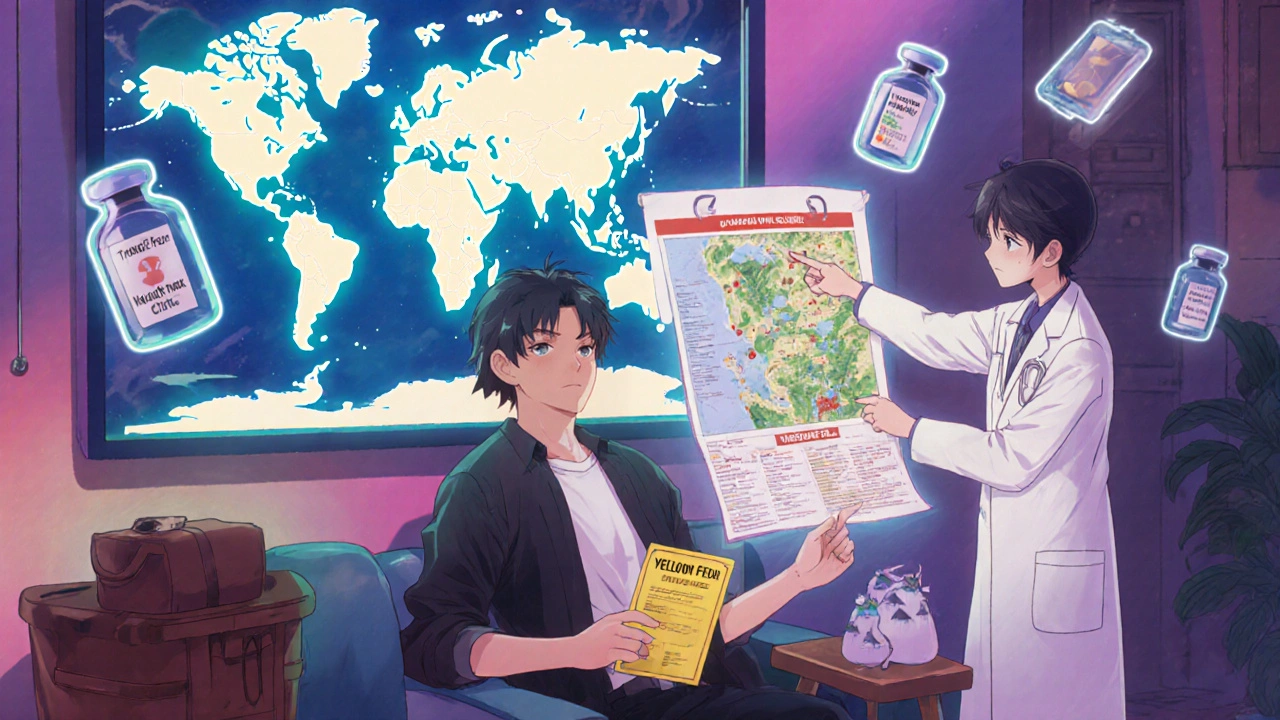
Planning a trip abroad? You’ve booked your flights, packed your bags, and checked the weather. But have you thought about what medicines you might need before you even step off the plane? Many travelers assume their regular doctor can handle this - but that’s often not enough. Travel health clinics exist for one reason: to make sure you don’t get sick because of something that could’ve been prevented. These clinics don’t just hand out prescriptions. They build a personalized plan based on where you’re going, how long you’ll stay, what you’ll be doing, and even your medical history.
Why a Travel Health Clinic Is Different From Your Regular Doctor
Your family doctor knows your health history. But they may not know that a trip to rural Thailand carries a higher risk of typhoid than a city tour in Bangkok. Or that the strain of malaria in northern Uganda is resistant to chloroquine - which means you can’t just take the same drug you used last year. Travel health clinics specialize in this. They track outbreaks, monitor drug resistance patterns, and update their recommendations every quarter based on CDC guidelines. According to the CDC Yellow Book 2024, travelers who see a travel medicine specialist are 63% less likely to get sick during their trip. Why? Because these clinics catch risks most primary care providers miss. A 2022 study in the Journal of Travel Medicine found that travel clinics identify 37% more destination-specific health threats than general practitioners. That’s not a small gap. It’s the difference between a smooth trip and an emergency room visit halfway around the world.What Happens During a Travel Clinic Visit
A typical appointment lasts 30 to 45 minutes. You won’t be rushed. The provider will ask detailed questions: Where exactly are you going? Are you staying in a hotel or camping in the jungle? Are you visiting family or doing adventure tourism? Do you have diabetes, asthma, or take blood thinners? Even your vaccination history matters - not just for what you need now, but what you might’ve missed years ago. Based on your answers, they’ll build your plan in four parts:- Vaccines - Some, like yellow fever, require proof you got them at least 10 days before travel. Others, like typhoid, come as a shot or pill and need time to work.
- Prophylactic medications - These are drugs you take before and during travel to prevent illness. Malaria pills are the most common. Atovaquone-proguanil (Malarone) starts 1-2 days before entering a risk zone. Mefloquine needs to start 2-3 weeks ahead. Doxycycline is taken daily, starting 1-2 days before. Get the timing wrong, and you’re unprotected.
- Emergency meds - You’ll likely get a prescription for azithromycin (500 mg) to treat traveler’s diarrhea. Some clinics also give you loperamide for symptom control. These aren’t for prevention - they’re for when you get sick on the road.
- Altitude or other condition-specific meds - If you’re hiking in the Andes or Himalayas, you might get acetazolamide (Diamox) to prevent altitude sickness. Start taking it 24-48 hours before ascending.
They’ll also give you written instructions. Not just “take one pill a day.” They’ll say: “Start Malarone 1 day before entering malaria zone. Take with food. If you miss a dose, take it as soon as you remember - but never double up.” They’ll tell you how to store pills in hot climates, what to do if your bag gets stolen, and how to recognize signs of a bad reaction.
When to Book Your Appointment
Don’t wait until the week before you leave. Many vaccines need time to work. Yellow fever immunity takes 10 days. Rabies pre-exposure shots require three doses over 21 days. Malaria pills need to be started weeks in advance. The CDC says 4 to 8 weeks before departure is ideal. Kaiser Permanente requires appointments 6 to 8 weeks ahead. Even if you’re leaving in two weeks, it’s not too late - but your options shrink. If you’re traveling to a country that requires the yellow fever vaccine, you must get it at a clinic certified by the CDC. There are 256 authorized centers in the U.S. as of January 2024. Your regular pharmacy won’t cut it. The certificate they give you is a small yellow card - and it’s valid for life. You’ll need it to enter countries like Ghana, Kenya, or Brazil.
Costs and Where to Go
Prices vary. University clinics like UCLA or UC Davis charge $150-$250 for a consultation. Retail clinics like CVS MinuteClinic offer them for $129, and some insurance plans cover part of it. Hospital-based clinics may charge more but often handle complex cases better. Here’s how they compare:| Provider Type | Average Cost | Insurance Coverage | Complex Case Handling | Virtual Visits |
|---|---|---|---|---|
| University Travel Clinic | $150-$250 | Usually not covered | Excellent | Often available |
| CVS MinuteClinic | $129 | Possible | Limited | No |
| Mayo Clinic Travel Medicine | $200-$300 | Varies | Excellent | Yes |
| Local Hospital Travel Clinic | $100-$200 | Often covered | Good | Sometimes |
Specialized clinics handle chronic conditions better. If you’re on immunosuppressants, have heart disease, or are pregnant, they’ll coordinate with your primary doctor. Retail clinics will refer you out - and that can delay things.
What to Bring to Your Appointment
Come prepared. The more info you give, the better your plan will be. Bring:- A list of all destinations, including layovers
- Exact dates of travel
- Itinerary details - are you staying in cities or trekking in remote areas?
- Full medical history - including allergies, surgeries, and current prescriptions
- Previous vaccination records - even if they’re old
- A list of any health problems you’ve had on past trips
Don’t forget your insurance card. Some clinics bill insurance directly. Others don’t, but you can submit receipts for reimbursement.
Pitfalls to Avoid
Many travelers make the same mistakes:- Skipping malaria pills because they seem “too strong.” The CDC reports that 28% of preventable malaria cases happen because people didn’t start their pills early enough or skipped doses.
- Getting vaccines too late. Rabies pre-exposure shots need three doses. If you wait until you’re in Africa, it’s too late.
- Assuming all clinics are the same. Only CDC-registered clinics can give yellow fever vaccines. If you get it elsewhere, your certificate won’t be valid.
- Not asking about drug interactions. Some malaria meds conflict with birth control or antidepressants. Always ask.
One big warning: overprescribing antibiotics. A 2024 study in Clinical Infectious Diseases found that some clinics give azithromycin to nearly every traveler - but don’t always explain when to use it. If you take it for every stomach ache, you risk making bacteria resistant. Only use it when you have watery diarrhea with cramps or fever.
What’s New in 2025
Travel medicine is changing fast. Mayo Clinic now offers virtual consultations that 92% of patients complete successfully. Stanford is piloting genetic tests to see how your body metabolizes antimalarial drugs - so you get the right one, not just the most common one. The CDC is rolling out AI tools that adjust recommendations based on real-time outbreak data. By 2026, most clinics will use these systems to tailor advice down to the city level.Telehealth is expanding, too. If you live in a rural area with no clinic nearby, you might get a video consult. But for complex cases - like managing diabetes while trekking in Nepal - in-person visits still matter.
Final Checklist Before You Leave
Once you’ve been to the clinic, make sure you have:- Completed vaccine records (especially yellow fever certificate)
- Prescriptions for all medications, with clear instructions
- Extra pills - pack at least 20% more than you think you’ll need
- A list of emergency contacts and clinic info from your visit
- A small first-aid kit with antiseptic, bandages, and pain relievers
- Water purification tablets or a filter - especially if you’re going off-grid
And remember: the goal isn’t to avoid all risk. It’s to reduce it so you can enjoy your trip without fear.
Do I really need to see a travel clinic if I’m just going to Europe?
For most Western European countries, you won’t need vaccines or malaria pills. But travel clinics still help. They check if your routine shots (like tetanus or measles) are up to date. They can advise on tick-borne diseases in rural areas, food safety risks, or altitude sickness if you’re hiking in the Alps. Even if you think it’s low risk, a 15-minute chat can prevent a bad trip.
Can I get travel meds from my pharmacy without a clinic visit?
Some pharmacies offer basic travel shots like typhoid or hepatitis A. But they can’t give you a full risk assessment. They won’t know if your destination has drug-resistant malaria or if you need a different dose because of your weight or medical history. For anything beyond routine vaccines, a travel clinic is safer.
What if I forget my malaria pills on the trip?
Some clinics give you a backup prescription you can fill overseas. Others recommend carrying a few extra pills in your carry-on. If you run out, contact your embassy or local hospital. Don’t skip doses - stopping malaria pills early can lead to severe illness. In remote areas, you might need to buy more locally, but only if you’re sure it’s the right brand and strength.
Are travel clinic visits covered by insurance?
Sometimes. Medicare and some private plans cover vaccines if they’re medically necessary. But the consultation fee often isn’t covered. Check with your insurer. Retail clinics like CVS may bill insurance directly. University clinics usually don’t, but they can give you a receipt to submit for reimbursement.
How far in advance should I schedule if I’m traveling to Africa?
At least 6 to 8 weeks. Many African countries require yellow fever vaccination, which needs 10 days to become effective. Malaria prevention requires starting pills 1-3 weeks before arrival. Rabies shots need three doses over three weeks. Waiting until 2 weeks before leaves you with limited options and higher risk.
Matthew Higgins
November 30, 2025 AT 02:40Just got back from Bali and let me tell you - I skipped the travel clinic because I thought I’d be fine. Got hit with diarrhea so bad I spent three days in a hostel bathroom. Learned my lesson the hard way. Now I go to every single clinic before I leave. Worth every penny. My stomach thanks me.
Also, the guy at the clinic gave me this little ziplock with emergency meds and a note in Thai. Best. Travel hack. Ever.
Brandy Johnson
November 30, 2025 AT 14:15This article is dangerously misleading. The CDC’s data is cherry-picked to promote bureaucratic overreach. Travel clinics are profit-driven extensions of pharmaceutical lobbying. Most destinations in Southeast Asia and Africa pose negligible risk to healthy adults who practice basic hygiene. The real threat is medical tourism inflation - and you’re feeding it.
Monica Lindsey
December 2, 2025 AT 09:03Anyone who thinks they can wing it with a pharmacy shot is asking for a hospital bill overseas. You don’t need a travel clinic. You need common sense. And a passport that doesn’t say ‘I’m dumb.’
stephen idiado
December 3, 2025 AT 10:03Western medical imperialism rebranded as ‘prevention.’ In Lagos, we’ve managed cholera outbreaks without Malarone for decades. Your ‘risk assessment’ is colonialism in a white coat. Why not just vaccinate everyone and shut up?
Andrew Keh
December 4, 2025 AT 12:22I used to think travel clinics were overkill too - until I got sick in Peru and couldn’t find a doctor who spoke English. The clinic gave me a printed list of emergency contacts, a translation card for symptoms, and even told me which pharmacies in Cusco sold real meds. It saved my trip. No hype. Just practical help.
Peter Lubem Ause
December 5, 2025 AT 02:36Let me tell you something real - I’m from Nigeria, and I’ve traveled to over 15 countries. I’ve seen people die because they thought ‘it won’t happen to me.’ Travel clinics aren’t about fear. They’re about respect. Respect for the places you visit, respect for your own body, and respect for the people who’ve studied this stuff for years. I don’t care if it costs $200 - if you’re going somewhere with malaria, typhoid, or yellow fever, you owe it to yourself to get the full plan. Not just a shot. A plan. And yes, it’s worth every second and every dollar. Don’t be that person who comes home in a body bag because they saved $150.
Also, pack extra pills. Always. I once lost my bag in Istanbul and had to buy more meds from a local pharmacy. Thank God I had the prescription. Don’t gamble with your health.
LINDA PUSPITASARI
December 6, 2025 AT 14:09OMG YES I DID THIS LAST YEAR AND IT CHANGED MY LIFE 😭 I went to a clinic in Portland and they gave me this little card with all my meds and even drew me a map of where to find pharmacies in Vietnam 🥹 I took Malarone and didn’t get sick once! Also they told me to carry loperamide in my pocket like candy 🍬 and I did and it saved me when I ate that sketchy street noodles 💪
PS: if you’re on birth control ASK ABOUT DRUG INTERACTIONS I DIDN’T AND IT WAS A MESS 🤦♀️
gerardo beaudoin
December 7, 2025 AT 03:40Just want to add - if you’re going to Europe and think you don’t need it, think again. I got a tick bite in Austria last year. No fever, no rash, but the clinic flagged it as possible Lyme risk. They gave me a 10-day antibiotic course as a precaution. Turned out I had early Lyme. If I hadn’t gone, it could’ve been bad. Even ‘safe’ places have risks. Just a 30-minute chat can save you months of pain.
Joy Aniekwe
December 8, 2025 AT 06:12Wow. So we’re supposed to pay $250 to be told what my grandma knew in 1978: ‘Don’t drink the water.’ How cute. You people treat travel like a horror movie. Meanwhile, real people in Lagos just… live. And they’re fine. But sure, keep buying your yellow cards. I’ll be here, sipping clean coconut water, laughing at your overpriced prescriptions.