
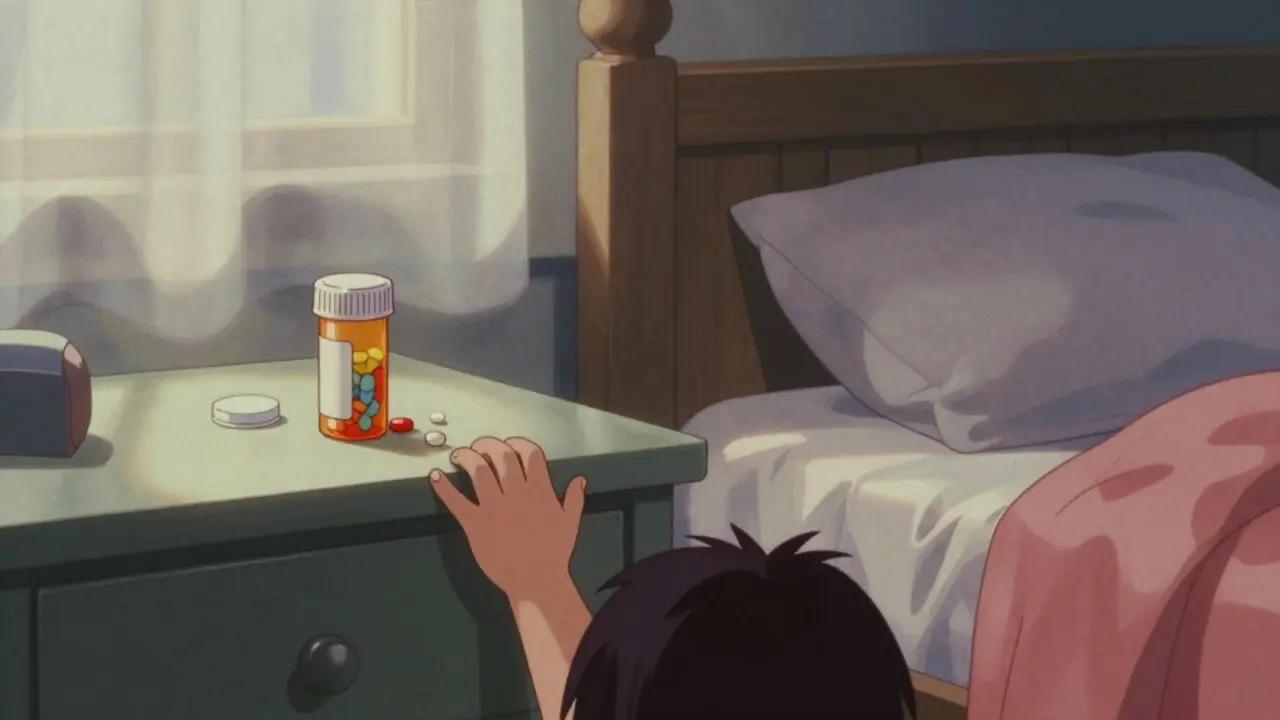
Imagine a scenario where a curious toddler finds a colorful bottle of pills on a nightstand, or a teenager raids a parent's medicine cabinet out of curiosity. These aren't just scary stories; they are daily realities. In the U.S. alone, about 60,000 emergency department visits every year are caused by children accidentally poisoning themselves with household medications. When those medications are high-risk, like opioids, the result can be fatal. The truth is, a simple change in where you keep your prescriptions can be the difference between a close call and a tragedy.
Quick Safety Summary
- Lock it up: Use a dedicated lockbox to stop unauthorized access.
- Height matters: Store meds at least 4 feet off the ground.
- Keep original packs: Never move pills into unmarked containers.
- Track your stock: Keep a daily log of pill counts to spot missing doses.
- Dispose safely: Use DEA-authorized take-back sites for expired drugs.
The Hidden Danger of "Convenient" Storage
Many of us keep our medications in the bathroom cabinet or on a bedside table because it's easy. But convenience is the enemy of safety. High-risk medications is a category of prescription drugs, particularly opioids and controlled substances, that have a high potential for misuse, diversion, and accidental overdose. When these are left unsecured, you aren't just risking a mistake; you're creating an opportunity for diversion.
Research shows that over 50% of people who misuse opioids get them from a friend or family member's unsecured supply. Even if you trust the people in your home, guests or visiting relatives can stumble upon these drugs. A locked cabinet isn't about a lack of trust; it's about creating a physical barrier that prevents a split-second bad decision from becoming a lifelong tragedy.
Choosing the Right Storage Solution
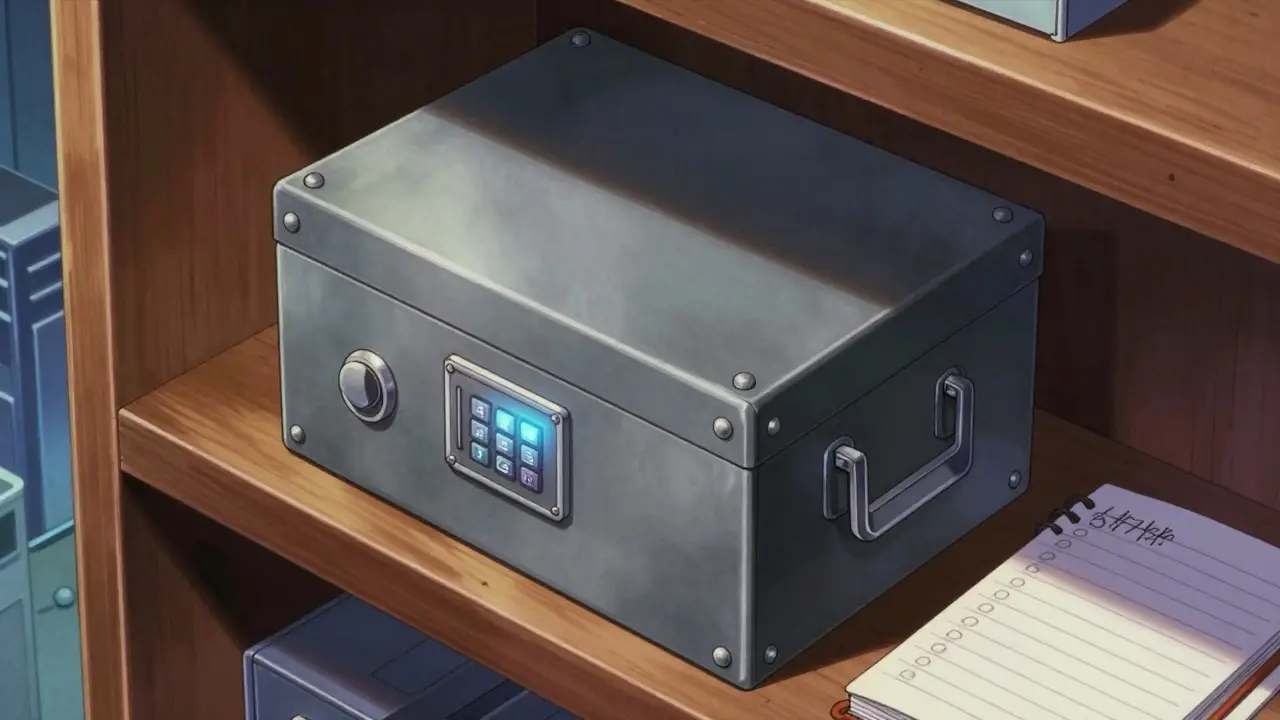
Not all boxes are created equal. If you're storing something as potent as fentanyl or oxycodone, a plastic bin with a latch won't cut it. You need something that can withstand a determined attempt to get inside. For those looking for the gold standard, look for storage that meets ANSI Grade 2 standards. These are designed to resist forced entry for at least 10 minutes, which is often long enough to deter a child or an opportunistic intruder.
If you're on a budget, a basic metal lockbox can still prevent about 92% of unauthorized access attempts. For those who struggle with dexterity-like people with arthritis who find child-proof caps impossible to open-digital lockboxes with 4-digit codes are a lifesaver. They provide security without requiring the fine motor skills needed to turn a difficult key or twist a stubborn cap.
| Storage Method | Security Level | Best For | Key Limitation |
|---|---|---|---|
| Open Shelf/Nightstand | None | Low-risk vitamins | Extreme risk of accidental ingestion |
| Child-Resistant Caps | Low/Medium | General prescriptions | Many adults remove them for ease |
| Standard Lockbox | High | Opioids/Sedatives | Key management can be tricky |
| Smart Dispensers | Very High | Complex schedules | Higher cost and tech learning curve |
The "Four-Foot Rule" and Environmental Control
If you can't afford a high-end lockbox immediately, start with the four-foot rule. The Centers for Disease Control and Prevention (or CDC) suggests storing narcotics at least 4 feet off the ground. Why? Because most children can only reach objects up to 36 inches high. Moving your meds from a kitchen counter to a high shelf reduces child access by over 70%.
But height isn't the only factor; environment matters too. Storing your meds in a humid bathroom or near a sunny window can actually break down the chemical compounds in the drug, making it less effective or potentially dangerous. Aim for a cool, dry spot. Ideally, the temperature should stay between 68-77°F (20-25°C). If you're storing medications in a garage or basement, be wary of extreme temperature swings that could compromise the drug's stability.
Developing a Safe Handling Routine
The most dangerous moment for an overdose isn't always when the bottle is closed-it's during the actual dosing process. A huge number of pediatric poisonings happen when a parent sets a bottle down for a second to answer the phone or grab a glass of water. To stop this, you need a strict routine.
First, always keep medications in their original containers. It's tempting to move pills into a daily organizer, but original labels provide critical dosage information and safety warnings. Second, implement a pill count. It sounds tedious, but keeping a simple log-like "42 tablets left on Monday morning"-allows you to notice immediately if a few pills have gone missing, which is often the first sign of diversion or misuse in the home.
- Inventory: Spend 20 minutes listing every high-risk med you own.
- Verify: Ensure every pill is in its original, labeled container.
- Secure: Place the containers in a locked box or a shelf at least 4 feet high.
- Log: Create a simple notebook or digital sheet to track quantities.
- Purge: Identify expired meds and plan a trip to a take-back site.
When Storage Isn't Enough: Secure Disposal
The only way to truly eliminate the risk of overdose is to remove the temptation entirely. Expired or leftover opioids are essentially "drug magnets" for teenagers or visitors. Don't just throw them in the trash or flush them down the toilet, as this can contaminate the water supply.
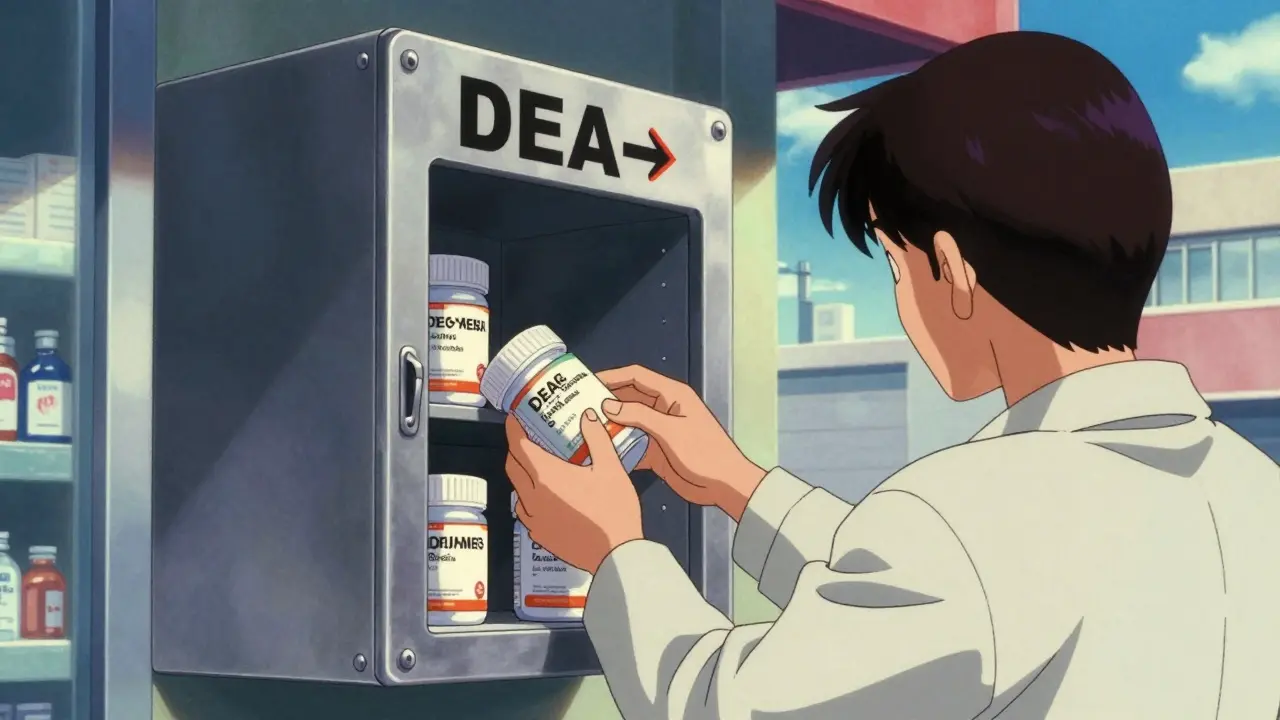
Look for DEA-approved disposal locations. The Drug Enforcement Administration (DEA) manages thousands of authorized collection sites, often located in pharmacies or police stations. Using these sites ensures that high-risk medications are destroyed professionally and cannot be scavenged from a landfill.
What counts as a "high-risk" medication?
Generally, this includes opioids (like oxycodone, fentanyl, or hydrocodone), benzodiazepines (like Xanax or Valium), and strong stimulants. Any medication that is a controlled substance due to its potential for addiction or overdose is considered high-risk.
Can't I just rely on child-proof caps?
Child-resistant caps are a great first layer of defense, but they aren't foolproof. Many children can eventually figure them out, and they provide zero protection against teenagers or adults looking to misuse the medication. A lockbox is the only way to ensure actual security.
Where can I find a safe place to dispose of old meds?
Your best bet is to search for a DEA-authorized take-back site. Many large pharmacy chains (like CVS or Walgreens) have secure kiosks where you can drop off unused prescriptions anonymously.
What should I do if I think someone has accessed my meds?
First, conduct an immediate pill count to determine exactly how much is missing. If you suspect a family member is misusing the drugs, contact a healthcare provider or a substance abuse counselor immediately. If an accidental ingestion has occurred, call the Poison Control center or emergency services right away.
Are smart pill dispensers worth the money?
For most people, a sturdy lockbox is sufficient. However, if you have a very complex medication schedule or a history of dosing errors, smart dispensers provide valuable timestamped logs and alerts that can prevent accidental double-dosing.
Next Steps for Your Home
If you're feeling overwhelmed, don't try to fix everything in one hour. Start by moving your medications to a high shelf today. Tomorrow, look into a basic lockbox. Within a week, set up your pill log. If you're currently managing care for an elderly parent, consider a lockbox with an emergency release code so that first responders can access meds in a crisis without having to break the box.
David Snyder
April 13, 2026 AT 05:53Moving things up high is a great first step that anyone can do right now. It's all about those small wins for safety!
Kenzie Evans
April 14, 2026 AT 01:11This is honestly basic common sense and barely worth a whole guide. Like, why do we need a table to tell us a nightstand is unsafe? Just buy a lockbox and stop acting like it's some complex operation. Most people are just lazy about their health and their kids, and this post barely scratches the surface of the negligence involved.
Randy Ryder
April 14, 2026 AT 05:21The mention of ANSI Grade 2 is a critical detail here. For those not in the loop, the mechanical specifications regarding shear strength and penetration resistance are what actually differentiate a 'safe' from a 'plastic box.' If you're dealing with high-potency synthetic opioids, the pharmacokinetic profile means a tiny error in dosing is catastrophic, so the physical security layer needs to be commensurate with the pharmacological risk.
Scott Lofquist
April 14, 2026 AT 20:49Imagine thinking child-proof caps actually work 🙄. My cousin's kid figured out a pill bottle in like two seconds. The only way to actually be moral about this is to get rid of the drugs entirely if you aren't using them. Why are people hoarding old oxy in their cabinets like it's a collection of vintage stamps? Totally irresponsible 🤦♂️.
S.A. Reid
April 16, 2026 AT 04:08While I appreciate the sentiment of safety, one must wonder why we are encouraged to utilize DEA-authorized sites. It is quite a leap of faith to assume that the same entities managing the pharmaceutical industrial complex are the ones best equipped to 'destroy' these substances. I find it far more plausible that these medications are merely diverted back into a different, more clandestine stream of distribution under the guise of professional disposal.
Mary Johnson
April 17, 2026 AT 16:05Exactly! The government just wants you to hand over your meds so they can track who has what and maybe even synthesize new versions from the 'waste.' It's a total surveillance trap. They tell us it's for the kids, but it's really about controlling the supply chain and keeping us dependent on their 'approved' pharmacies while they monitor every single pill we take through these digital dispensers!
rupa das
April 17, 2026 AT 23:43pill logs are overkill lol
Princess Busaco
April 18, 2026 AT 05:23I cannot believe some of you are actually arguing about the government when there are children in literal peril, and frankly, the suggestion that a simple notebook log is 'overkill' is just a testament to the absolute lack of discipline in modern households where people just wing it with potent chemicals and then act surprised when a crisis happens, which is honestly just a manifestation of a deeper societal decay where we prioritize convenience over the actual lives of our offspring and the sanity of our living spaces.
Tabatha Pugh
April 18, 2026 AT 07:43Most people forget that humidity in bathrooms actually degrades the active ingredients in tablets, which is why the 'convenience' of the medicine cabinet is a double failure-both in safety and in efficacy. I've seen people keep their meds right next to the shower steam, which is just ridiculous.
Milo Tolley
April 19, 2026 AT 13:20The sheer audacity of the pharmacological volatility here is just... staggering!!! Like, the potential for a catastrophic adverse event is practically written in the stars if you don't have a rigorous titration and storage protocol!!! I can't even deal with the stress of thinking about an unsecured fentanyl patch just lying around!!! Absolute chaos!!!
melissa mac
April 20, 2026 AT 01:31For anyone feeling overwhelmed by the list, just start with the four-foot rule. It's a gentle way to begin improving your home safety without feeling like you have to buy a bunch of expensive equipment all at once. We can all take it one step at a time.
Rim Linda
April 21, 2026 AT 22:53Omg the part about the toddler finding the bottle gave me actual anxiety :(((( Just imagine the panic! Definitely getting a lockbox now! 😭
Olivia Lo
April 22, 2026 AT 00:45There is a nuanced intersection between the autonomy of the patient and the systemic safety of the household. While the reliance on high-security lockboxes introduces a layer of friction, this friction serves as a cognitive checkpoint, mitigating the impulsivity associated with substance misuse. We must balance the ergonomic requirements of the elderly with the non-negotiable safety of the vulnerable, ensuring that our protective measures do not become barriers to essential care.