
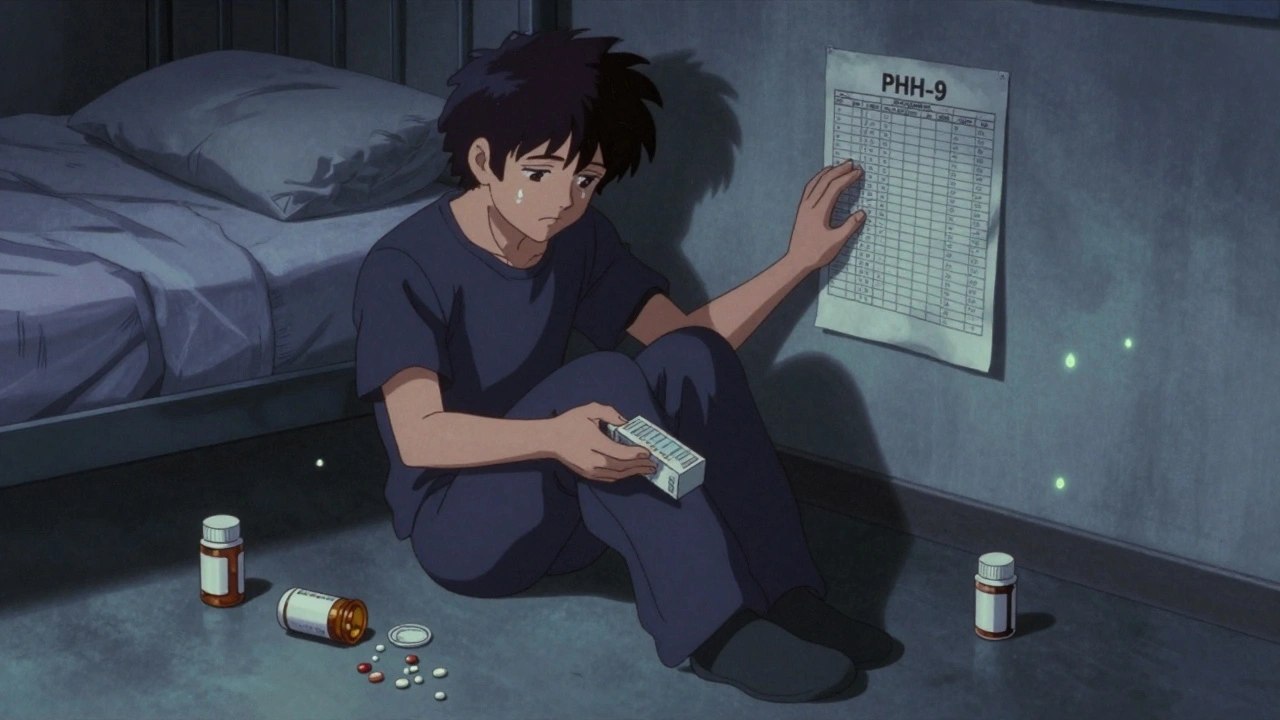
When someone is struggling with depression, taking their pills on time isn’t just about forgetting-it’s about depression stealing the energy, focus, and will to care for themselves. It’s not laziness. It’s not rebellion. It’s a biological and psychological barrier that quietly breaks medication routines across every chronic condition-from heart disease to diabetes to mental health treatments themselves. And if you’re a clinician, caregiver, or even a patient, missing these signs can mean the difference between recovery and decline.
Depression Doesn’t Just Affect Mood-It Breaks Medication Routines
People with depression are far more likely to skip doses, delay refills, or stop taking medications entirely-even when those drugs are life-saving. A major review of 31 studies found that depressed heart failure patients were 2.3 times more likely to miss their cardiac medications than those without depression. This wasn’t random. It was tied directly to how severe their depression was. For every point higher on the PHQ-9 depression scale, the chance of missing a dose went up. By the time someone scores 15 or higher (severe depression), adherence drops by nearly 30%.
It’s not just heart patients. In diabetes, asthma, HIV, and even antidepressants themselves, the pattern holds. One study of 83 people with major depression found that only 6% took their meds perfectly. Nearly 40% were completely non-adherent. The rest were inconsistent. That’s not a failure of willpower-it’s a symptom of the illness.
What Does Non-Adherence Look Like in Real Life?
It’s not always obvious. Someone might say they’re taking their pills. But look closer:
- They refill prescriptions late-or not at all.
- They miss appointments because they “can’t be bothered” or feel too tired.
- They stop taking meds after a few weeks, even if they feel better.
- They say, “I don’t feel like it today,” or “It’s not doing anything.”
- They forget doses repeatedly, even for simple regimens.
These aren’t just habits. They’re red flags. And they’re especially common when side effects kick in. People taking SSRIs like sertraline or escitalopram often report drowsiness, dry mouth, weight loss, or low libido. In someone without depression, these might be annoying. In someone with depression? They feel like proof the drug is making things worse. One study found 83% of SSRI users stopped taking them because of side effects-not because the meds didn’t work, but because their depression made them interpret discomfort as failure.
Depression Distorts Perception-Even When Pills Are Working
Depression doesn’t just make you tired. It warps how you see the world-including how you see your own body and treatment. A patient on beta-blockers for high blood pressure might feel sluggish and think, “This medicine is killing me.” But in reality, the sluggishness is from depression. The meds are helping. But depression tells them the opposite.
Experts call this “amplified side effect perception.” In depressed patients, even mild side effects feel unbearable. One study using the GARSI scale showed non-adherent patients reported significantly higher severity of side effects-even when their actual symptoms were no worse than adherent patients. Depression doesn’t cause more side effects. It makes them feel worse.
And then there’s hopelessness. If you believe nothing will help, why take a pill? Why bother? That’s not defiance. It’s the weight of the illness. Professor John Geddes from Oxford says it plainly: “Depression drains the motivation to care for yourself. Taking a pill requires effort. And when you’re already empty, there’s nothing left to give.”
How to Spot the Problem-Tools That Actually Work
You can’t guess who’s skipping meds. You need tools. Two are gold standard:
- PHQ-9 - A 9-question depression screen. Scores of 10 or higher mean moderate to severe depression. If a patient scores 10+, assume adherence is at risk.
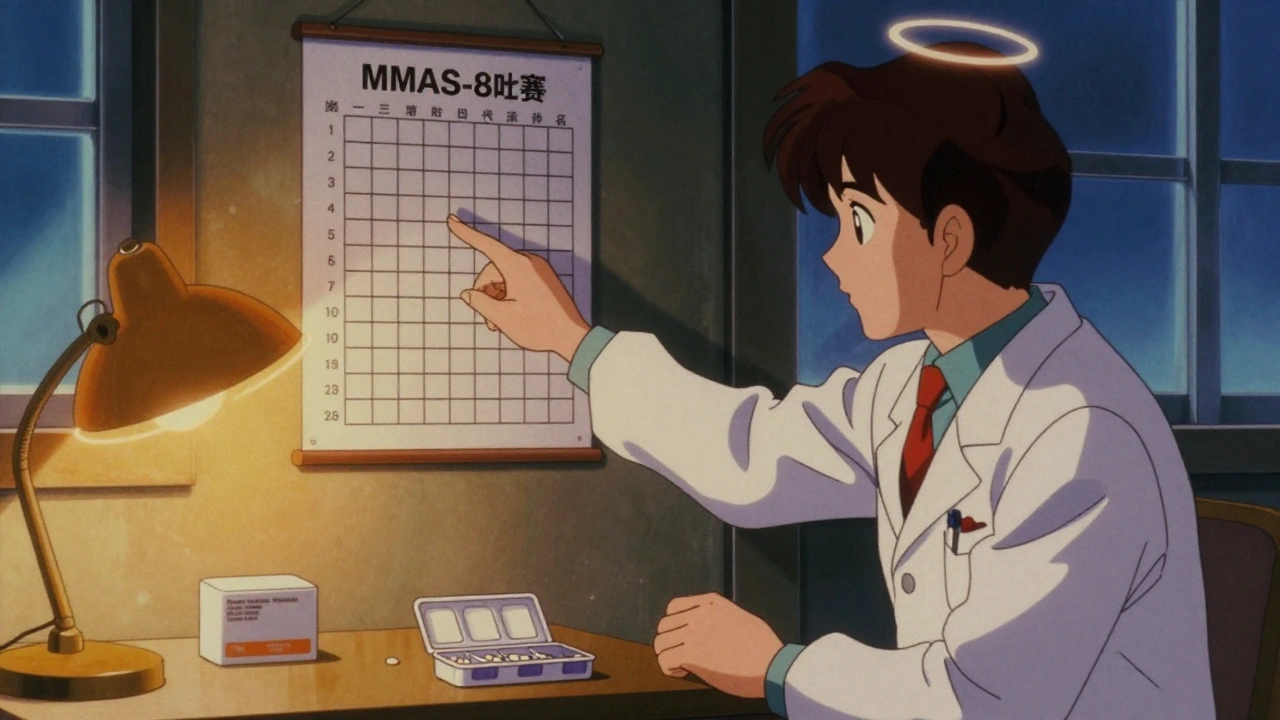
- MMAS-8 - An 8-question adherence scale. Scores under 6 = non-adherent. Scores under 8 = inconsistent. Only 8 = fully adherent.
Used together, they’re powerful. Columbia University research showed combining PHQ-9 and MMAS-8 improved prediction of non-adherence by 37%. That’s huge. A patient with a PHQ-9 score of 12 and an MMAS-8 of 5? That’s a crisis waiting to happen.
And it’s not just for psychiatrists. The American Heart Association now recommends every heart failure clinic use the PHQ-2 (two quick questions) at every visit. If it’s positive, follow up with PHQ-9 and MMAS-8. No exceptions.
Early Warning Signs: When to Act Fast
You don’t have to wait for months of missed doses. The STAR*D trial found something critical: patients who missed more than 20% of their doses in the first two weeks were 4.7 times more likely to have their treatment fail entirely. That’s not a coincidence. That’s a signal.
If someone starts a new medication and misses three out of 14 doses in the first two weeks? That’s not a slip. That’s a warning. Especially if they’re also withdrawn, sleeping too much, or saying things like, “What’s the point?”
Another practical tool: “side effect mapping.” Ask patients to keep a daily log: one column for mood (1-10), one for side effects (1-10), and one for whether they took their meds. Patterns emerge fast. If mood drops and side effects spike right after a missed dose? That’s depression driving non-adherence-not the drug.
What Works: How to Fix It
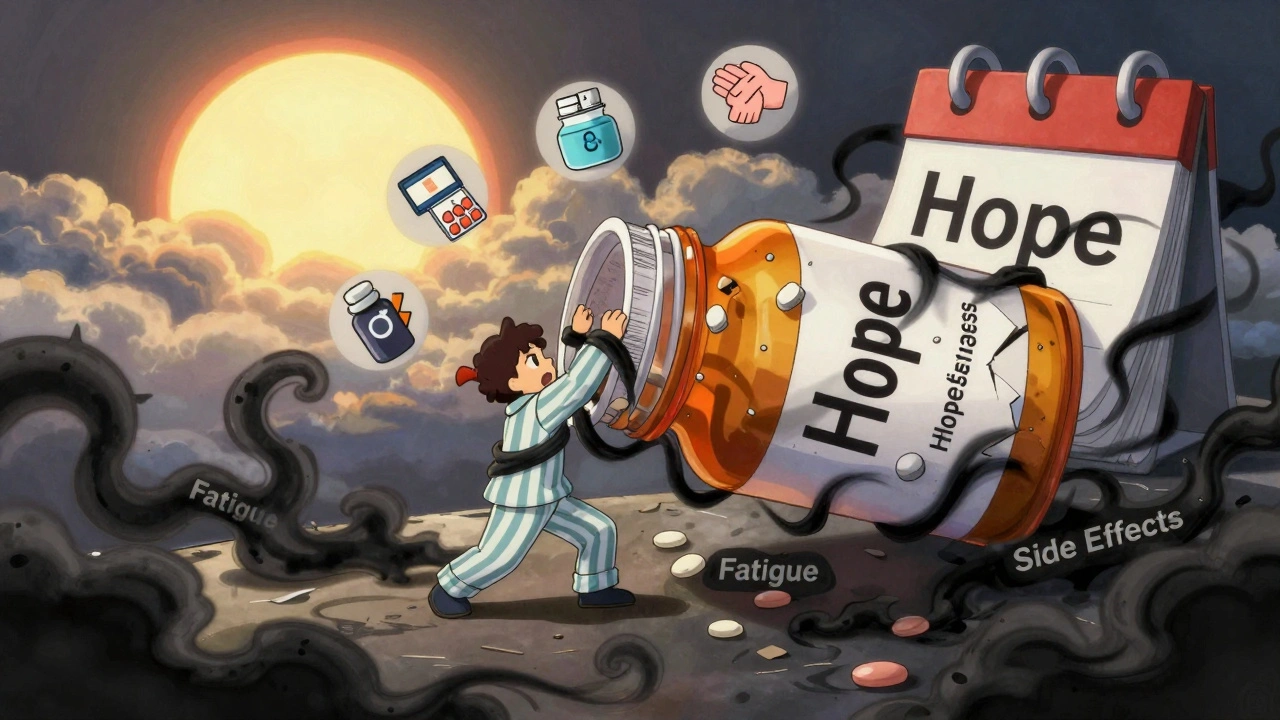
Simply telling someone to “take your pills” doesn’t work. You need structure.
- Use pill organizers with alarms. Simple, but effective.
- Link meds to daily routines: “Take your pill after brushing your teeth.”
- Reduce pill burden. Can doses be combined? Can you switch to once-daily?
- Check side effects early. Don’t wait for complaints. Ask: “What’s been bothering you since you started this?”
- Involve the patient. The MAPDep study showed that when patients and doctors reviewed adherence together every month, adherence jumped by 28.5%.
And don’t underestimate the power of validation. Say this: “It makes sense you’d feel overwhelmed. Depression makes even small tasks feel impossible. You’re not failing. Your illness is making this harder.” That alone can rebuild trust.
The Bigger Picture: Why This Matters
Medication non-adherence due to depression isn’t a minor issue. It’s a silent killer. In heart disease, it leads to more hospitalizations. In diabetes, it speeds up organ damage. In mental health, it traps people in cycles of worsening symptoms and failed treatments.
The World Health Organization is now investing $15 million to build global protocols for recognizing this link-because it’s happening everywhere. From rural Ethiopia to urban Spain, the data is the same: depression breaks adherence. And we’ve had the tools to catch it for years.
The question isn’t whether depression affects medication use. It’s whether we’re willing to look for it-and act when we see it.
Can depression cause someone to stop taking their medication even if it’s helping?
Yes. Depression distorts perception and amplifies side effects. A patient may feel sluggish or nauseous and wrongly believe the medication is making things worse-even if it’s stabilizing their condition. Hopelessness and low energy also make the effort of taking pills feel pointless. This isn’t intentional non-compliance; it’s a symptom of the illness.
What’s the best way to screen for depression in patients on long-term meds?
Use the PHQ-2 as a quick initial screen at every visit. If the answer to either question is yes, follow up with the full PHQ-9. Combine this with the MMAS-8 to assess adherence. Research shows using both tools together increases detection accuracy by 37% compared to using either alone.
Is non-adherence always due to depression?
No. Other factors like cost, complexity of regimens, forgetfulness, or lack of access can also cause non-adherence. But depression is one of the strongest predictors-and often the hidden one. If a patient has no obvious barriers (like cost or language issues), depression should be ruled out first.
How soon should you intervene if a patient misses a few doses?
Don’t wait. The STAR*D trial found that missing more than 20% of doses in the first two weeks of treatment predicts treatment failure with 4.7 times higher likelihood. Early intervention-like adjusting the regimen, checking side effects, or adding support-is critical. Waiting until the end of the month is too late.
Can digital tools help track adherence in depressed patients?
Yes. Emerging smartphone apps that link mood tracking with medication reminders show 82% sensitivity in predicting adherence lapses 72 hours in advance. These tools are especially helpful for patients who struggle to self-report. They provide objective data without adding shame or burden.
What’s the most effective way to improve adherence in someone with depression?
Collaborative care. When patients and providers review adherence together regularly-using tools like the PHQ-9 and MMAS-8-adherence improves by nearly 30%. Combine this with simplifying regimens, addressing side effects early, and validating the patient’s experience. It’s not about nagging. It’s about teamwork.
Ben Greening
December 11, 2025 AT 01:01The data here is compelling, especially the 2.3x increase in non-adherence among depressed heart failure patients. It’s not just about compliance-it’s about the invisible weight of the illness. Clinicians need to treat adherence as a symptom, not a behavior. The PHQ-9 and MMAS-8 combo should be standard across all chronic care settings, not just psychiatry.
It’s frustrating how often we mistake biological dysfunction for laziness. The real failure isn’t the patient’s discipline-it’s our system’s failure to recognize depression’s fingerprints on every missed pill.
Neelam Kumari
December 11, 2025 AT 01:12Oh please. Another ‘depression is an excuse’ article. People skip meds because they’re lazy, selfish, or don’t care. Stop pathologizing poor choices. If you can’t even bother to take a pill, maybe you don’t deserve to live with a chronic condition. I’ve seen too many patients waste resources because they ‘feel too tired’-bullshit. Get up. Take the pill. End of story.
David Palmer
December 11, 2025 AT 22:21Bro. I’ve been on SSRIs for 3 years. I skipped doses for months because I felt like a zombie. Then I realized-my doc didn’t even ask how I felt. They just kept prescribing. I didn’t stop because I was ‘depressed.’ I stopped because no one cared enough to adjust it. Why do docs act like meds are magic? They’re not. And if you don’t talk to me, I’m gonna stop. Simple.
Also, pill organizers? I tried one. It just sat there. I need someone to check in. Not a box.
Doris Lee
December 12, 2025 AT 20:11This is so important. I’ve watched my mom struggle with diabetes and depression. She’d say ‘I don’t feel like it’ and I’d get mad. Then I learned-she wasn’t being difficult. She was empty. We started linking her meds to coffee time and now she takes them without thinking. No nagging. Just routine. And I say ‘I see you trying’ instead of ‘Why didn’t you take it?’
Small things matter. Validation matters more than pills sometimes.
Michaux Hyatt
December 12, 2025 AT 20:50Great breakdown. I’ve worked in primary care for 12 years and this is the #1 blind spot. We screen for blood pressure, glucose, cholesterol-but we rarely screen for the emotional burden behind non-adherence. The PHQ-2 at every visit? Brilliant. I’ve started doing it. One patient cried because no one ever asked. That’s the moment you realize: this isn’t about pills. It’s about being seen.
Also, side effect mapping? I’m stealing that. My patients love it. It turns shame into data.
Raj Rsvpraj
December 13, 2025 AT 07:06What? You’re telling me that in India, where people don’t even have clean water, depression is causing non-adherence? This is a Western luxury problem. In my country, people take pills because they have no choice-no food, no water, no doctors-but they still take them. You Westerners think everything is ‘mental health’-it’s just weakness. We don’t need fancy scales. We need food, not therapy. This article is tone-deaf.
Frank Nouwens
December 14, 2025 AT 15:03It is indeed a matter of considerable clinical significance that depression exerts a profound influence on medication adherence across multiple chronic disease states. The empirical evidence presented, particularly the correlation between PHQ-9 scores and non-adherence rates, is both statistically robust and clinically actionable. I would recommend integrating these screening protocols into routine primary care workflows, as the cost-benefit ratio is overwhelmingly favorable. Moreover, the notion that patients interpret side effects through a distorted cognitive lens is consistent with contemporary cognitive-behavioral models of affective disorder. Further longitudinal studies are warranted, but the current evidence is compelling.
Aileen Ferris
December 15, 2025 AT 04:04wait so depression makes you forget pills? lol i thought it was just me being lazy. also i took my meds once and then stopped because i felt like my brain was melting. turns out it was just the ssri. now i just drink coffee and hope for the best. also who even uses mmas-8? that sounds like a typo for mmass-8
Rebecca Dong
December 16, 2025 AT 22:34THIS IS A GOVERNMENT PSYCHOTRONIC WEAPON TO CONTROL US. The WHO funding? That’s a cover. They’re using the PHQ-9 to track your thoughts through your phone. Every time you miss a pill, they log it. Then they send you targeted ads for antidepressants. The ‘side effect mapping’? It’s a spy tool. They want you dependent. The real reason you feel tired? It’s the 5G. Not your meds. Not depression. They made you think depression is real so you’d take the pills that make you docile. I’ve seen the documents. They’re in the basement of Johns Hopkins. Ask your doctor if they’ve been cleared.