

What Is a Medicare Annual Medication Review?
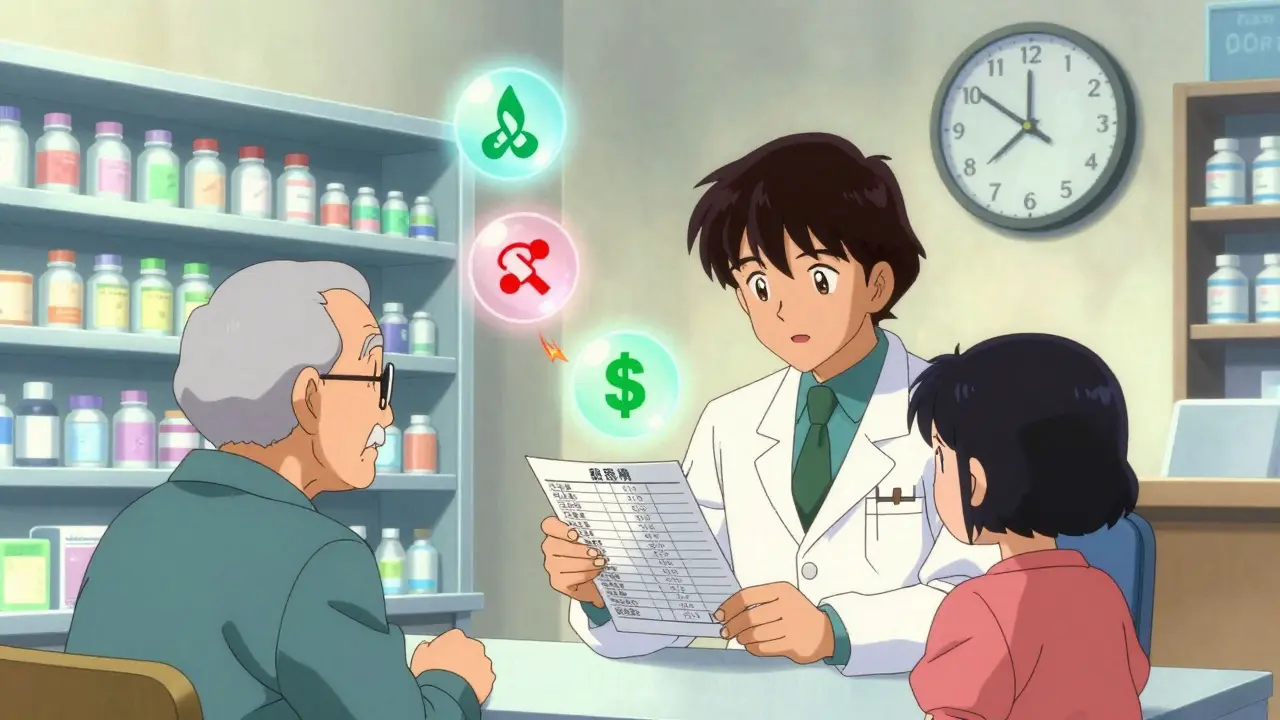
A Medicare Annual Medication Review, also called a Comprehensive Medication Review (CMR), is a free, one-on-one consultation with a pharmacist that’s required by Medicare Part D plans. It’s not just a quick check-in-it’s a full audit of every pill, capsule, patch, supplement, and herbal product you’re taking. The goal? To catch dangerous interactions, stop unnecessary drugs, save money, and make sure you’re taking everything correctly.
This isn’t something your doctor does during a 10-minute visit. It’s a dedicated session, usually 30 to 60 minutes long, where the pharmacist walks through your entire medication list with you. They’ll ask about side effects, costs, how often you forget doses, and even if you’re taking something your doctor doesn’t know about-like that fish oil or turmeric supplement you started last year.
Medicare only requires this review once a year, but it’s one of the most powerful tools you have to stay safe and healthy. In 2022, over 14 million seniors got one. And those who showed up prepared? 78% said it helped them avoid serious health problems.
Who Qualifies for a Medicare Annual Medication Review?
You don’t automatically get this service. Medicare Part D plans must offer it, but only to beneficiaries who meet specific criteria. As of 2025, you qualify if you:
- Have at least three chronic conditions like diabetes, heart disease, COPD, high blood pressure, or arthritis
- Take between two and eight Part D-covered medications (including maintenance drugs like insulin or blood pressure pills)
- Spent $1,623 or more out-of-pocket on covered Part D drugs in the past year
These numbers changed in 2025. The cost threshold dropped from over $4,000 to just $1,623, so more people now qualify. If you’re on multiple medications and pay for them yourself, you’re likely eligible-even if you didn’t realize it.
There’s also a new exception: if you have two chronic conditions and are at high risk (like after a hospital stay or with low income), you might qualify even if you don’t hit the full three-condition mark. Your plan will notify you if you’re eligible. If you haven’t heard anything by October, call them. Don’t wait.
Why Preparation Is the Most Important Step
Many seniors show up to their CMR with nothing but a vague memory of what they take. That’s a mistake.
Pharmacists rely on your list to spot problems. But studies show people forget or misremember 2 to 3 medications on average. That’s not just inconvenient-it’s dangerous. One woman in Ohio missed that she was taking two different blood thinners because one was from a different doctor. The pharmacist caught it during the review. She could’ve had a stroke.
Dr. Jane Williams from Johns Hopkins says it plainly: “CMRs are only as effective as the information you give.” If you don’t bring your meds, the pharmacist can’t help you. If you don’t mention your back pain pills or your sleep aid, they can’t see the full picture.
This isn’t about being perfect. It’s about being honest and thorough. The more you bring, the better they can protect you.
Step-by-Step: How to Prepare for Your Review
Set aside 45 to 90 minutes before your appointment. You won’t regret it.
- Gather every medication you take-all of them. This includes:
- Prescription drugs (even if they’re from different doctors)
- Over-the-counter pills (ibuprofen, antacids, allergy meds)
- Vitamins and supplements (vitamin D, magnesium, CoQ10)
- Herbs and teas (ginkgo, garlic pills, chamomile)
- Topical creams, patches, eye drops, inhalers
Bring the actual bottles or boxes. Don’t rely on a list you wrote down. Labels have the exact name, dose, and instructions. If you can’t find them, take clear photos of each label with your phone.
- Write down your concerns
- Have you had new side effects? Dizziness? Upset stomach? Fatigue?
- Do you forget to take any pills? Which ones?
- Are any too expensive? Have you skipped doses to save money?
- Are you taking something because you thought it was “good for you” but aren’t sure?
Write these down. Don’t try to remember them. Bring the paper.
- Check your medication list against your bottles
Go through each one. Does your list say “Lisinopril 10 mg once daily”? Does the bottle say the same? If not, update your list. Many people are taking doses that changed months ago but never updated their notes.
- Bring your medical history
- Any recent hospital stays or ER visits?
- New diagnoses?
- Lab results that changed (like kidney function or blood sugar)?
Pharmacists use this to see if your meds need adjusting. If your kidneys are weaker, some drugs become riskier. If your blood pressure dropped, maybe your dose is too high.
- Bring someone with you
It’s easy to forget what was said during the review. A family member or friend can listen, ask questions you didn’t think of, and remember the action plan. One man in Florida brought his daughter. She asked why he was taking two different memory pills. Turns out, one was a placebo his old doctor prescribed. The pharmacist canceled it.
What Happens During the Review?
The pharmacist will start by confirming your full medication list. They’ll check for:
- Duplicates (two pills that do the same thing)
- Drug interactions (like blood thinners with NSAIDs)
- Medications you don’t need anymore
- Costly alternatives (generic versions or lower-cost brands)
- Adherence issues (are you skipping doses? Taking too much?)
They’ll ask you how you take each medication. Do you use a pill organizer? Do you crush pills? Do you take them with food or on an empty stomach?
Then they’ll give you three documents:
- Consultation Letter-a summary of what was discussed
- Medication Action Plan-what you need to do next (stop a drug, switch brands, schedule a follow-up)
- Personal Medication List-your updated, official list to keep and share with all your doctors
You’ll get copies. Keep them in a folder. Show them to every new doctor you see.
Real Results: What People Gain From This Review
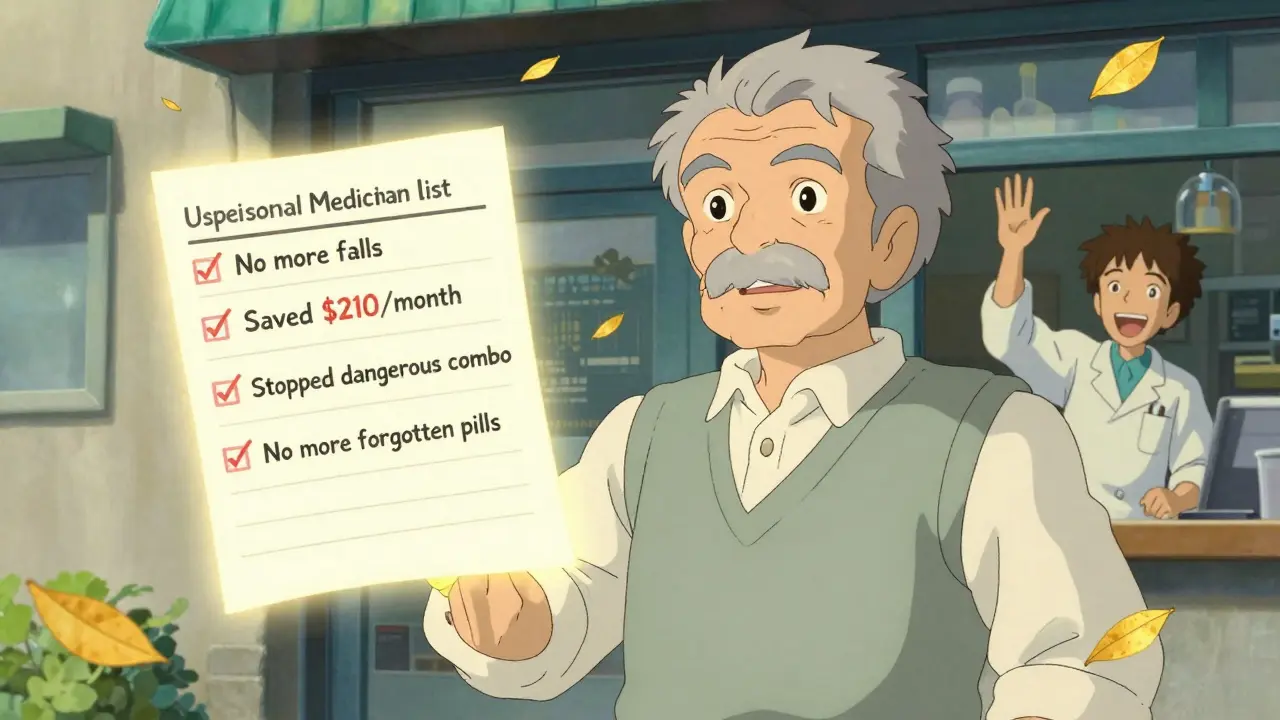
People who prepare properly walk away with real wins:
- Cost savings: One man in Florida saved $210 a month by switching from a brand-name statin to a generic. His plan covered it.
- Reduced side effects: A woman stopped taking a sleep aid that made her dizzy. Her falls dropped from three a month to zero.
- Eliminated dangerous combos: A man was taking ibuprofen daily for arthritis and aspirin for his heart. The pharmacist found the combo raised his risk of stomach bleeding. He switched to a safer option.
- Stopped unnecessary drugs: A woman was still taking a cholesterol drug her doctor discontinued two years ago. No one noticed until the CMR.
These aren’t rare cases. They’re common outcomes when people show up ready.
What to Do After the Review
The review isn’t the end-it’s the start.
- Follow the action plan. If they say to stop a pill, don’t wait. Call your doctor if they need to approve it.
- Update your Personal Medication List. Keep it in your wallet or phone.
- Share it with all your doctors and pharmacies. Even the one you only go to for flu shots.
- Set a reminder for next year. Mark it on your calendar now.
- If you’re not happy with the results, call your plan’s customer service. You have the right to a second review.
Don’t assume everything’s fixed. If you feel worse after the review, or if a new side effect shows up, call your pharmacist. They’re still your resource.
What If You Don’t Qualify?
If you don’t meet the Medicare eligibility rules, you still have options.
- Ask your local pharmacy for a free medication review. Many offer them even if you’re not on Medicare Part D.
- Ask your doctor for a “medication reconciliation” during your next visit.
- Use the Medicare.gov tool to check if you’ve been missed.
Even if you’re not eligible, you deserve to know your meds are safe. Don’t let paperwork stop you from asking for help.
Final Tip: Don’t Wait Until You’re in Trouble
Most seniors wait until they feel sick, have a fall, or get a scary lab result before they look at their meds. But the best CMRs happen when you’re healthy. That’s when you catch problems before they become emergencies.
Think of it like a car inspection. You don’t wait until the engine blows. You get it checked before the winter. Same with your meds.
Take 60 minutes now. Gather your bottles. Write down your questions. Bring a loved one. Your future self will thank you.
Lu Jelonek
December 23, 2025 AT 12:50siddharth tiwari
December 24, 2025 AT 21:40Adarsh Dubey
December 26, 2025 AT 04:56claire davies
December 27, 2025 AT 23:25Raja P
December 28, 2025 AT 13:21Joseph Manuel
December 29, 2025 AT 19:29Abby Polhill
December 31, 2025 AT 08:17Bret Freeman
January 1, 2026 AT 10:09Austin LeBlanc
January 3, 2026 AT 00:44niharika hardikar
January 3, 2026 AT 06:50EMMANUEL EMEKAOGBOR
January 4, 2026 AT 14:35CHETAN MANDLECHA
January 4, 2026 AT 19:39