
Buying medication abroad sounds simple: cheaper prices, easy access, maybe even a vacation with a side of prescriptions. But what you think is a smart shortcut could be a life-threatening mistake. Every year, thousands of travelers return home with pills that look real but aren’t. They’re fake. They’re dangerous. And they’re easier to get than you think.
Why Foreign Medications Are Risky
Just because a website says it’s "Canadian" or "UK-based" doesn’t mean it’s legal or safe. In fact, most online pharmacies selling medications to Americans claim to be from Canada - but they’re not. The Canadian government has said it can’t verify what happens to drugs once they leave their borders. Many of these pills actually come from India, Turkey, or Southeast Asia, where manufacturing standards are loose or nonexistent.
The World Health Organization estimates that 1 in 10 medical products in low- and middle-income countries are fake. That number climbs even higher for popular drugs like weight loss medications (semaglutide, liraglutide) and blood thinners (Eliquis). These counterfeit pills often contain no active ingredient at all - or worse, they’re laced with fentanyl, rat poison, or industrial chemicals. In 2024, the DEA reported a U.S. woman died after taking one pill she thought was oxycodone. It was pure fentanyl.
How Illegal Pharmacies Trick You
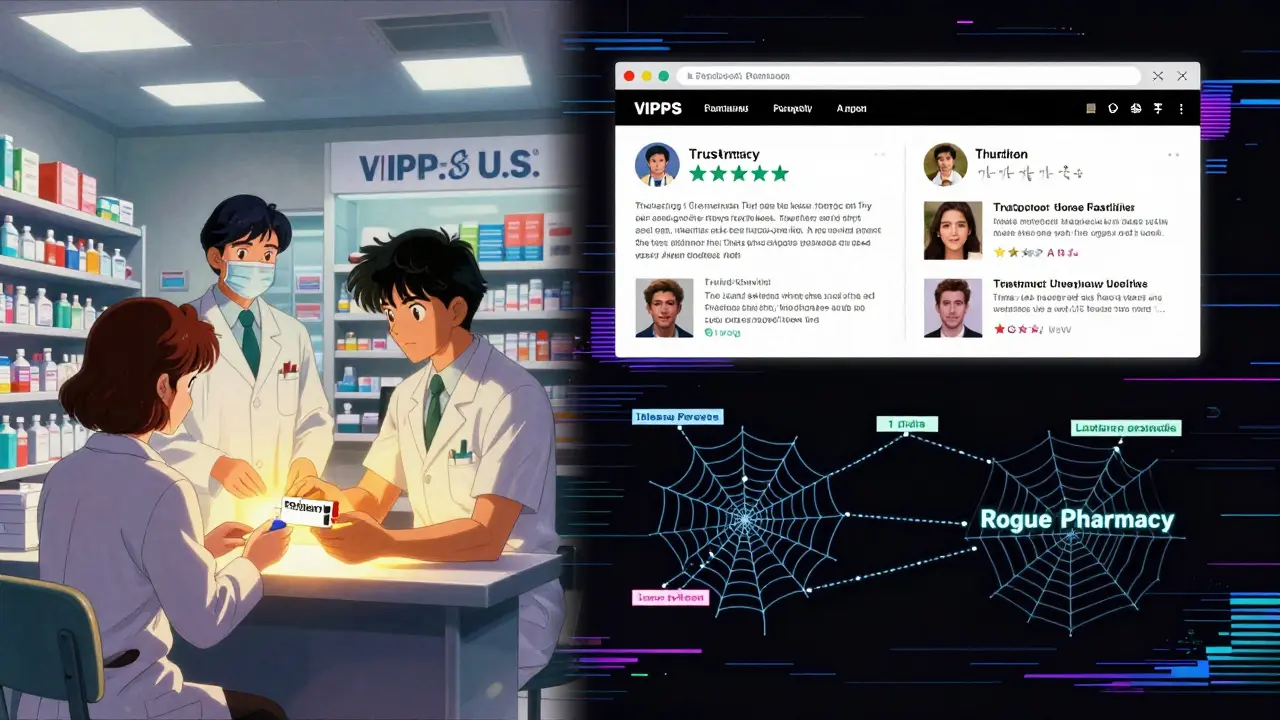
These operations are smarter than ever. They copy the logos of real pharmacies. They use fake reviews on Trustpilot. They even mimic the look of official government websites. You might see a site with a Canadian flag, a "Verified Pharmacy" badge, and a phone number - all of which are fabricated.
Here’s how they lure you in:
- They don’t require a prescription - or they’ll ask for one after you pay.
- Prices are 70% lower than U.S. pharmacies. If it seems too good to be true, it is.
- They list prices in foreign currency (euros, pounds, rupees) to confuse you.
- Packaging is in a language you don’t recognize, or the labels look blurry or misaligned.
- The website has no physical address, or the address leads to a warehouse or a residential building.
The Drug Enforcement Administration (DEA) calls these sites "rogue pharmacies." In 2024 alone, they shut down 327 such operations targeting Americans. Many of them were running Facebook and Instagram ads with before-and-after photos of people losing weight - all using fake drugs.
What Legitimate Pharmacies Look Like
There are safe ways to buy medication online - if you know where to look.
In the U.S., the only trusted system is the Verified Internet Pharmacy Practice Sites (VIPPS) program run by the National Association of Boards of Pharmacy (NABP). As of October 2024, only 68 U.S. online pharmacies are certified under this program. These pharmacies:
- Require a valid prescription from a licensed U.S. doctor.
- Have a U.S.-based physical address and licensed pharmacists on staff.
- Display their VIPPS seal clearly on their homepage.
- Do not sell controlled substances without proper DEA registration.
In Europe, check your national medicines agency. In the UK, that’s the MHRA. In Germany, it’s the BfArM. These agencies maintain public lists of approved online pharmacies. If a site isn’t on the list, it’s not legal.
Don’t trust sites that say "EMA-approved" or "FDA-certified." Neither agency endorses any private online pharmacy. If they do, it’s a scam.
What to Check Before You Buy
If you’re considering buying medication abroad - even if you’re just traveling - follow this checklist:
- Ask for a prescription - even if you think you don’t need one. A real pharmacy will always ask.
- Verify the pharmacy’s license - go to your country’s official medicines regulator website and search for the pharmacy name.
- Check the packaging - if it’s in a foreign language, has no expiration date, or looks cheaply printed, don’t take it.
- Look for tampering - cracked seals, mismatched colors, or odd-smelling pills are red flags.
- Don’t buy from social media - Instagram, TikTok, and Facebook ads for pills are almost always illegal.
Even if you’re buying insulin, blood pressure meds, or antibiotics while on vacation, stick to local pharmacies you can walk into. Ask the pharmacist for the generic name of the drug. If they can’t tell you what’s in it, walk out.
The Hidden Costs of Fake Pills
It’s not just about getting sick. Fake drugs cost lives - and money.
In 2022, counterfeit medications added $67 billion to U.S. healthcare costs. Why? Because people took fake blood thinners and had strokes. They took fake diabetes pills and ended up in the ER. They took fake antibiotics and developed drug-resistant infections. One Reddit user, u/PharmaSafetyAdvocate, shared that they bought counterfeit Eliquis from a "Canadian" site. The pill had no active ingredient. Weeks later, they had a stroke.
And it’s not just you. When you buy from these sites, you’re funding criminal networks that use the profits to run other illegal operations - human trafficking, weapons smuggling, even child exploitation. The WHO says the global market for fake medicines is now worth $30 billion a year. That’s not a loophole. That’s a crime ring.
What to Do If You’ve Already Bought Fake Medicine
If you’ve already taken a pill from an unknown source, don’t wait for symptoms. Go to a doctor immediately. Bring the pill bottle - even if it’s empty. Tell them exactly where you bought it.
Report the pharmacy. In the U.S., file a report with the FDA’s MedWatch system. In the UK, report it to the MHRA. In Europe, use the EMA’s reporting portal. These agencies track patterns. One report might not stop a scammer - but 50 reports might shut them down.
And if you’re still thinking about buying abroad to save money - remember this: the average U.S. prescription costs $100. A fake version might cost $10. But if it kills you? The cost is infinite.
Real Solutions: Affordable Medicines at Home
The real problem isn’t that people want cheap drugs. It’s that so many can’t afford them. That’s why these scams work.
Countries with universal healthcare report 83% fewer cases of illegal medication purchases than the U.S. Why? Because people don’t have to choose between food and their medicine.
If you’re struggling with drug costs in the U.S., ask your doctor about patient assistance programs. Most drugmakers offer them. Use GoodRx or NeedyMeds to find discounts. Talk to your pharmacist about generics. These are legal, safe, and proven solutions - unlike buying from a website that disappears after you pay.
Can I legally buy prescription drugs from Canada?
Technically, U.S. law allows personal importation of a 90-day supply of medication from Canada if it’s for personal use and you have a valid prescription. But in practice, very few Canadian pharmacies ship to the U.S. legally. Most websites claiming to be Canadian are based overseas and sell counterfeit drugs. The Canadian government has repeatedly warned that it cannot guarantee the safety of drugs shipped abroad. Stick to U.S.-licensed pharmacies with VIPPS certification.
What should I do if I find a suspicious pharmacy website?
Don’t buy from it. Report it. In the U.S., file a complaint with the FDA’s MedWatch program or the DEA’s online tip form. In the UK, report it to the MHRA. In the EU, use the EMA’s reporting portal. Include screenshots, URLs, and any communication you had with the site. These agencies use reports to track and shut down illegal operations.
Are generic drugs from other countries safe?
Generic drugs are safe if they’re made by approved manufacturers under strict regulations. But when you buy them online from unknown sellers, you have no way of knowing who made them or how. The same generic pill made in India under FDA standards is safe. The same pill made in a basement lab in Bangladesh is not. Always get generics from a licensed pharmacy - never from a website that doesn’t require a prescription.
Can I bring medication I bought abroad into my country?
You might be able to bring in a small personal supply - but only if it’s for your own use, you have a prescription, and it’s not a controlled substance. Even then, customs officers can seize it. More importantly, you have no guarantee the drug is safe. Many travelers have been hospitalized after bringing back pills that looked normal but contained toxic substances. It’s not worth the risk.
Why do people keep falling for these scams?
Because the scams are designed to look real. They use fake testimonials, professional logos, and urgent language like "Limited stock!" or "FDA-approved!" They target people who are struggling to pay for medicine. But the truth is, there are legal, safe alternatives - patient assistance programs, discount cards, generic options - that don’t put your life on the line.
Dean Jones
March 2, 2026 AT 06:44The entire system is a rigged game where pharmaceutical companies profit from desperation. We’re told to trust institutions, but the FDA doesn’t regulate foreign supply chains, and the VIPPS seal is a tiny island in a sea of fraud. The real scandal isn’t that people buy pills online-it’s that we’ve made healthcare a luxury commodity and then blamed the victims for trying to survive. This isn’t about safety. It’s about power. And the people who designed this mess are sipping champagne while you’re Googling "where to buy Eliquis cheap."
There’s no moral high ground here. Only survival.
And if you think this is just about pills-you’re wrong. It’s about who gets to live, and who gets to die quietly.
Every time someone takes a counterfeit pill, they’re voting with their body on a system that failed them. We don’t need more warnings. We need systemic change.
Until then, the scammer wins. And we all lose.
John Cyrus
March 3, 2026 AT 06:29People are stupid and they deserve what they get. You think you’re saving money by buying from some sketchy site but you’re just making yourself a statistic. No one forced you to click the link. No one handed you the pill. You did it yourself. You ignored the red flags because you were too lazy to call your doctor or use GoodRx. Now you’re dead and your family is crying. Good job. You won.
Also stop blaming Big Pharma. They didn’t make you buy fake insulin from a Facebook ad. You did. You’re the problem.
Tobias Mösl
March 4, 2026 AT 11:53Let me tell you something no one else will: the whole "fake meds" narrative is a distraction. The real threat isn’t some Indian lab pumping out counterfeit Eliquis-it’s the U.S. government’s refusal to regulate drug prices. They let corporations charge $1,000 for a pill that costs $2 to make, then turn around and scare you with horror stories about foreign websites. It’s psychological warfare. They want you afraid. They want you paralyzed. They want you to keep paying $400 for a prescription you can’t afford.
And while you’re busy reading about "VIPPS seals" and "MHRA approval," the same people who run those agencies are taking millions from drug lobbyists. The system is the scam. The website is just the symptom.
You think you’re safe if you use a "legit" pharmacy? You’re still paying 10x what it costs to produce. You’re still being exploited. You’re just being exploited by someone with a fancy website and a license.
Wake up. This isn’t about safety. It’s about control.
Jessica Chaloux
March 4, 2026 AT 20:45I just cried reading this. I lost my mom last year because she bought fake blood pressure meds from a "Canadian" site. She trusted it because it looked so official. She had no idea. She was 68. She didn’t know how to check licenses. She just wanted to live. I hate that the system let her down. I hate that we make people choose between rent and insulin. I hate that we turn death into a statistic. I hate that no one listens until it’s too late. Please. If you’re reading this-don’t risk it. Talk to your doctor. Ask for help. You’re not alone. I’m here. I see you.
💔
Richard Elric5111
March 6, 2026 AT 17:05It is an epistemological failure of the modern liberal state that we have allowed the commodification of life-sustaining pharmaceuticals to devolve into a clandestine black market of unregulated chemical speculation. The individual, stripped of systemic support, becomes a rational actor in a Hobbesian state of nature-where survival necessitates the procurement of substances through channels that are legally and ethically ambiguous. The notion of "safety" as a function of certification seals is a neoliberal illusion. The VIPPS program is not a safeguard; it is a performative gesture of institutional legitimacy designed to pacify the masses while structural inequities persist unaddressed. The real solution lies not in the verification of websites, but in the decommodification of medicine itself.
Until pharmaceuticals are recognized as a public good rather than a profit center, the cycle of exploitation will continue. The counterfeit pill is merely the symptom. The disease is capitalism.
Mariah Carle
March 8, 2026 AT 13:45Ugh I know right?? Like I just bought my insulin from a site that looked legit and I was SO scared but then I read the reviews and they were all 5 stars and I thought "maybe it’s okay??" and then I took it and I felt fine so I was like "yasss I saved $300" but then I read this article and I started crying because what if it wasn’t real?? What if I’m just one of those stats?? I’m so scared. I hate that we have to do this. I hate that I can’t afford my meds. I hate that I feel like a criminal for trying to live. I just want to be healthy. Why is this so hard??
😭😭😭
Raman Kapri
March 8, 2026 AT 14:58While your article presents a compelling narrative for American readers, it ignores the global context. In India, generic pharmaceutical manufacturing is one of the most regulated industries in the world. The WHO itself has acknowledged that Indian generics meet international standards. The issue is not the origin of the drugs-it is the lack of consumer education and the demonization of affordable alternatives. The U.S. healthcare system is the outlier, not the global norm. Blaming Indian labs for the failures of American policy is both illogical and ethically suspect. The real fraud is the price gouging that makes these "illegal" purchases the only viable option for millions.
Perhaps instead of warning people away from foreign pharmacies, we should be asking why those pharmacies exist in the first place.
Megan Nayak
March 9, 2026 AT 12:15You know what’s really scary? That this whole post was written by someone who’s never been broke. Who’s never had to choose between insulin and rent. Who’s never had to Google "can I buy my meds from Amazon" at 3am because the pharmacy said "sorry, your insurance denied it again."
You talk about "rogue pharmacies" like they’re some alien threat. But they’re not. They’re the only thing standing between a diabetic woman and death. You think the DEA shutting down 327 sites made anyone’s life better? Or did it just make the people who needed help even more desperate?
And now you’re telling me to go to GoodRx? Like that’s a miracle cure. Like that’s not still $120 a month. Like my paycheck doesn’t vanish into rent before I even see it.
This isn’t about fake pills. It’s about a society that lets people die because they can’t afford to live. And you? You’re just cleaning up the blood with a list of links.