
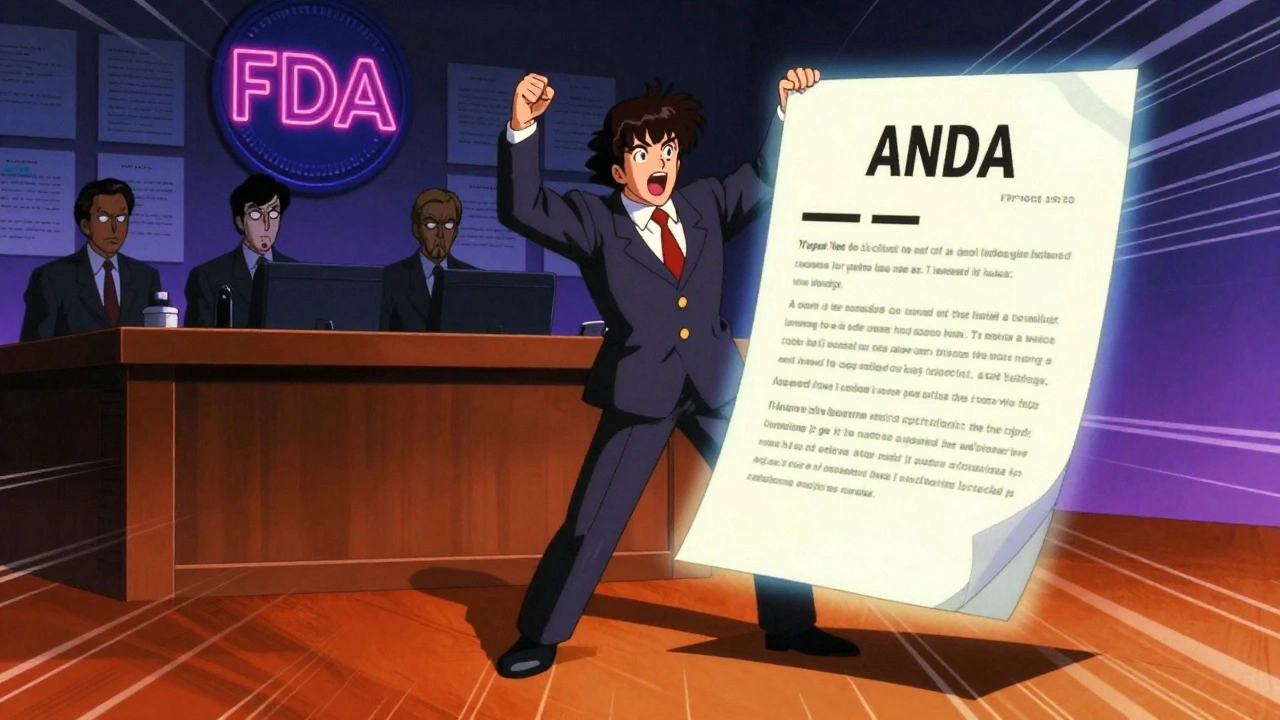
The Hatch-Waxman Act didn’t just change how drugs are approved in the U.S.-it reshaped the entire pharmaceutical market. Before 1984, bringing a generic drug to market meant starting from scratch. Companies had to run their own clinical trials, even when the brand-name version had already been proven safe and effective. That made generics too expensive and slow to develop. Only about 19% of prescriptions were filled with generics back then. Today, over 90% of prescriptions in the U.S. are for generic drugs. That shift didn’t happen by accident. It was built on the foundation of the Drug Price Competition and Patent Term Restoration Act of 1984, better known as the Hatch-Waxman Act.
What the Hatch-Waxman Act Actually Did
The law created a legal shortcut for generic drug makers. Instead of repeating expensive clinical trials, they could prove their product was the same as the brand-name drug using a simpler process called the Abbreviated New Drug Application, or ANDA. The key? Bioequivalence. The generic drug had to deliver the same amount of active ingredient into the bloodstream at the same rate as the original. The FDA requires this to be within 80% to 125% of the brand’s performance-measured by Cmax and AUC in blood tests. That’s not guesswork. It’s science, tightly regulated.But the law didn’t just help generics. It also protected innovators. Brand-name drug companies could get their patent terms extended to make up for the years spent in FDA review. The law capped this at five extra years, with a maximum total market exclusivity of 14 years from the drug’s original approval. That balance-encouraging innovation while enabling competition-is what made Hatch-Waxman work.
The Orange Book and Patent Listings
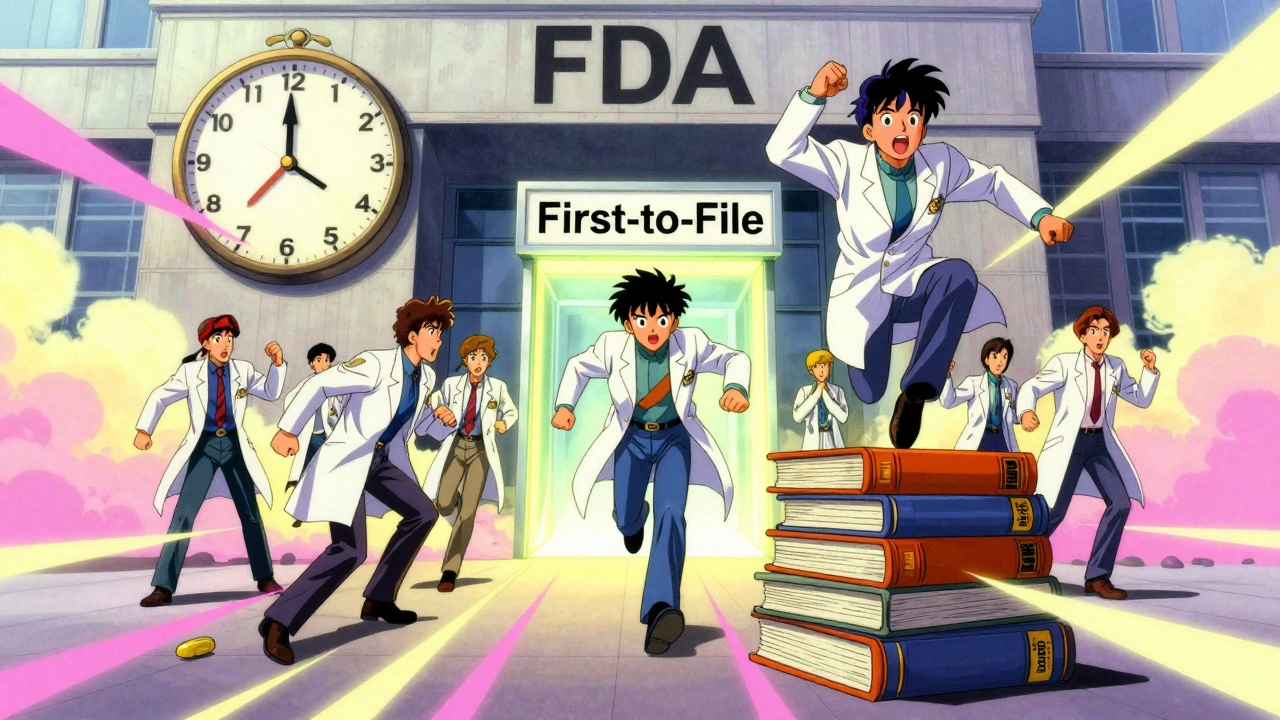
To make this system work, the FDA created the Approved Drug Products with Therapeutic Equivalence Evaluations, better known as the Orange Book. Every brand-name drug must list its patents here. These include patents on the active ingredient, the way it’s made, or even how it’s used. Generic companies check the Orange Book before filing their ANDA. If a patent is still active, they have to decide: wait until it expires, or challenge it.That’s where things get intense. Generic companies can file what’s called a Paragraph IV certification, claiming the patent is invalid or won’t be infringed. This is a legal shot across the bow. It triggers a 45-day window for the brand-name company to sue for patent infringement. If they do, the FDA can’t approve the generic for up to 30 months. That’s called a 30-month stay. It’s not a guarantee of victory-it’s a delay tactic. In fact, 90% of Paragraph IV filings lead to lawsuits. Some generic companies even camped outside FDA offices in the 1990s, trying to be first to file and lock in the next big prize: 180 days of market exclusivity.
180-Day Exclusivity: The High-Stakes Race
The first generic company to file a successful Paragraph IV certification gets 180 days of exclusive rights to sell their version. No other generic can enter the market during that time. That’s a massive financial incentive. During those six months, the first filer can charge nearly brand-name prices while capturing most of the market. That’s why companies spend millions on legal teams and patent analysis just to be first.But it’s not always fair. Sometimes, brand and generic companies strike secret deals-known as “pay-for-delay”-where the brand pays the generic to delay entry. The FTC has cracked down on these, but they still happen. The law was meant to speed up access, not slow it down. In 2003, the FDA changed the rules so that if multiple companies file on the same day, they share the 180-day window. That reduced the “first-to-file” frenzy, but the race is still on.
Who Wins? Patients and the System
The results speak for themselves. Since 1984, generic drugs have saved the U.S. healthcare system over $1.7 trillion. In 2023 alone, Americans saved $158 billion thanks to generics. The average price of a generic drug is 80% to 90% lower than the brand-name version. Medicare Part D beneficiaries saved an average of $3,200 per person in 2023 just by using generics. And it’s not just about cost. More people get the medicines they need because they’re affordable.Generic manufacturers like Teva, Viatris, and Sandoz now operate like specialized legal-scientific hybrids. They don’t just make pills-they analyze patent portfolios, predict litigation outcomes, and time their filings down to the month. The average cost to develop a generic drug today? $5 million to $10 million. It’s still a lot, but it’s a fraction of the $2.6 million (in 1984 dollars) it used to take just to file an application before Hatch-Waxman.
Where the System Breaks Down
The Hatch-Waxman Act was built for small-molecule drugs-pills and capsules with simple chemical structures. But today, more complex drugs are coming off patent. Biosimilars, which are copies of biologic drugs made from living cells, don’t fit neatly into the ANDA system. That’s why Congress passed the Biologics Price Competition and Innovation Act (BPCIA) in 2010. It’s a separate, slower, and more expensive pathway.Another problem? Patent thickets. Brand companies pile on dozens of secondary patents-covering everything from pill coatings to dosing schedules-to keep generics out. The average drug had just 1.5 patents listed in the Orange Book in 1984. Today, it’s 3.5. Some companies use the 30-month stay repeatedly, stretching exclusivity far beyond the original patent term. The FDA has responded with new rules under the CREATES Act, forcing brand companies to provide samples so generics can test their products. Still, delays happen.
And then there’s quality. In 2023, 283 generic drugs were in short supply. Many of those shortages trace back to manufacturing issues-especially at overseas facilities. The FDA inspects thousands of plants each year, but the system is stretched thin. And while most generics are safe and effective, a few bad actors have slipped through.
What’s Next for Generic Drugs?
The FDA is working to speed things up. Thanks to the Generic Drug User Fee Amendments (GDUFA) III, the average review time for an ANDA dropped from 36 months in 2012 to just 18 months in 2023. The agency also released 15 new guidance documents in 2023 alone to help generic makers navigate complex requirements.Congress is debating whether to tighten rules around pay-for-delay deals and patent thickets. Some lawmakers want to limit patent extensions. Others want to make it easier for generics to challenge weak patents without facing lawsuits. Meanwhile, the FDA is preparing for the next wave of complex drugs-like combination therapies and injectables-that will test the limits of the Hatch-Waxman framework.
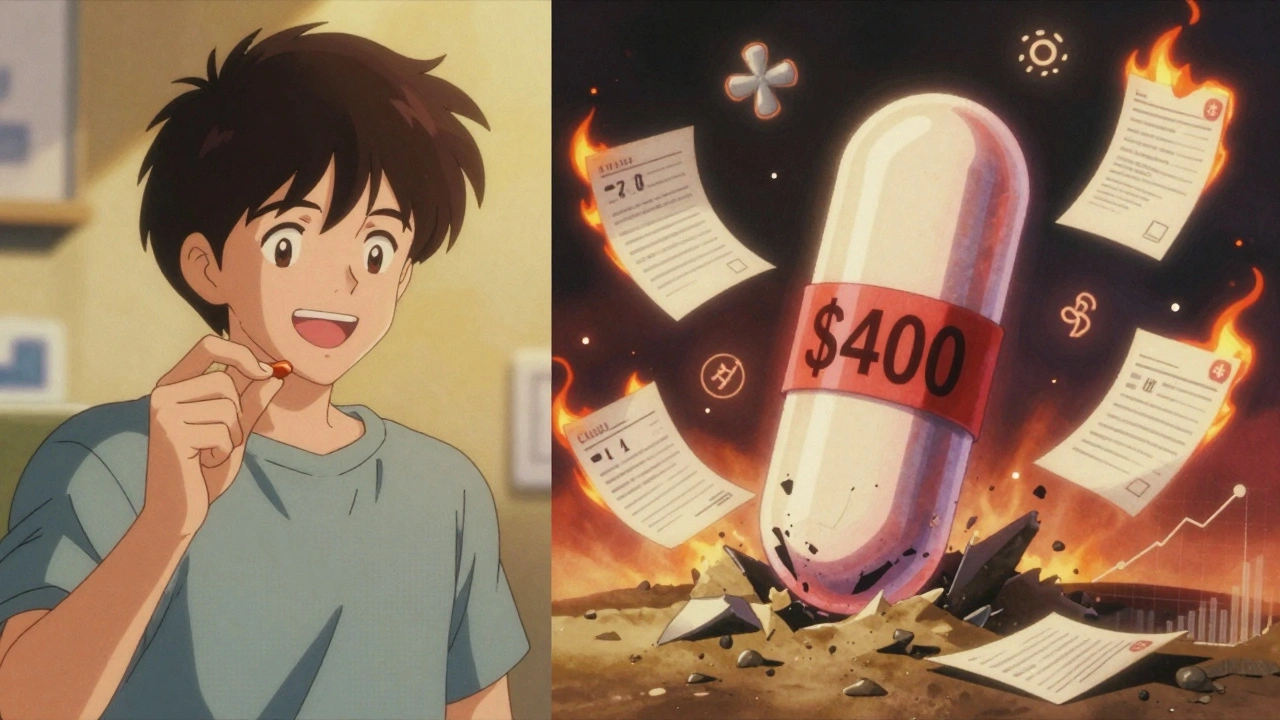
One thing is clear: without the Hatch-Waxman Act, millions of Americans wouldn’t be able to afford their prescriptions. The law didn’t just create a pathway for generics-it created a system that balances innovation with access. It’s not perfect. But it’s the reason why a 30-day supply of a generic blood pressure pill costs $4 instead of $400.
How Generic Drugs Get Approved Today
Here’s the real-world process:- A brand-name drug gets FDA approval and patents are listed in the Orange Book.
- A generic company develops an identical version and files an ANDA.
- They certify the patent status: Paragraph I (no patents), II (expired), III (will wait), or IV (challenging the patent).
- If they file Paragraph IV, they notify the brand company and wait for a lawsuit.
- If no lawsuit is filed, or if they win, the FDA approves the generic.
- The first filer gets 180 days of exclusivity.
- After that, other generics enter and prices drop further.
The entire system runs on timing, legal strategy, and scientific precision. It’s not just about making a pill. It’s about outmaneuvering patents, beating competitors, and passing FDA inspections-all while keeping costs low.
What does ANDA stand for, and why is it important?
ANDA stands for Abbreviated New Drug Application. It’s the shortcut the Hatch-Waxman Act created for generic drug makers. Instead of running full clinical trials, they prove their drug is bioequivalent to the brand-name version. That cuts development time and cost, making generics affordable and widely available.
What is the Orange Book and how does it affect generics?
The Orange Book is the FDA’s official list of approved drug products and their patents. Generic companies use it to know which patents they must address before launching. If a patent is listed, they can’t get approval until it expires-or until they successfully challenge it through a Paragraph IV certification. It’s the roadmap for generic entry.
Why do generic drugs cost so much less than brand-name drugs?
Generic drugs don’t have to pay for the original research, clinical trials, or marketing campaigns. The Hatch-Waxman Act lets them rely on the brand’s safety and effectiveness data. That cuts development costs by 70% or more. Once multiple generics enter the market, competition drives prices down 80% to 90%.
Can a generic drug be different from the brand?
The active ingredient must be identical. So must the strength, dosage form, and route of administration. But inactive ingredients-like fillers or dyes-can differ. That’s why some people notice a change in pill color or shape. But if the drug is bioequivalent, it works the same way in the body. The FDA considers these generics interchangeable.
What’s a pay-for-delay deal, and is it legal?
A pay-for-delay deal happens when a brand-name company pays a generic company to delay launching its cheaper version. This keeps prices high. The FTC considers these agreements anti-competitive, and courts have ruled many of them illegal. But some still slip through, especially when structured as “licensing deals” or “services agreements.” They’re under increasing legal scrutiny.
Why do some generic drugs go into short supply?
Many generic drugs are made overseas, and manufacturing problems-like quality control failures or facility shutdowns-can cause shortages. Low profit margins mean companies don’t always invest in backup production. In 2023, 283 generic drugs were in short supply, including critical medicines like insulin and antibiotics. The FDA is working to improve oversight, but the system remains fragile.
Sara Larson
December 3, 2025 AT 19:44Wow, this is such a game-changer for everyday people! 🙌 I’ve seen my grandma switch to generics and suddenly she could afford all her meds-no more skipping doses. This law didn’t just save money, it saved lives. So glad someone finally explained it clearly!
Josh Bilskemper
December 3, 2025 AT 19:46The Hatch-Waxman Act is the only reason we’re not paying $2000 for lisinopril. The real story is how the FDA’s bioequivalence standards are more rigorous than most people realize. Cmax and AUC aren’t suggestions-they’re legal thresholds. Stop acting like generics are some kind of miracle.
Storz Vonderheide
December 4, 2025 AT 19:02As someone who’s worked in global health, I’ve seen how this model spread to India and Brazil-massive drops in drug prices, way more access. But here’s the thing: the U.S. version was designed for small molecules. Now we’re stuck with biosimilars that take 5 years and $200M to approve. We need a Hatch-Waxman 2.0 for biologics. The system’s still brilliant, just outdated.
dan koz
December 6, 2025 AT 06:11Man, this is why Africa can't get affordable meds. The whole system is built for rich countries. Patent thickets? 30-month stays? We don't even have the labs to test bioequivalence. Your 'solution' is a luxury. Meanwhile, people die because insulin costs more than rent.
Kevin Estrada
December 8, 2025 AT 04:24OK but have you heard about the secret FDA bribes?? I mean, I read this one Reddit thread where a guy said his cousin’s ex-boss worked at Teva and they all knew the ANDA reviews were rigged. And the 180-day exclusivity? That’s just corporate collusion with a fancy name. Also, why do all generics taste like plastic?? I think they’re using banned fillers. #HatchWaxmanScam
Katey Korzenietz
December 9, 2025 AT 19:23Generic drugs are dangerous. I took one for my thyroid and my heart started racing. The brand worked fine. The FDA says they’re ‘bioequivalent’-bullshit. It’s not the same. People die from this. And don’t even get me started on the Chinese factories. I won’t touch a generic again.
Chris Jahmil Ignacio
December 11, 2025 AT 18:48Let me break this down for you people who think this is all sunshine and rainbows. The 180-day exclusivity isn’t competition-it’s a monopoly disguised as innovation. The brand companies know this. They sit back, wait for the first filer to spend $10M on lawyers, then they sue the second filer into oblivion. And the FDA? They’re asleep at the wheel. Patent thickets? They’re not loopholes-they’re weapons. This system was designed to protect Big Pharma, not patients. The $1.7 trillion savings? That’s just the tip of the iceberg. The real cost is in the delayed access, the chronic shortages, the patients who still can’t get their meds because the system is rigged. And now they’re trying to extend this model to biosimilars? That’s not progress. That’s a death sentence for millions.
Colin Mitchell
December 12, 2025 AT 17:57Just wanted to say thanks for laying this out so clearly. I’m a pharmacy tech and I see this every day-people crying because they can’t afford their meds, then finding out the generic is $4. It’s wild how few people know how this works. The Orange Book? Most patients have no idea it exists. Maybe we need a public education push. Not everyone’s got a law degree to decode patent filings.
Susan Haboustak
December 13, 2025 AT 21:17You’re all missing the point. The real problem isn’t the law-it’s the manufacturers. Look at the 283 shortages in 2023. Over 70% came from India and China. The FDA inspects 1,200 plants a year? That’s one inspection every 3 years per plant. And they’re still approving batches with 20% potency variance. This isn’t about patents. It’s about corporate greed and regulatory capture. The Hatch-Waxman Act didn’t fail. The people running it did.