
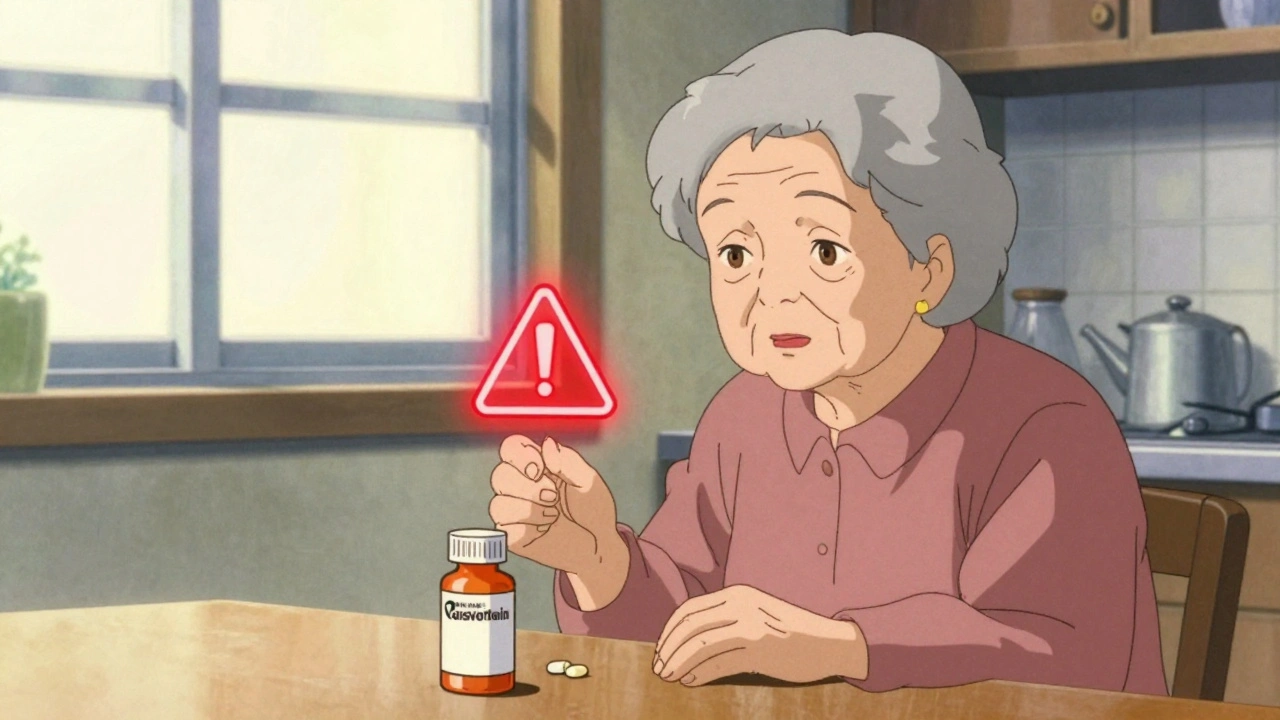
Millions of people take Ginkgo Biloba every day - not because it’s trendy, but because they believe it helps their memory, focus, or circulation. It’s one of the most popular herbal supplements in the U.S. and Europe. But here’s the problem: if you’re also on a blood thinner, you might be putting yourself at risk without even knowing it.
What Exactly Is Ginkgo Biloba?
Ginkgo Biloba comes from the leaves of the Ginkgo tree - one of the oldest living tree species on Earth, unchanged for over 270 million years. The extract used in supplements is standardized, meaning it’s processed to contain consistent levels of active compounds: 24% flavonol glycosides and 6% terpene lactones. This specific formula, known as EGb 761, is what most clinical studies use and what you’ll find in reputable brands.
It’s been used in traditional Chinese medicine for centuries, but only became widely available in the West in the 1980s. Today, it’s sold as capsules, tablets, teas, and liquid extracts. People take it for brain health, tinnitus, and poor circulation. But none of those benefits matter if it’s interacting dangerously with your medication.
How Ginkgo Biloba Might Affect Blood Thinners
Blood thinners - whether they’re aspirin, warfarin, clopidogrel, or newer drugs like apixaban - work by stopping your blood from clotting too easily. That’s critical for people with atrial fibrillation, history of stroke, or after stent placement. But Ginkgo Biloba doesn’t just sit quietly in your system. It has properties that can interfere with how your blood clots.
Research shows Ginkgo may reduce platelet aggregation - meaning it makes your platelets less likely to stick together and form clots. That sounds helpful, right? But if you’re already on a blood thinner, that’s like adding another layer of protection your body doesn’t need. It’s stacking effects.
Some lab studies suggest Ginkgo might also affect the liver enzyme CYP2C9, which breaks down warfarin. If that enzyme slows down, warfarin builds up in your blood, increasing your risk of bleeding. That’s not just a theory - it’s been seen in real cases. The FDA has logged 18 reports of bleeding events linked to Ginkgo use between 2008 and 2020. No one proved Ginkgo caused them directly, but in every case, the person was also taking blood thinners.
What the Experts Say - And Why They Disagree
Here’s where it gets messy. Some top medical sources say Ginkgo is safe with blood thinners. A 2008 review in PubMed concluded that well-designed studies showed no significant interaction. They pointed out that most bleeding cases involved low-quality, non-standardized Ginkgo products - the kind you might buy from a street vendor or unregulated online store.
But other equally respected sources say the opposite. The Mayo Clinic, Cleveland Clinic, and GoodRx all warn against combining Ginkgo with blood thinners. They list warfarin as a "high-risk" interaction and aspirin or clopidogrel as "moderate-risk." The American Society of Health-System Pharmacists calls the risk "theoretical," but still advises caution.
Why the gap? Because science doesn’t always give clear answers. Controlled trials often use pure, standardized extracts like EGb 761. Real-world users? They’re taking whatever’s on the shelf - different doses, different brands, sometimes mixed with other herbs like garlic or ginseng, which also affect bleeding.
Which Blood Thinners Are Most Concerning?
Not all blood thinners are the same. Here’s how Ginkgo interacts with the most common ones:
- Warfarin (Coumadin, Jantoven): Highest concern. Ginkgo may slow its breakdown, leading to dangerously high levels in your blood. Case reports show increased INR levels and serious bleeding.
- Aspirin: Both reduce platelet function. Together, they may increase bruising or nosebleeds. Not life-threatening for most, but risky if you’re prone to bleeding.
- Clopidogrel (Plavix): Used after heart attacks or stents. Ginkgo may amplify its antiplatelet effect. A 2020 study found 2.6% of clopidogrel prescriptions were taken with Ginkgo - a risky combo.
- DOACs (Apixaban, Rivaroxaban, Dabigatran): Newer drugs with fewer interactions, but still not risk-free. A 2020 study found 18% of DOAC users taking Ginkgo - and 48.7% of those were at high risk of interaction.
The bottom line? If you’re on any of these, Ginkgo isn’t worth the gamble.

What About Surgery or Dental Work?
This is where the stakes get highest. If you’re scheduled for surgery - even a simple tooth extraction - your surgeon or dentist needs to know if you’re taking Ginkgo. Bleeding during or after the procedure can be serious, even deadly.
Most experts agree: stop Ginkgo before any procedure. But how long?
- The American Society of Anesthesiologists recommends stopping 36 hours before surgery.
- Dr. Michael Murray and others suggest 36-48 hours.
- Dr. Tieraona Low Dog and some integrative medicine centers recommend 2 weeks - just to be safe.
Why the range? Because Ginkgo’s effects on platelets can linger longer than its presence in your bloodstream. If you’re having major surgery, err on the side of caution. Tell your doctor. Write it down. Don’t assume they’ll ask.
What Other Supplements Can Make This Worse?
Ginkgo doesn’t work alone. Many people take multiple supplements thinking they’re harmless. But combining Ginkgo with other blood-thinning herbs multiplies the risk.
Watch out for:
- Garlic - even raw cloves or supplements can thin blood.
- Danshen - a Chinese herb used for heart health, known to interact with warfarin.
- Evening primrose oil - may increase bleeding time.
- Fish oil - high doses (over 3,000 mg EPA/DHA daily) can affect clotting.
- Curcumin (turmeric) - has antiplatelet effects.
If you’re on a blood thinner, avoid stacking these. One might be okay. Two or three? That’s a recipe for trouble.
What Should You Do?
Here’s the practical advice - no fluff, no guesswork:
- Don’t start Ginkgo if you’re already on a blood thinner. Period.
- If you’re already taking it, talk to your doctor or pharmacist before stopping. Abruptly quitting isn’t always safe either.
- Always disclose every supplement you take - even if you think it’s "just herbal."
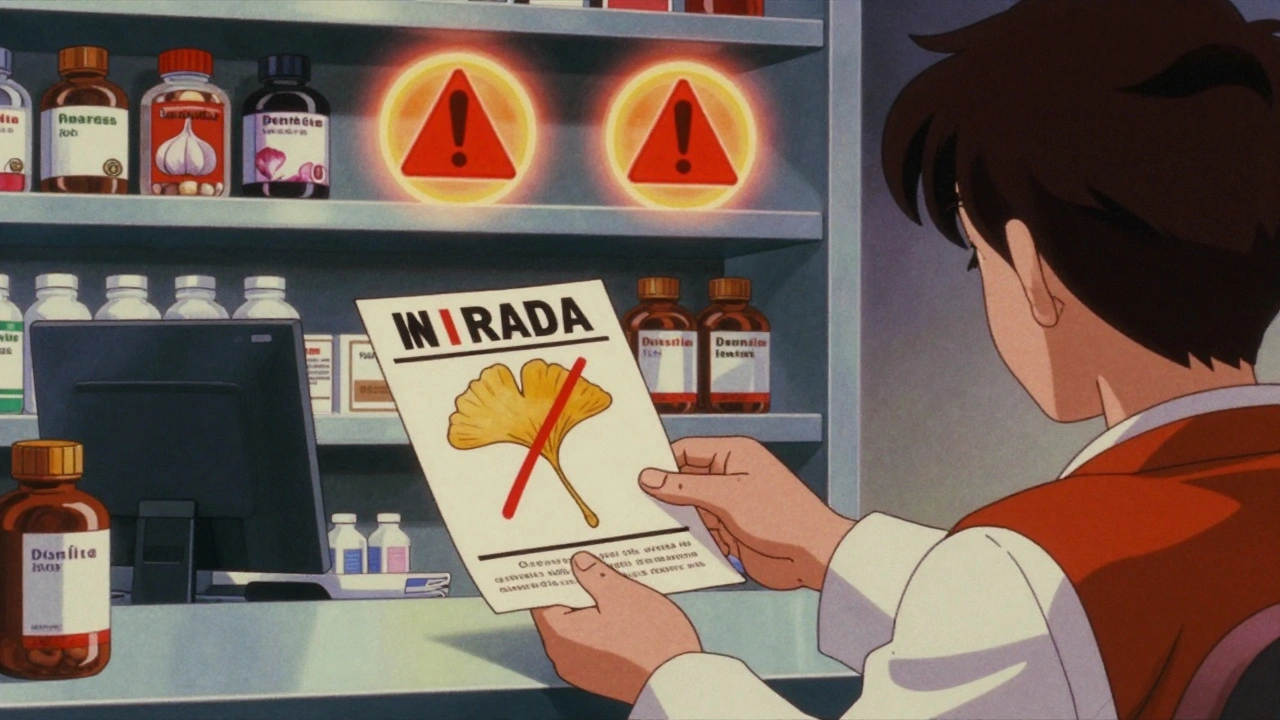
- Ask your pharmacist to run a full interaction check. Most pharmacies do this for free.
- Read labels. If your Ginkgo bottle doesn’t warn about blood thinners, consider switching brands. 42% of manufacturers now include this warning - the others haven’t caught up.
- Before any medical procedure, stop Ginkgo at least 36 hours ahead. For major surgery, go with 2 weeks.
What If You’ve Already Had a Bleeding Episode?
If you’ve had unexplained bruising, nosebleeds, blood in your urine or stool, or a headache that won’t quit - and you’re taking Ginkgo and a blood thinner - stop the supplement immediately. Call your doctor. Get your INR checked if you’re on warfarin. Don’t wait.
One case report from 2019 described a 72-year-old woman on warfarin who developed a brain hemorrhage after taking Ginkgo for 6 months. She had no other risk factors. She survived - but barely. Her doctors called it "a textbook example of a preventable interaction."
That could be you. Or your parent. Or your neighbor.
Bottom Line
There’s no perfect answer. Science hasn’t proven Ginkgo always causes bleeding with blood thinners. But it’s shown enough red flags to warrant extreme caution. The risks aren’t theoretical - they’re documented in real people. And the consequences? They can be fatal.
Herbal doesn’t mean safe. Natural doesn’t mean harmless. If you’re on a blood thinner, Ginkgo Biloba isn’t worth the risk. There are safer ways to support brain health - exercise, sleep, omega-3s, and managing blood pressure. Skip the supplement. Talk to your doctor. Protect your health - not just your memory, but your life.
Can I take Ginkgo Biloba if I’m on aspirin?
It’s not recommended. Both aspirin and Ginkgo reduce platelet function, which can increase your risk of bruising, nosebleeds, or internal bleeding. Even though the interaction is considered "moderate," the risk isn’t worth it if you’re already on a blood thinner. Talk to your doctor before combining them.
Is Ginkgo Biloba safe with warfarin?
No. Warfarin and Ginkgo Biloba together can significantly increase your risk of serious bleeding, including brain hemorrhages. Studies show Ginkgo may slow how your body breaks down warfarin, leading to dangerous buildup. The Mayo Clinic, Cleveland Clinic, and GoodRx all advise avoiding this combination entirely.
How long before surgery should I stop Ginkgo Biloba?
Stop at least 36 hours before any procedure. For major surgery, most experts recommend stopping 1-2 weeks ahead. Platelet effects from Ginkgo can linger longer than the supplement stays in your system. When in doubt, follow your surgeon’s advice - and always tell them you’re taking it.
Do all Ginkgo supplements have the same risk?
No. Most clinical studies used a standardized extract called EGb 761, which has consistent potency. Many store-bought products are weaker, unstandardized, or contaminated. Non-standardized versions may have unpredictable effects. If your bottle doesn’t list "EGb 761" or the percentage of active ingredients, it’s harder to predict how it will interact with your medication.
Can I take Ginkgo if I’m not on blood thinners but have a history of bleeding?
If you’ve had unexplained bleeding in the past - like frequent nosebleeds, heavy periods, or bleeding gums - talk to your doctor before starting Ginkgo. Even without blood thinners, Ginkgo’s effect on platelets could make bleeding more likely. It’s not just about medications - your personal health history matters too.
What to Do Next
Don’t wait for a bleeding event to happen. If you’re taking Ginkgo and a blood thinner, schedule a quick appointment with your pharmacist or doctor. Bring your supplement bottles. Ask: "Is this safe with what I’m on?" Most will check for free.
And if you’re thinking of starting Ginkgo for memory or circulation - pause. Ask yourself: Is this worth the risk? There are proven, safer ways to support brain health. You don’t need a supplement to do it.
Ollie Newland
December 6, 2025 AT 02:48Man, I’ve been taking ginkgo for my focus for years-never even thought about the blood thinner angle. This post is a wake-up call. My uncle had a bleed after surgery and they traced it back to his herbal stack. Scary stuff.
Bill Wolfe
December 8, 2025 AT 01:47Let’s be real-most people don’t know what EGb 761 even is, and that’s the problem. 🤦♂️ You’re not just taking ‘ginkgo,’ you’re taking a chemically inconsistent hodgepodge from some Amazon vendor who calls it ‘Ancient Wisdom™.’ The fact that 58% of supplements don’t even list active compound percentages? That’s not negligence-it’s corporate malpractice. 🧪💔
And don’t get me started on the ‘natural means safe’ crowd. Poison ivy is natural. Botulinum toxin is natural. Nature doesn’t care if you live or die. Only your pharmacist does.
If you’re on warfarin and you think a 200mg capsule from GNC is ‘harmless,’ you’re one INR spike away from a neurosurgery ward. The FDA’s 18 reported cases? That’s the tip of the iceberg. Most people don’t connect the dots until they’re bleeding out in the ER.
And yes, I’ve read the 2008 PubMed review. It was funded by a supplement manufacturer. Surprise, surprise. Science doesn’t exist in a vacuum-it’s shaped by dollars. The Mayo Clinic, Cleveland Clinic, and GoodRx aren’t selling you a bottle. They’re trying to keep you alive.
Stop romanticizing herbalism. It’s not ‘holistic.’ It’s reckless. If you want brain health, eat blueberries, sleep 7 hours, and move your body. Not a leaf extract with zero regulatory oversight.
And if you’re going to take it anyway? At least get the standardized version. But even then-don’t. Just don’t.
PS: If your supplement bottle doesn’t say ‘EGb 761’ in bold, it’s not worth the paper it’s printed on. And if it says ‘organic’? That just means it’s grown without pesticides. Not that it’s safe with your meds. 😌
Heidi Thomas
December 9, 2025 AT 08:32You’re all overreacting. I’ve taken ginkgo with warfarin for 12 years and I’m fine.
zac grant
December 10, 2025 AT 03:21Heidi’s right-some people are just lucky. But luck isn’t a strategy. 🤷♂️ I’ve seen too many patients assume ‘I’m fine’ means ‘it’s safe.’ One guy had a GI bleed after adding ginkgo to his aspirin + fish oil combo. He thought it was ‘just a little herbal boost.’ Turns out, ‘a little’ is enough when you’re on anticoagulants.
Bottom line: If your doctor doesn’t ask about supplements, ask them. Bring the bottle. Show them the label. It’s not weird-it’s smart.
Rebecca Braatz
December 10, 2025 AT 15:00Y’all need to stop playing Russian roulette with your health. 🚨 I’m a nurse, and I’ve held the hands of people who thought ‘natural’ meant ‘no consequences.’ Ginkgo isn’t a vitamin-it’s a pharmacologically active compound with documented bleeding risks. If you’re on blood thinners, you’re already walking a tightrope. Don’t add a second rope made of twigs and wishful thinking.
Switch to walking, meditation, or omega-3s. Your brain will thank you. Your body will thank you more.
jagdish kumar
December 12, 2025 AT 08:17The universe whispers through leaves. Ginkgo is ancient. Blood thinners are modern. Who are we to say which speaks truth?
Michael Feldstein
December 13, 2025 AT 05:06Hey, I get why people take ginkgo. I used to take it too-thought it helped my concentration. But after reading this, I called my pharmacist. She checked my meds (lisinopril + low-dose aspirin) and said, ‘Don’t risk it.’ So I quit. No drama. No guilt. Just… safer.
If you’re thinking about starting it? Pause. Breathe. Ask your pharmacist. They’re not trying to sell you anything. They’re trying to keep you alive.
Carolyn Ford
December 15, 2025 AT 03:56Oh, so now it’s ‘dangerous’? Funny how the same people who scream ‘Big Pharma is lying!’ suddenly trust the Mayo Clinic? 🤨 You want consistency? Then stop taking the cheap stuff. But don’t pretend you’re ‘protecting health’ by listening to institutions that profit from your fear.
My cousin took ginkgo with Plavix for 5 years. No bleeding. No issues. He’s 89 and still hikes. Maybe the real danger is fearmongering?
Libby Rees
December 15, 2025 AT 23:59Medical advice should be clear, evidence-based, and free of emotional manipulation. This article is well-researched. The warnings are not exaggerated. The risks are documented. The solution is simple: avoid combining Ginkgo Biloba with anticoagulants. No speculation. No drama. Just facts.
Benjamin Sedler
December 17, 2025 AT 11:34What if I told you ginkgo actually *reduces* bleeding risk by improving microcirculation? 🤔 Maybe the whole ‘blood thinner’ fear is just a placebo effect created by Big Pharma to sell more warfarin? I mean, think about it-why would a 270-million-year-old tree be dangerous? That’s evolution’s masterpiece. You’re scared of nature because you’ve forgotten how to listen.
Also, I took ginkgo with apixaban for 3 years. My INR? Perfect. My brain? Sharper than ever. The system doesn’t want you to know this. 😏
michael booth
December 18, 2025 AT 10:30I appreciate the thoroughness of this post. It is imperative that individuals on anticoagulant therapy exercise caution when introducing any supplement into their regimen. The potential for pharmacokinetic interference is well documented. I recommend consultation with a licensed clinical pharmacist prior to initiating any herbal product. Safety is not optional.
Dematteo Lasonya
December 20, 2025 AT 04:18My mom took ginkgo for memory and ended up in the hospital with a subdural hematoma. She didn’t tell her doctor because she thought it was ‘just a supplement.’ We got lucky she survived. Now I make sure everyone in my family brings their supplement bottles to every appointment. No exceptions.
Alex Piddington
December 20, 2025 AT 07:03Thank you for this. 🙏 I’ve been taking ginkgo since my dad had a stroke. I thought it was helping him. Turns out, he was also on aspirin. We didn’t know. He’s okay now, but I’m done with it. I’m switching to walking in the park every morning. Simple. Safe. Real.