
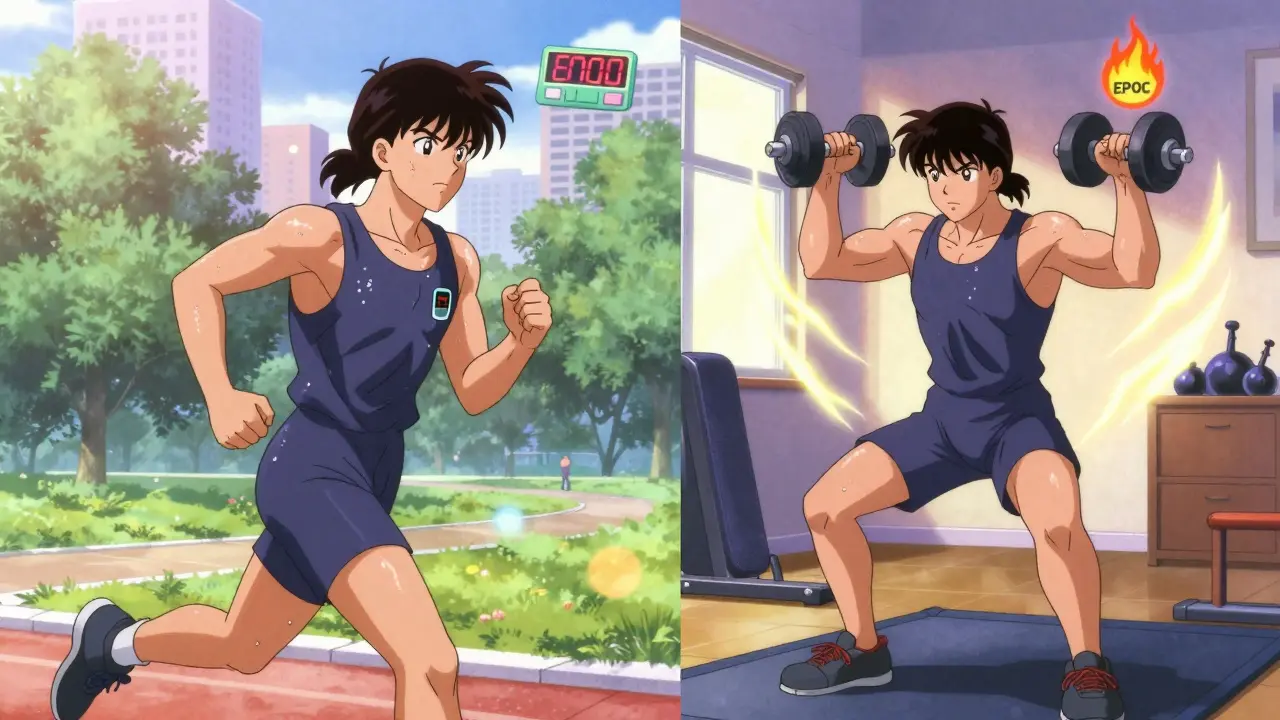
When it comes to losing weight, most people start with the same question: cardio or strength training? It feels like a battle - one side says run harder, the other says lift heavier. But here’s the truth: neither alone is the full answer. The real magic happens when you stop picking sides and start combining them.
Cardio Burns Calories Fast - But It’s Not the Whole Story
Cardio is the go-to for quick results. A 30-minute jog can burn 300-400 calories for someone weighing 155 pounds. Cycling, swimming, dancing - all of these get your heart pumping and your body using up energy fast. That’s why the scale often drops quickly when you start running or brisk walking regularly. People report seeing changes in just a few weeks. It’s immediate. It’s visible. And that feels good. But here’s what most don’t tell you: after 8-12 weeks, the scale tends to stall. Why? Your body adapts. You get more efficient. You burn fewer calories doing the same workout. And if you’re only doing cardio, you might start losing muscle along with fat. That’s not just a numbers problem - it’s a metabolic one. Less muscle means your body burns fewer calories even when you’re sitting still.Strength Training Doesn’t Burn Many Calories - But It Changes Your Body Forever
A 30-minute weight session might only burn 90-150 calories. That’s less than half of what cardio burns in the same time. So why do so many people who lift weights look leaner, even if the scale doesn’t move? Because strength training doesn’t just burn calories during the workout. It keeps burning them afterward. This is called EPOC - excess post-exercise oxygen consumption. After a hard lifting session, your body works harder for up to 48 hours to recover. That means you’re burning extra calories while you sleep, while you watch TV, while you walk the dog. More importantly, muscle burns more calories at rest than fat. One kilogram of muscle uses about 13-15 calories per day. Fat? Only 4.5-5. So if you gain 2kg of muscle and lose 2kg of fat, your body starts burning an extra 16-20 calories every single day - just by existing. That’s nearly 7,000 extra calories a year. That’s close to a full kilogram of fat, without changing a single thing else.The Science Says: Combine Them
A 2022 study in Obesity tracked people over six months. Those who did both cardio and strength training lost 12.4% body fat and gained 1.8kg of muscle. The cardio-only group lost 9.7% fat - but also lost muscle. The strength-only group gained muscle but lost less fat overall. The results were clear: combining both gave the best body composition change. Not just weight loss - real transformation. Clothes fit better. You look tighter. Your posture improves. You feel stronger in daily life - climbing stairs, carrying groceries, playing with kids. And it’s not just one study. The National Weight Control Registry, which tracks over 10,000 people who’ve lost significant weight and kept it off, found that successful maintainers averaged 220 minutes of cardio a week - but also did at least three strength sessions. The ones who stuck with it long-term didn’t just run. They lifted.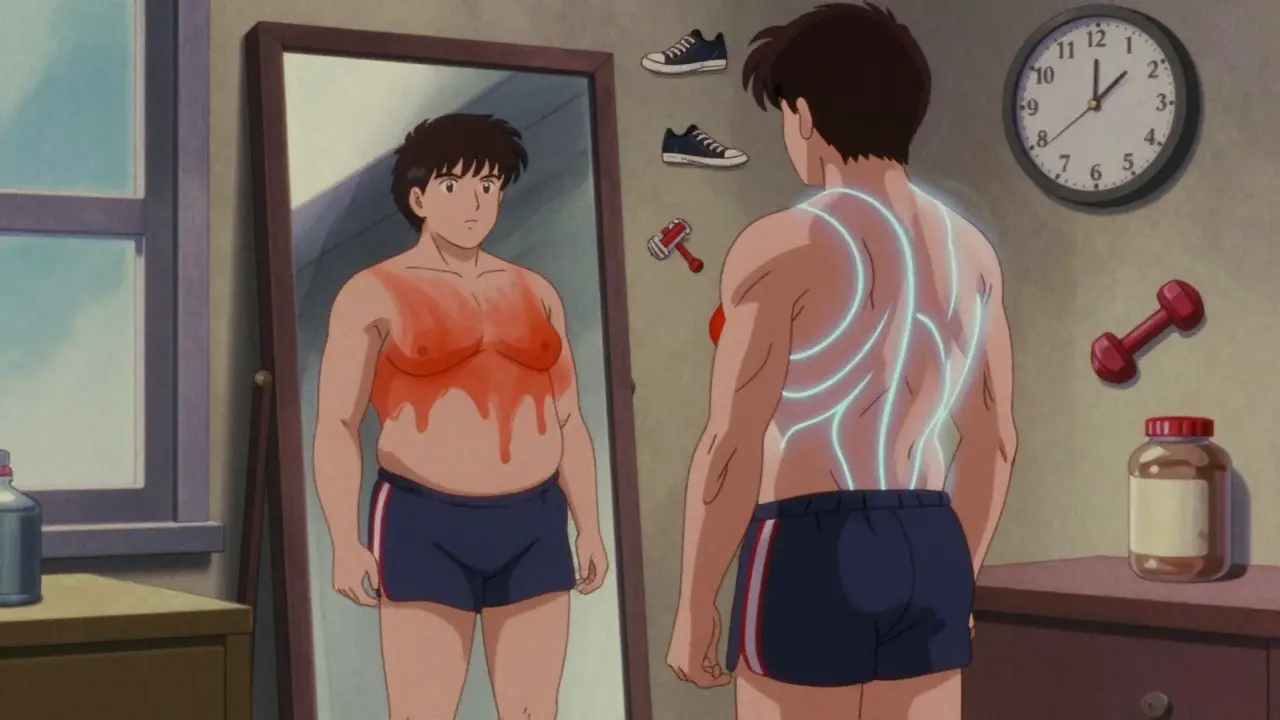
What About HIIT? Is It the Best of Both Worlds?
High-intensity interval training - short bursts of all-out effort followed by rest - is gaining serious traction. A 20-minute HIIT session can burn as many calories as 40 minutes of steady jogging. And because it’s intense, it spikes EPOC even more than traditional cardio. One 2023 study showed HIIT triggered 12-15% more post-workout calorie burn than steady-state cardio. But here’s the catch: HIIT is hard. If you’re new to exercise, or if you have joint issues, jumping into sprints or burpees can lead to injury. It’s not for everyone. But if you’re already active and want to maximize time, a couple of HIIT sessions a week mixed with strength training can be powerful.Real People, Real Results
Look at Reddit threads from people who’ve tried both. One top post with over 3,400 upvotes showed 68% of people who did both cardio and weights lost more than 15% body fat. Only 42% of cardio-only folks hit that mark. And only 31% of those who lifted alone did. Cardio lovers say: “The scale dropped fast.” “I felt less stressed.” Strength lovers say: “The scale didn’t move, but my jeans were loose.” “I finally saw my abs after three months.” “I’m not skinny - I’m strong.” And the people who stuck with it? They did both. They tracked both. They didn’t quit when the scale stalled. They knew muscle takes time.How to Start - No Gym Required
You don’t need fancy equipment. You don’t need to spend hours. Here’s what works for most people:- Start with 3 days of cardio: brisk walking, cycling, dancing, or swimming - 20-30 minutes each session.
- Do 2 days of strength: bodyweight squats, push-ups, lunges, planks. Use dumbbells or resistance bands if you have them.
- Focus on form, not weight. Learn how to move properly before adding more load.
- Progress slowly. Add 5% more weight or one more rep each week.
- Drink water. Eat enough protein (1.6-2.2g per kg of body weight). Without protein, muscle won’t grow - no matter how hard you lift.

Common Mistakes People Make
Most people fail not because they don’t work hard - they fail because they do the wrong things.- Only doing cardio: You lose muscle. Your metabolism slows. You plateau.
- Only lifting without cardio: You build muscle, but fat stays. You look toned, but not lean.
- Not eating enough protein: Only 32% of people trying to lose weight hit the protein target. That’s why they don’t build muscle.
- Skipping recovery: Strength training breaks muscle down. It rebuilds during rest. Sleep and rest days aren’t optional.
- Expecting the scale to tell the whole story: Muscle weighs more than fat. If you’re lifting and the scale doesn’t move, take measurements. Take photos. See how your clothes fit.
The Bigger Picture: It’s Not Just About Exercise
Here’s something few talk about: non-exercise activity thermogenesis - or NEAT. That’s everything you do that’s not sleeping, eating, or working out. Walking to the bus, standing while talking on the phone, fidgeting, gardening. Research from Mayo Clinic shows NEAT can burn 2-3 times more calories than your structured workout. That means if you’re sitting all day and then doing a 30-minute run, you’re still not moving enough. Move more. Take the stairs. Park farther away. Stand up every hour. Exercise is important. But movement all day long? That’s the secret sauce.What’s Next?
The future of weight loss isn’t about one perfect workout. It’s about personalization. New studies are looking at genetics, metabolism, and even gut health to tailor exercise plans. Wearables now track not just steps, but recovery and calorie burn after workouts. But you don’t need a lab test to get started. Just begin. Mix cardio and strength. Be consistent. Eat protein. Sleep well. Move often. You don’t have to be perfect. You just have to be consistent.Is cardio or strength training better for losing belly fat?
Neither alone targets belly fat specifically - fat loss happens all over the body. But combining cardio and strength training gives you the best shot. Cardio burns calories fast, while strength training preserves muscle and boosts your resting metabolism. Studies show people who do both lose more body fat overall, including around the waist, than those who do only one.
Can I lose weight with strength training alone?
Yes, but it’s slower. Strength training builds muscle, which increases your daily calorie burn. However, it doesn’t burn as many calories during the workout as cardio does. If you’re eating at a deficit and lifting consistently, you’ll lose fat - but you might not see the same rapid scale drop as with cardio. For faster results, add some cardio.
Why does the scale go up when I start lifting weights?
Muscle holds more water than fat, and when you start strength training, your muscles retain fluid as part of the repair process. This can cause a temporary weight gain of 1-3 pounds. It’s not fat - it’s your body adapting. After 4-6 weeks, this water retention fades, and you’ll start seeing fat loss. Don’t quit because the scale goes up - look at your clothes and how you feel.
How often should I do cardio and strength training to lose weight?
Aim for 150 minutes of moderate cardio (like brisk walking or cycling) spread over 3-5 days, and 2-3 strength sessions per week targeting all major muscle groups. That’s about 20-30 minutes of cardio most days, plus two 30-minute lifting sessions. This balance is what major health organizations recommend for sustainable fat loss and muscle retention.
Do I need to do HIIT to lose weight?
No. HIIT is effective and time-efficient, but it’s not necessary. Steady-state cardio like walking or cycling works just as well if you’re consistent. HIIT can be hard on joints and recovery, especially if you’re new. Start with moderate cardio and add HIIT only if you feel ready and enjoy it.
What if I hate cardio?
Then find something you don’t hate. Dancing, hiking, swimming, even vigorous cleaning counts as cardio. The key is movement that raises your heart rate for at least 20 minutes. You don’t have to run on a treadmill. You just have to move regularly. Many people lose weight successfully with low-impact cardio like walking or cycling - especially if they pair it with strength training.
Shane McGriff
January 18, 2026 AT 19:54I used to think cardio was the only way to lose weight until I started lifting. The scale didn’t budge for weeks, but my shirts got looser. Then one day I looked in the mirror and realized I actually had shoulders. That’s when it clicked - strength training isn’t about getting big, it’s about getting tight.
Cardio gets you sweaty. Strength gets you strong. And strong people don’t quit when the scale stalls - they adjust.
Also, protein. Eat more of it. Like, a lot more. Your muscles aren’t magic, they need fuel.
Paul Barnes
January 20, 2026 AT 13:51Technically, the phrase 'burns more calories at rest' is misleading. Muscle doesn't 'burn' calories like a furnace - it has a higher metabolic rate due to increased energy demands for maintenance. Also, the 13–15 kcal/kg/day figure is outdated; recent studies suggest 10–13 kcal/kg/day for lean mass. Precision matters.
pragya mishra
January 21, 2026 AT 20:16Why do you think Americans always think exercise is the answer? Have you looked at how much sugar is in everything here? You can't out-train a soda habit. My cousin lost 40 pounds just by stopping soda. No gym. No running. Just quit drinking liquid candy.
Stop glorifying workouts. Fix your diet first.
Manoj Kumar Billigunta
January 23, 2026 AT 08:28Let me tell you something simple: if you're not moving more during the day, no amount of cardio or weights will save you.
I used to sit at my desk for 10 hours. Then I started walking for 10 minutes after every meal. No fancy gear. No app. Just walking. In three months, I lost 12 pounds without changing what I ate.
NEAT isn't a buzzword - it's your secret weapon. Stand up. Stretch. Take the stairs. Your body remembers every little movement.
And yes, protein matters. But don't overcomplicate it. Eggs. Chicken. Lentils. Milk. That's enough to start.
Consistency beats intensity every time. One good day is better than five great days and then quitting.
Andy Thompson
January 25, 2026 AT 06:27Cardio is a scam. The government and Big Pharma want you running on treadmills so you don't notice how the food industry is poisoning you with HFCS and soybean oil.
Strength training? That's real. But even that's controlled - gyms are owned by corporations who sell you protein powder made from lab-grown soy.
Real men lift rocks. Real women walk barefoot. The system wants you dependent on equipment and supplements.
Go outside. Lift logs. Carry water. Sweat in the sun. That's real fitness. Not this gym cult.
Also, vaccines cause weight gain. Coincidence? I think not. 🤡
sagar sanadi
January 27, 2026 AT 00:37So let me get this straight - you’re telling me the answer to losing weight is to do more stuff? Wow. Groundbreaking.
What if the real problem is we’re all just too lazy to stop eating cookies at 2am? What if the 'magic combo' is just: don’t eat junk, sleep more, and stop watching YouTube at 3am?
Also, who says muscle burns 13 calories a day? That’s less than a potato. Maybe the real secret is just… not being fat?
Also, I’ve never met someone who lost weight doing both. They all quit after two weeks. I’m not buying it.
Thomas Varner
January 27, 2026 AT 11:42Man, I tried the cardio thing for a year... walked like 15 miles a week... scale barely moved...
Then I did three weeks of bodyweight squats and push-ups... and suddenly my jeans didn't pinch...
Not even a little...
And I didn't even change my diet...
So... yeah... maybe it's not about calories burned...
Maybe it's about... body shape...
And also... sleep...
I think I slept better after lifting...
Just saying...
Art Gar
January 29, 2026 AT 01:20It is axiomatic that the efficacy of any weight-loss regimen must be evaluated within the context of caloric balance, hormonal regulation, and behavioral adherence. The conflation of body composition with weight metrics represents a fundamental epistemological error in public health discourse. Furthermore, the reliance on anecdotal testimony from online forums undermines the scientific method. I would recommend consulting peer-reviewed meta-analyses published in the Journal of Clinical Endocrinology & Metabolism before formulating conclusions.
clifford hoang
January 30, 2026 AT 15:32Cardio is a dopamine trap. They train you to crave the endorphin rush so you’ll keep buying gym memberships while the pharmaceutical industry sells you fat-burning supplements that are just caffeine and sugar.
Strength training? That’s the body’s way of rewriting your DNA. Every rep is a rebellion against the matrix. Your muscles are storing quantum energy - that’s why the scale doesn’t move, but your aura changes.
And protein? That’s the key. Your cells are listening. They hear your whey powder like a sacred chant.
Meanwhile, the government is secretly replacing your cortisol with synthetic estrogen through tap water. That’s why you’re bloated. That’s why you can’t lose belly fat.
Drink spring water. Sleep in a Faraday cage. Lift heavy. And never trust a scale that’s plugged in. 🧘♂️⚡🌌
Carolyn Rose Meszaros
January 31, 2026 AT 12:51I used to hate lifting because I thought I’d get bulky. Turns out, I just got stronger. And my back doesn’t hurt anymore when I pick up my kid. That’s worth more than any number on a scale.
Also, I started walking after dinner. Just 15 minutes. Now it’s my favorite part of the day. Quiet. No phone. Just me and the night.
It’s not about being perfect. It’s about showing up. Even if it’s just for 10 minutes.
And yeah - I cry sometimes when I see my progress photos. Not because I’m thin. Because I’m alive. 💪❤️
Greg Robertson
January 31, 2026 AT 16:18Just wanted to say thanks for this. I’ve been stuck for months. Tried running, hated it. Tried lifting, felt awkward. But now I’m doing 20 minutes of walking and two bodyweight sessions a week. No pressure. No goals. Just moving.
My wife said I look less tired. That’s all I needed to hear.
Keep it simple. You don’t need a PhD to get stronger.
And hey - if you’re reading this and feeling overwhelmed? Start with one squat today. That’s enough.
Crystal August
January 31, 2026 AT 19:36Ugh. Another ‘just combine cardio and weights’ post. Everyone says that. But nobody talks about how impossible it is to find time when you’re working two jobs and raising kids.
And don’t even get me started on protein. I can’t afford grass-fed steak every day. My kids need food, not supplements.
So yeah. Great advice. For people who have time, money, and no responsibilities. Thanks for nothing.
Nadia Watson
February 1, 2026 AT 00:17While I appreciate the comprehensive nature of this analysis, I must note a minor typographical error on page three: '1.6-2.2g per kg' should ideally be rendered as '1.6–2.2 g/kg' per ISO 80000 standards for scientific notation. Additionally, the term 'NEAT' is under-explained for international audiences - perhaps a brief glossary would enhance accessibility.
That said, the synthesis of empirical research with lived experience is commendable. I have shared this with my wellness group in Lagos - many found the cultural framing of movement particularly resonant.