
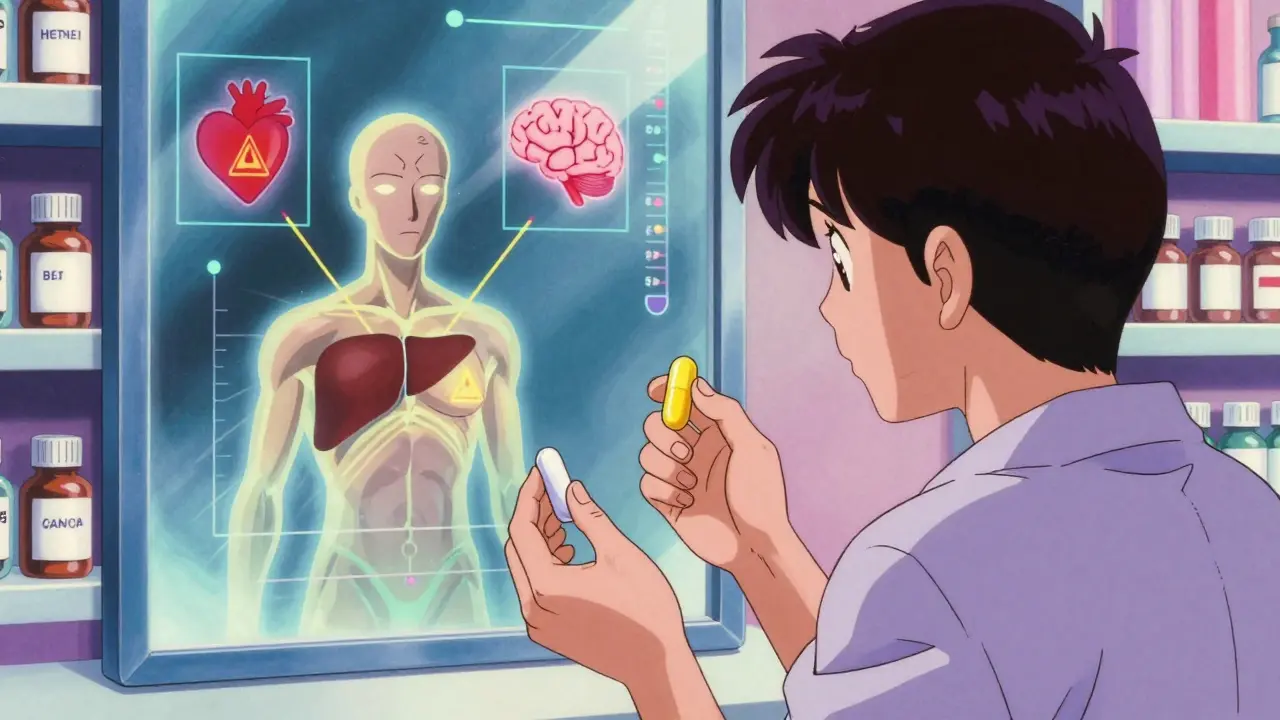
Most people assume that if a generic drug works the same as the brand-name version, then it must interact the same way too. And for the most part, they’re right. But when someone switches from one generic to another - or even back to the brand - and suddenly feels off, dizzy, or their blood thinning levels go haywire, it’s easy to blame the generic. The truth? It’s rarely the active ingredient. It’s almost always something else.
Generics Are Supposed to Be Identical - So Why Do People Think They’re Not?
The FDA requires every generic drug to contain the exact same active ingredient, in the same strength, and delivered the same way as the brand-name version. That means if you’re taking a generic version of warfarin, it’s still warfarin. If you’re taking a generic for levothyroxine, it’s still levothyroxine. The science doesn’t lie: 97.4% of generics approved between 2018 and 2023 matched their brand-name counterparts in how quickly and completely they entered the bloodstream. So why do so many patients swear their generic gives them stomach upset, headaches, or worse? The answer isn’t pharmacology - it’s psychology and excipients. Excipients are the fillers, dyes, and binders that hold the pill together. They don’t treat your condition. But they can cause problems. A 2021 case in the Journal of the American Pharmacists Association showed a patient reacting to lactose in a generic levothyroxine pill - even though the brand-name version used a different filler. That patient had no issues before, but switched to a generic that used lactose. Suddenly, bloating and diarrhea started. Same drug. Different filler. Same problem. Then there’s the nocebo effect. If you’ve been told generics are cheaper because they’re ‘inferior,’ your brain starts looking for proof. You feel a little tired after switching to a generic? It’s the drug. Not your sleep schedule. Not stress. Not caffeine. Your mind locks onto the change and blames the pill.Real Drug Interactions Don’t Care If It’s Generic or Brand
The real dangers come from how drugs interact with other substances - and those rules don’t change just because the pill’s label says “Sandoz” instead of “Lipitor.” Take simvastatin. When you take it with fluconazole (an antifungal), your blood levels of simvastatin can jump 300-400%. That’s dangerous. It doesn’t matter if it’s the brand or generic version. The active ingredient is the same. The interaction is the same. Grapefruit juice? It blocks an enzyme called CYP3A4 that breaks down dozens of medications. Calcium channel blockers, statins, even some anti-anxiety drugs - if they’re metabolized by that enzyme, grapefruit juice will make them stronger. Again, brand or generic? Doesn’t matter. The chemistry is identical. Even something as simple as antacids can mess with absorption. If you take a generic version of levothyroxine and then swallow an antacid 30 minutes later, your thyroid levels can drop. Same as the brand. Same mechanism. The FDA requires generic manufacturers to list the exact same interaction warnings as the brand. Every single one. In 2022, the agency checked over 1,200 generic labels. 100% matched.Where Things Get Tricky: Narrow Therapeutic Index Drugs
Some drugs have a razor-thin margin between helping and harming. These are called narrow therapeutic index (NTI) drugs. A tiny change in blood level - even 10% - can mean the difference between control and crisis. Warfarin is the classic example. Too little? You risk a clot. Too much? You bleed internally. Levothyroxine? Too low and your metabolism slows. Too high and your heart races. Phenytoin? One wrong dose and you could have seizures. For these, the FDA demands tighter bioequivalence standards - 90% to 112% instead of the usual 80% to 125%. That’s still a range, but it’s smaller. Still, even within that tighter range, switching between different generic manufacturers can cause small shifts in absorption. Not because the drug is different - but because the way it’s made is. That’s why hospitals and pharmacists often stick to one generic manufacturer for NTI drugs. If you’re on warfarin and your pharmacy switches your generic from Teva to Mylan, your INR might drift. Not because Mylan’s warfarin is worse. But because the tablet’s coating, the granule size, or the binder changed slightly. Your body absorbed it a little differently. The solution? Stick with the same generic brand. If you must switch, ask your pharmacist to notify your doctor. Get your INR checked within a week. That’s it.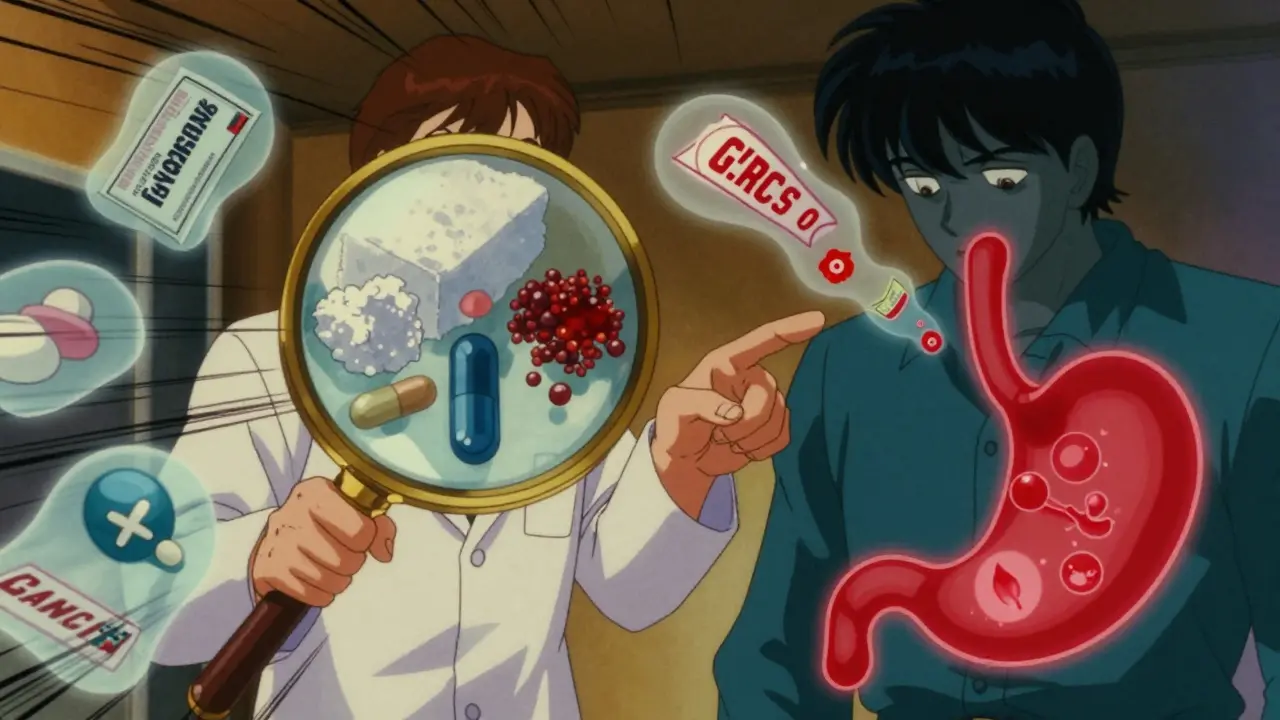
Why Switching Generics Is More Common Than You Think
Most people don’t realize they’re switching generics. Your insurance company changes its preferred manufacturer. Your pharmacy runs out of one brand and grabs another. You refill your prescription and suddenly the pill looks different - smaller, yellow instead of white, with a different imprint. According to IQVIA, 32% of U.S. prescriptions for generics switch manufacturers at least once a year. That’s one in three people. And most of them never know why. The FDA recorded 1,842 adverse event reports in 2022 tied to generic switches. But only 217 - about 12% - were linked to actual pharmacological changes. The rest? Patients forgot to take their pills. They changed their diet. They started a new supplement. Or they just felt uneasy because the pill looked different.What You Can Do - And What You Shouldn’t
Don’t stop taking your generic because it looks different. Don’t assume it’s unsafe. Don’t blame the manufacturer. Do this instead:- If you feel new side effects after switching, write down exactly what changed - the pill’s color, size, name, or even the pharmacy.
- Check the inactive ingredients. Some generic labels list them. Look for things like lactose, gluten, or dyes you know you’re sensitive to.
- Ask your pharmacist: “Is this the same manufacturer as last time?” If not, ask if you can stick with the one that worked.
- If you’re on warfarin, levothyroxine, or phenytoin, get your levels checked after any switch. Don’t wait for symptoms.
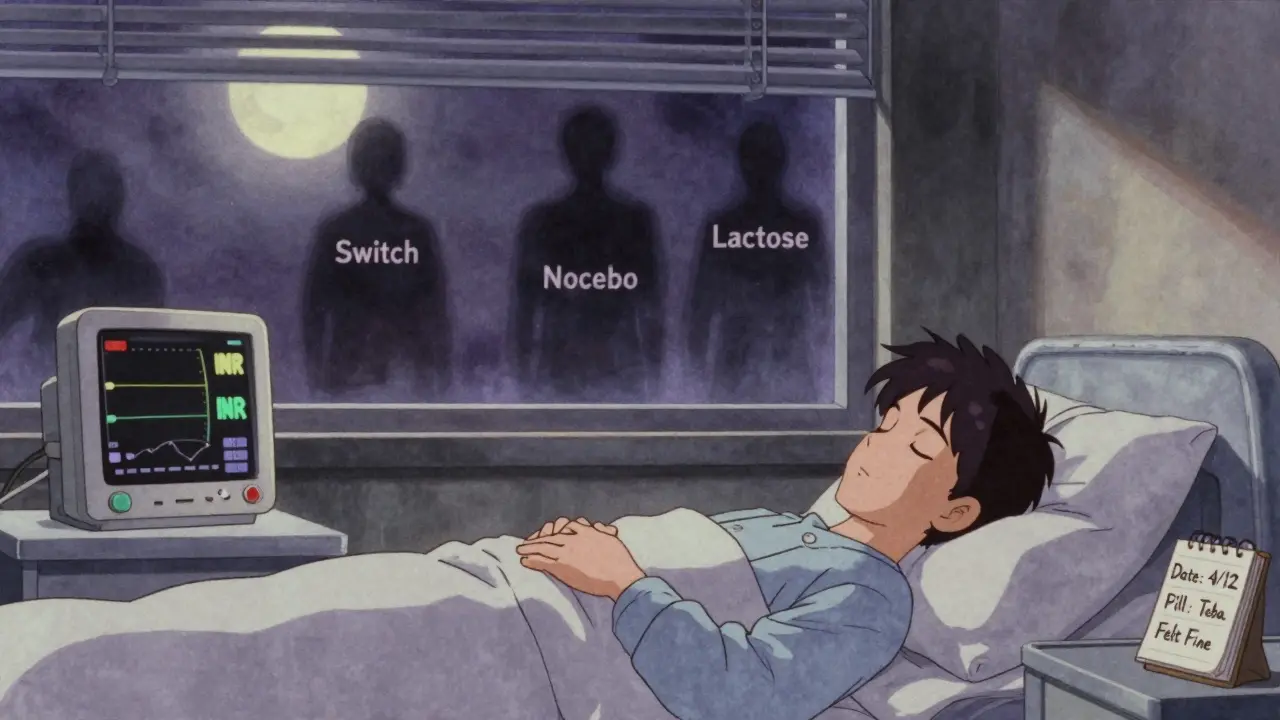
- Keep a simple log: Date, drug, dose, how you felt. Bring it to your next appointment.
What Experts Say - And Why You Should Trust Them
Dr. Michael Cohen of the Institute for Safe Medication Practices put it bluntly: “If a generic appears to interact differently, it’s almost always due to factors like inconsistent dosing, patient psychology, or undiagnosed conditions.” The FDA’s Dr. Rachel Salzman says generics go through the same interaction testing as brand-name drugs - before they’re even approved. And Dr. Jerry Avorn from Harvard reminds us: “The perception that generics are inferior can trigger nocebo effects where patients experience more side effects simply because they expect to.” The data backs them up. Out of 127 patient reports of different side effects with generics, only 17 involved actual pharmacological differences. The rest? Belief, timing, or coincidence.Bottom Line: It’s Not the Generic. It’s the Switch.
Drug interactions happen because of what’s in the pill - not who made it. The active ingredient is the same. The risks are the same. The warnings are the same. The real issue? Unnecessary switching. Lack of communication. And fear based on myths. If you’re on a critical medication, ask your pharmacist to keep you on the same generic manufacturer. If you’re switched, don’t panic. Check your levels. Track your symptoms. Talk to your doctor. You’re not being paranoid. You’re being smart. But don’t let the shape of the pill scare you. The science is clear: generics are safe. The interactions aren’t in the label. They’re in the dose. And the dose hasn’t changed.Are generic drugs less safe than brand-name drugs when it comes to interactions?
No. Generic drugs contain the same active ingredients as brand-name versions and are required by the FDA to have identical interaction profiles. Any differences in side effects are usually due to inactive ingredients (like fillers or dyes), patient expectations, or changes in dosing - not the drug’s core chemistry.
Can switching between different generic brands cause drug interactions?
Switching between generic manufacturers doesn’t cause new drug interactions - but it can cause small changes in how your body absorbs the medication. This matters most for drugs with a narrow therapeutic index, like warfarin or levothyroxine. Even slight shifts in absorption can affect blood levels. That’s why it’s best to stick with one generic manufacturer for these drugs and check lab values after a switch.
Why do some people feel worse after switching to a generic?
Often, it’s not the drug - it’s the mind. The nocebo effect can make people feel side effects simply because they believe generics are inferior. Other times, it’s a change in inactive ingredients like lactose or gluten that trigger allergies or sensitivities. Rarely, it’s a dosing error or unrelated health change. Tracking symptoms and checking with your pharmacist can help identify the real cause.
Which drugs are most likely to have issues when switching generics?
Drugs with a narrow therapeutic index - where small changes in blood levels can be dangerous - are the most sensitive. These include warfarin (blood thinner), levothyroxine (thyroid hormone), phenytoin (seizure medication), digoxin (heart medication), and cyclosporine (immunosuppressant). For these, consistency in manufacturer matters more than for most other drugs.
Should I always ask for the brand-name drug to avoid interaction risks?
No. Brand-name drugs carry the same interaction risks as generics - because they contain the same active ingredient. The only reason to choose brand is if you’ve had a confirmed reaction to a specific generic’s inactive ingredients, or if your doctor has documented a clinical need. For 99.8% of patients, generics are just as safe and effective. Choosing brand just to avoid interactions is unnecessary and costly.
Kamlesh Chauhan
January 6, 2026 AT 21:24Kyle King
January 7, 2026 AT 02:19Mina Murray
January 8, 2026 AT 20:22Rachel Steward
January 10, 2026 AT 03:21Emma Addison Thomas
January 11, 2026 AT 08:56Christine Joy Chicano
January 13, 2026 AT 07:07Alex Danner
January 15, 2026 AT 02:22Anastasia Novak
January 15, 2026 AT 22:54Jessie Ann Lambrecht
January 17, 2026 AT 05:31Jonathan Larson
January 17, 2026 AT 12:35