
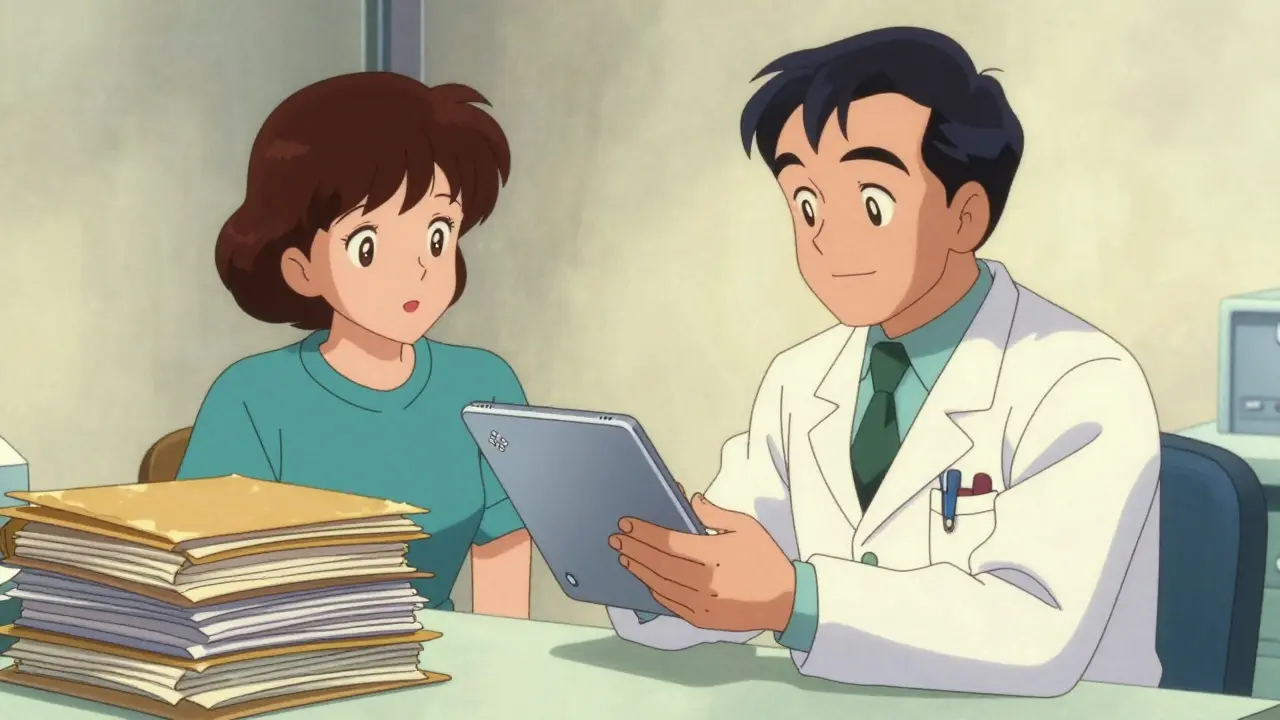
Imagine handing a patient a thick folder of medical instructions after a surgery. They nod politely, but do they really understand? Most likely not. This is where Digital tools for patient education are software applications and platforms designed to improve health literacy, treatment adherence, and self-management through interactive content. These tools transform complex medical jargon into digestible, actionable steps.
In 2026, the shift from paper handouts to digital engagement isn't just a trend; it's a necessity. With 78% of healthcare providers now using some form of digital patient communication, the question is no longer whether to use these tools, but which ones actually work. We are moving beyond simple PDFs to interactive experiences that track progress, answer questions instantly, and adapt to the patient's learning style.
Why Digital Tools Change Health Outcomes
The core problem in traditional patient education is retention. Studies show that patients forget up to 50% of what they hear during a clinical visit within minutes. Digital tools solve this by providing repeated exposure and interactive reinforcement. When you use an app like MyChart is a patient portal service provided by Epic Systems that allows secure messaging, appointment scheduling, and access to health records, you aren't just storing data; you're creating a continuous dialogue.
Consider the difference between reading about insulin injection technique in a brochure versus watching a 30-second video on a tablet with step-by-step overlays. The latter reduces anxiety and increases confidence. According to the 2025 Global Health Tech Report, patients who engage with digital educational materials show a 40% higher adherence rate to medication schedules compared to those who receive only verbal instructions. This isn't magic; it's about meeting people where they are-on their phones, at their own pace.
- Improved Retention: Interactive modules boost memory retention by up to 65%.
- Reduced Readmissions: Clear post-discharge instructions via apps cut hospital readmissions by 20%.
- Empowerment: Patients feel more in control when they can ask AI chatbots questions at 2 AM.
Top Platforms for General Health Literacy
Not all digital tools are created equal. Some are built for specific conditions, while others offer broad health literacy support. For general education, we need platforms that are intuitive, accessible, and trustworthy.
WebMD remains a leading consumer health information platform offering symptom checkers, drug interactions, and condition guides. While often criticized for causing "cyberchondria," its updated 2026 interface focuses more on curated, evidence-based pathways rather than open-ended searches. It’s great for quick answers but lacks personalized tracking.
A stronger contender for structured learning is Khan Academy Health offers free, high-quality video lessons on human biology, disease mechanisms, and healthy living habits. Originally focused on K-12, its expansion into adult health literacy has been significant. The videos are short, visual, and free from commercial bias. If you want to explain how hypertension works without sounding like a textbook, this is your go-to resource.
For a more clinical approach, Epic MyChart integrates education directly into the patient's medical record context. When a doctor orders a new medication, MyChart automatically pushes relevant educational videos and FAQs. This contextual timing is crucial. You’re learning exactly when you need to know it, not weeks later when you’ve forgotten why you got the prescription.
Specialized Apps for Chronic Condition Management
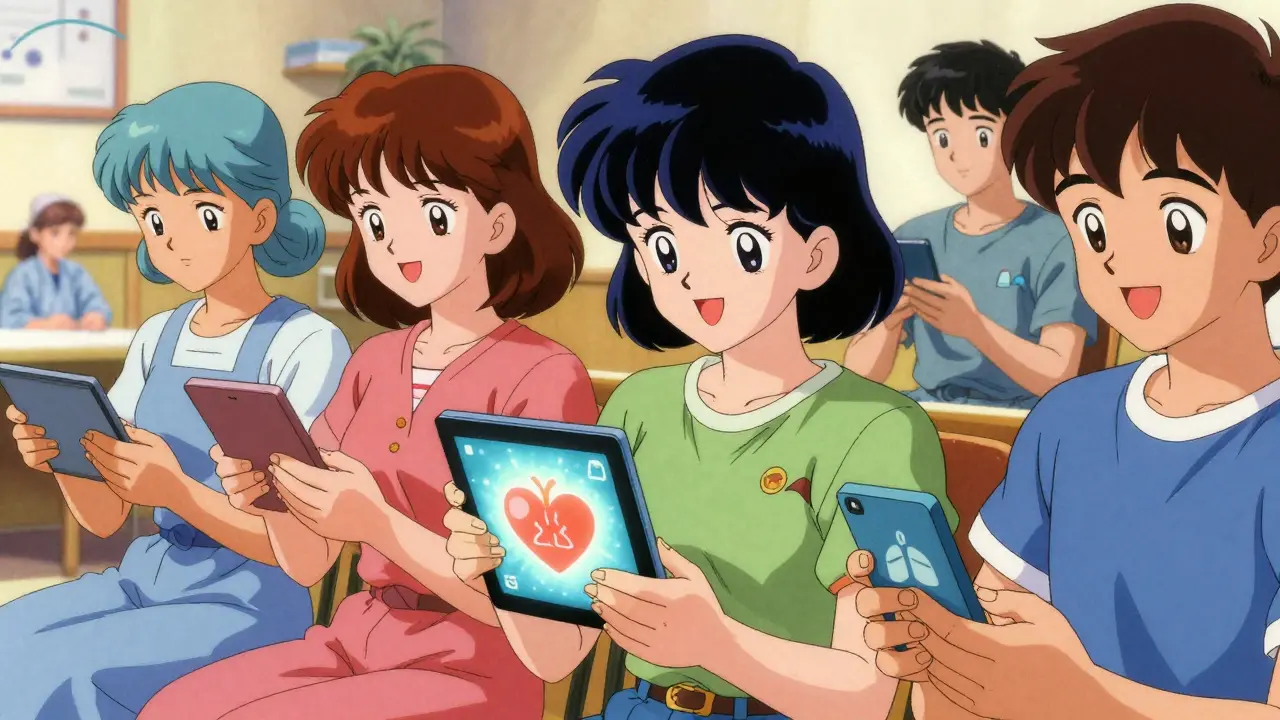
General knowledge helps, but chronic diseases require daily management. Here, specialized apps shine because they combine education with behavior change techniques.
Take diabetes management. MySugr is a comprehensive diabetes management app that tracks blood glucose levels, provides educational tips based on trends, and connects users with care teams. It doesn’t just log numbers; it teaches you how food choices impact your glucose curve through real-time feedback. Users report feeling less anxious because the app explains *why* their sugar spiked, turning data into understanding.
For heart health, Headspace and Calm are mindfulness and meditation apps that reduce stress-related cardiovascular risks. While not strictly "medical" apps, they address the behavioral side of heart disease. Stress management is a key component of cardiac rehabilitation, and these tools provide guided exercises that are easier to follow than vague advice to "relax more."
Another powerful tool is Propeller Health uses sensor-enabled inhalers paired with an app to teach asthma patients about triggers and proper technique. By linking environmental data (like pollen counts) with usage patterns, it educates patients on prevention strategies tailored to their local environment. This is precision education at its best.
| Platform | Primary Focus | Key Feature | Best For |
|---|---|---|---|
| Epic MyChart | General & Clinical | Contextual Learning | Hospitalized Patients |
| Khan Academy Health | Health Literacy | Free Video Lessons | Self-Educators |
| MySugr | Diabetes | Gamified Tracking | Type 1 & 2 Diabetics |
| Propeller Health | Asthma/COPD | Sensor Integration | Respiratory Patients |
E-Learning for Healthcare Providers: Teaching the Teachers
Patient education fails if the provider doesn't know how to teach effectively. That’s why e-learning for clinicians is equally important. Platforms like UpToDate provides evidence-based clinical decision support resources for physicians and other healthcare professionals. But beyond reference, newer platforms focus on communication skills.
Osmosis offers video-based learning modules for medical students and residents, including sections on patient communication and shared decision-making. Understanding how to explain complex topics simply is a skill that can be trained. When doctors use plain language instead of Latin terms, comprehension rates jump significantly. E-learning modules simulate difficult conversations, allowing providers to practice before entering the exam room.
This creates a virtuous cycle. Better-trained providers use better tools, which leads to better-educated patients. The goal is to make every interaction count. A five-minute explanation backed by a QR code to a detailed video is far more effective than a ten-minute monologue.
Overcoming Barriers: Accessibility and Trust
Not everyone has a smartphone or high-speed internet. This is the "digital divide," and it’s a major hurdle. In rural areas, 3G networks may struggle to load video-heavy apps. Solutions must be lightweight. Text-based SMS reminders or low-bandwidth web portals are essential alternatives.
Trust is another barrier. Patients are wary of sharing health data. Tools must comply with HIPAA regulations ensuring the privacy and security of protected health information (PHI). Look for platforms that explicitly state their compliance status. Transparency builds trust. If an app asks for too much personal data without clear justification, patients will delete it.
Language barriers also exist. Multilingual support isn't optional; it's critical. Apps like Translate Medical provide real-time translation services for medical terminology in over 200 languages. Integrating such features ensures that non-native speakers get accurate information, reducing misdiagnosis risks.
Future Trends: AI and Personalization
The next frontier is artificial intelligence. Imagine an AI tutor that adapts to your learning speed. If you struggle with understanding dosage calculations, it repeats the concept in different ways until you grasp it. IBM Watson Health explores AI-driven analytics to personalize patient care plans and educational content.
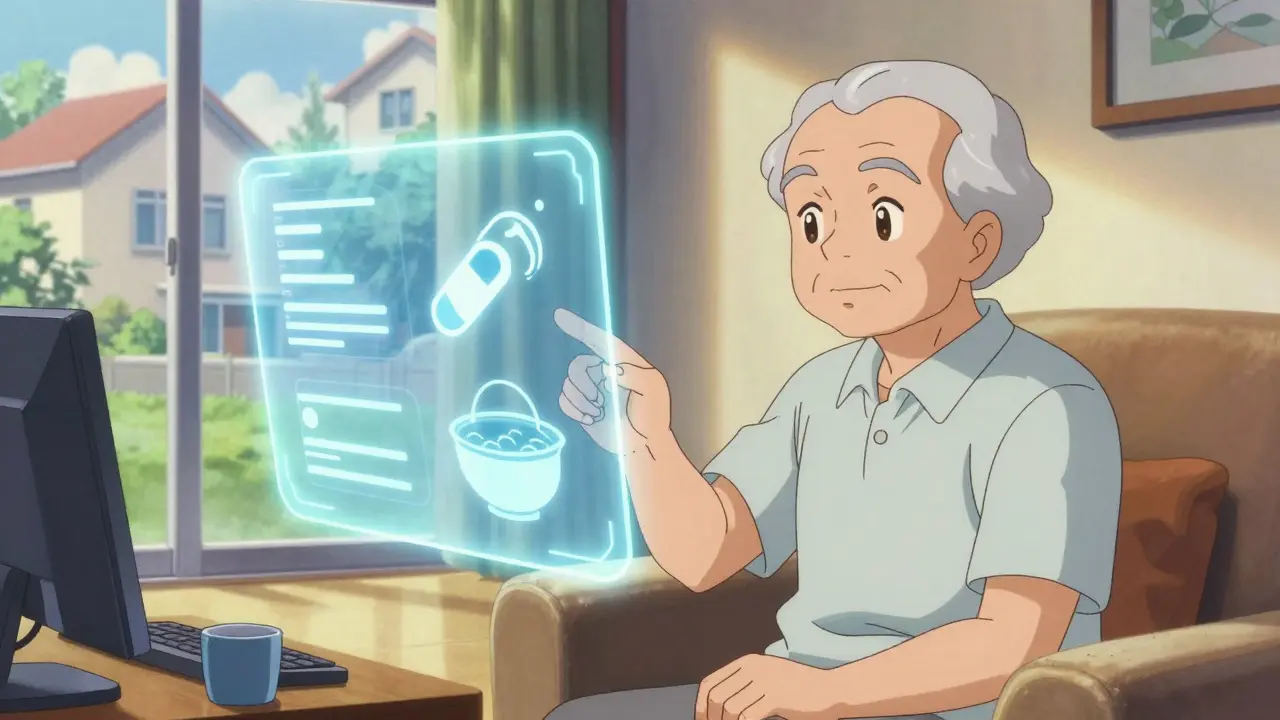
Voice assistants are also becoming educators. Asking Alexa, "What should I eat with my new medication?" gets an instant, vetted answer. As voice recognition improves, this hands-free education will become standard, especially for elderly patients with vision or mobility issues.
We are moving toward a future where education is invisible-it happens naturally through daily interactions with technology. The key is to choose tools that enhance, not replace, the human connection. Technology supports; it doesn't substitute empathy.
Are patient education apps safe for my data?
Safety depends on the app's compliance with HIPAA and GDPR regulations. Always check if the app is endorsed by your healthcare provider or hospital system. Reputable platforms like Epic MyChart encrypt data end-to-end. Avoid downloading random apps from unofficial stores that promise medical advice without clear privacy policies.
How do I choose the right app for my condition?
Start by asking your doctor for recommendations. They often have preferred partners. Look for apps that are specific to your condition (e.g., MySugr for diabetes) rather than general wellness trackers. Check reviews for ease of use and customer support quality. Ensure the app offers offline access if you have limited internet connectivity.
Can digital tools replace doctor visits?
No, they complement them. Digital tools are excellent for monitoring, education, and routine follow-ups. However, they cannot perform physical exams or diagnose complex conditions. Use apps to prepare for visits by logging symptoms and questions, making face-to-face time more productive.
Is there free patient education software available?
Yes, many resources are free. Khan Academy Health, WebMD, and government sites like CDC.gov offer high-quality, unbiased information. Some hospitals also provide free access to premium apps as part of their care package. Always verify the source of information to ensure it is evidence-based.
How do I help elderly parents use these tools?
Patience and simplicity are key. Choose apps with large fonts and simple interfaces. Set up the device together, creating shortcuts on the home screen. Consider voice-activated options like Amazon Echo Show, which allows hands-free interaction. Regularly check in to troubleshoot issues and reinforce confidence.
Danny S
May 18, 2026 AT 05:53They want you to believe that handing over your biometric data to Epic Systems is 'empowerment' :P It is not empowerment, it is surveillance capitalism wrapped in a medical coat. The 'digital divide' they mention? That is just a cover for excluding anyone who refuses to be tracked by the algorithm. MyChart does not care about your health; it cares about the dataset it builds from your anxiety spikes and medication failures. Do not fall for this corporate propaganda. Keep your paper folders if you value privacy.
Jeremiah Cassandra
May 20, 2026 AT 04:44Oh look, another post pretending that an app can replace actual human empathy 🙄 The idea that watching a 30-second video on insulin injections reduces anxiety is adorable, really. Have you met people with severe diabetes? They need support, not a gamified tracker that sends them notifications when their blood sugar drops because the company wants engagement metrics. Khan Academy Health is great for biology nerds, but telling a patient to 'learn hypertension via YouTube' is like telling someone to fix their car by watching Netflix. Useless.
charles robert
May 22, 2026 AT 03:17The illusion of control is the most dangerous drug we consume today 💊 We think these apps give us power, but they merely digitize our helplessness. When MySugr tells you why your sugar spiked, it is not teaching you; it is conditioning you to trust the machine over your own body’s wisdom. This is the death of intuition. We are becoming slaves to the sensor, waiting for permission to eat or breathe based on a green checkmark from a server farm in Nevada. Tragic.
Warren Brewer
May 23, 2026 AT 13:26I get what everyone is saying here. Tech is tricky. But for my mom, who has bad eyesight, having big buttons on her phone helps her take her pills. She likes the simple reminders. It is not perfect, but it works for her right now. We all have different needs. Some people like paper, some like phones. Just pick what feels safe and easy for you. No need to fight about it.
Mark Ronson
May 23, 2026 AT 13:49As someone who implements these systems in hospitals, I can say the integration is key. MyChart works well because it connects directly to the EHR so doctors see what you log. However, the typo-prone nature of quick messaging can lead to errors if not reviewed. We must ensure HIPAA compliance is strict. Many third-party apps fail here. Always verify if the app uses end-to-end encryption before sharing sensitive data. It is not just about convenience; it is about security protocols being robust enough to protect PHI.
Mikey Mann
May 25, 2026 AT 12:39There is a beauty in the connection between mind and machine if we approach it with optimism. Imagine an AI that truly listens, adapting to your learning curve without judgment. It is not about replacing the doctor; it is about extending the doctor's presence into the quiet hours of the night. If we can use technology to reduce fear and increase understanding, then we are moving forward. Let us hope the future brings more compassion coded into the algorithms.
Mollie Louise
May 26, 2026 AT 08:45I absolutely love how this article highlights the importance of accessibility! 🌟 It is so crucial that we consider elderly patients who might struggle with complex interfaces. I have been helping my grandmother set up her tablet, and using voice assistants like Alexa has made such a huge difference in her daily routine. She feels so much more independent now! We should all advocate for simpler designs and better customer support in these apps. Let us keep pushing for inclusivity in healthcare tech! ✨
Christina Moran
May 28, 2026 AT 02:08i dont know man, i tried one of those asthma apps and it was confusing af. why do i need to sync my inhaler to my phone just to breathe? seems like too much hassle for something that should be automatic. also my internet at home sucks so half the time the app crashes. maybe its good for city folks but out here in the sticks, old school methods still work best for me.
mardy duffy
May 29, 2026 AT 23:03Boring. Another listicle about apps. None of this matters if the doctor doesnt actually read your logs. I deleted three apps last week because they were just ad farms disguised as health tools. Waste of battery life.
Desirea Gaona
May 31, 2026 AT 20:07It is imperative that we address the ethical implications of data collection in these platforms. While the convenience of digital tools is undeniable, the potential for misuse of personal health information cannot be overlooked. Patients must be educated not only on how to use these applications but also on their rights regarding data privacy. Transparency from providers is essential to build trust within the community.
Yuvraj Singh
May 31, 2026 AT 20:21In India, we see similar trends with telemedicine apps gaining popularity. However, language barriers remain a significant challenge. English-only interfaces exclude many rural patients. We need more multilingual support and offline capabilities. Apps like Propeller Health are innovative, but localization is key for global adoption. Collaboration between tech companies and local healthcare providers can bridge this gap effectively.
Dana Ellington
June 2, 2026 AT 08:48Omg yes!! Finally someone talked about the stress part 😭 Like, Headspace isn't a cure-all but it helps me chill out after a panic attack. I feel so much better knowing I have tools to manage my anxiety. And yeah, WebMD can be scary but if you stick to the verified articles it is okay. Just don't google your symptoms at 3am lol. Love this info!
victoria catharinaa
June 2, 2026 AT 23:30You are ignoring the real issue which is cost. These apps are often locked behind paywalls or require expensive smartphones. Poor people get left behind while rich people play doctor with their iPhones. It is unfair and we need to stop pretending this is 'healthcare'. It is luxury entertainment for the wealthy. Fix the system first.
Glen Speck
June 3, 2026 AT 13:12the line between tool and master is thin we must stay vigilant yet open to progress technology serves humanity not the other way around let us use these aids wisely without losing our soul to the screen