
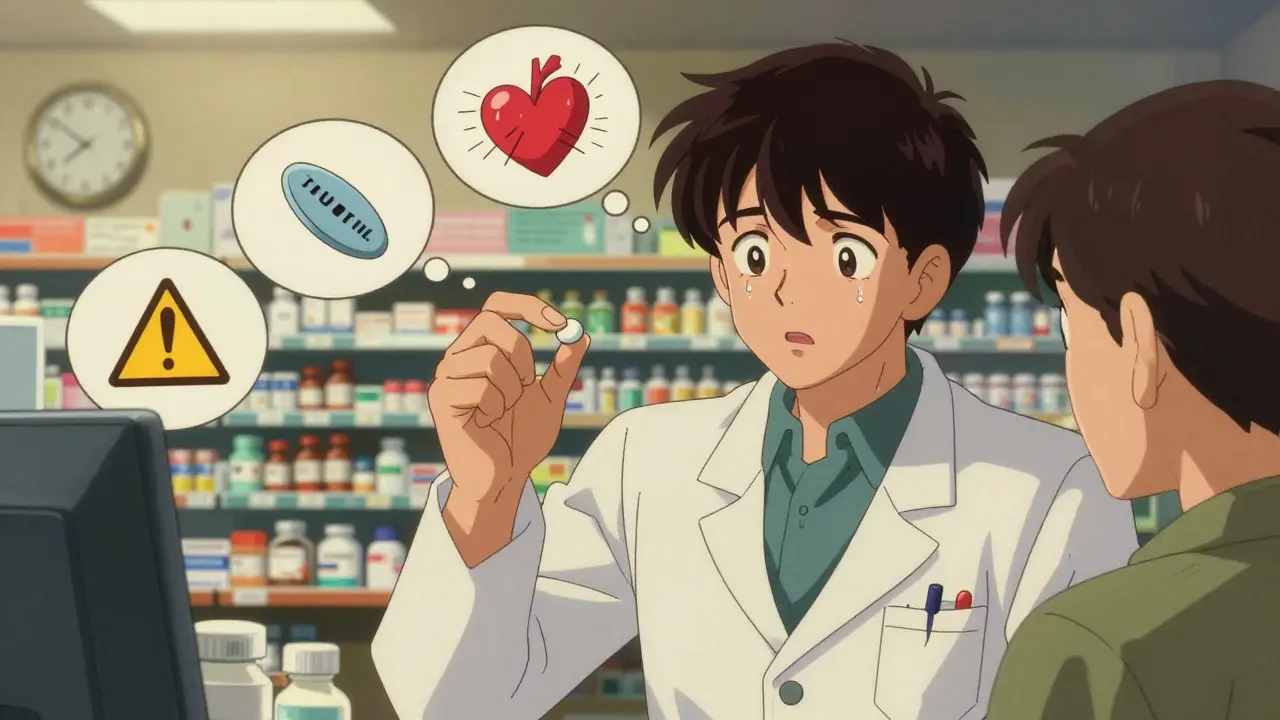
When a pharmacist reaches for a generic pill instead of the brand-name one on the prescription, it’s not just a cost-saving move-it’s a decision loaded with clinical, emotional, and logistical weight. For many pharmacists, generic substitution isn’t a simple swap. It’s a balancing act between saving patients money and ensuring they stay safe, compliant, and confident in their treatment. And despite decades of FDA oversight and scientific backing, the concerns haven’t faded-they’ve just changed shape.
Patients Don’t Believe Generics Work the Same
One of the biggest hurdles pharmacists face isn’t a law or a regulation-it’s a patient’s deep-seated belief that a cheaper pill can’t possibly be as good. A 2024 survey found that nearly one in three patients who switched to a generic drug reported negative experiences, often because the pill looked different. Same active ingredient? Yes. Same shape, color, or imprint? Not always. And for patients with chronic conditions like epilepsy or hypertension, that visual shift triggers panic. "I’ve had patients refuse to take their new generic because it was round instead of oval," one pharmacist shared. "They thought the change meant the drug had been altered. They didn’t trust it." The problem is compounded by misinformation. Many patients assume lower price = lower quality. In reality, the FDA requires generics to deliver the same therapeutic effect within 80-125% of the brand-name version. The average difference in absorption between brand and generic? Just 3.5%. But explaining that in a 90-second counseling window? Nearly impossible. Pharmacists end up doing the heavy lifting of education-something prescribers rarely do. A U.S. Pharmacist study found 64% of patients had never been told by their doctor that a generic substitution was possible. So the pharmacist becomes the educator, the advocate, and sometimes, the damage control specialist.When Substitution Gets Risky
Not all drugs are created equal when it comes to substitution. For medications with a narrow therapeutic index (NTI)-where the difference between a therapeutic dose and a toxic one is razor-thin-pharmacists tread carefully. Drugs like warfarin, levothyroxine, and certain anti-seizure medications fall into this category. Even small changes in absorption can lead to serious consequences: uncontrolled seizures, blood clots, or thyroid crises. Pharmacists know this. And they’re not just being cautious-they’re following guidelines. The American Society of Health-System Pharmacists (ASHP) recommends avoiding automatic substitution for NTI drugs unless the prescriber explicitly allows it. But here’s the catch: many state laws still permit substitution unless the prescriber writes "Do Not Substitute." So pharmacists are caught between legal permission and clinical judgment. Some choose to flag these cases manually. Others call the prescriber. Both take time. And in a pharmacy that fills 300+ prescriptions a day, time is the scarcest resource.The Education Gap Is Real-and Exhausting
Pharmacists are expected to be experts on bioequivalence, regulatory standards, and patient psychology-all while managing insurance paperwork, refill requests, and drug interactions. The data shows it’s overwhelming. One study found that while nearly 80% of patients were told substitution was happening, only 38% were told they could refuse it. And just over half were informed about the cost difference. That’s not informed consent. That’s an information vacuum. Worse, the burden falls almost entirely on pharmacists. Prescribers rarely discuss substitution with patients. Patients rarely ask. So when a patient walks in confused, anxious, or angry about a change in their pill, the pharmacist is the one who has to fix it. And they’re not trained counselors. They’re trained scientists. Yet they’re expected to explain why a generic for high blood pressure won’t suddenly make them dizzy, or why a different-looking pill for diabetes is just as effective. It’s not fair. And it’s not sustainable.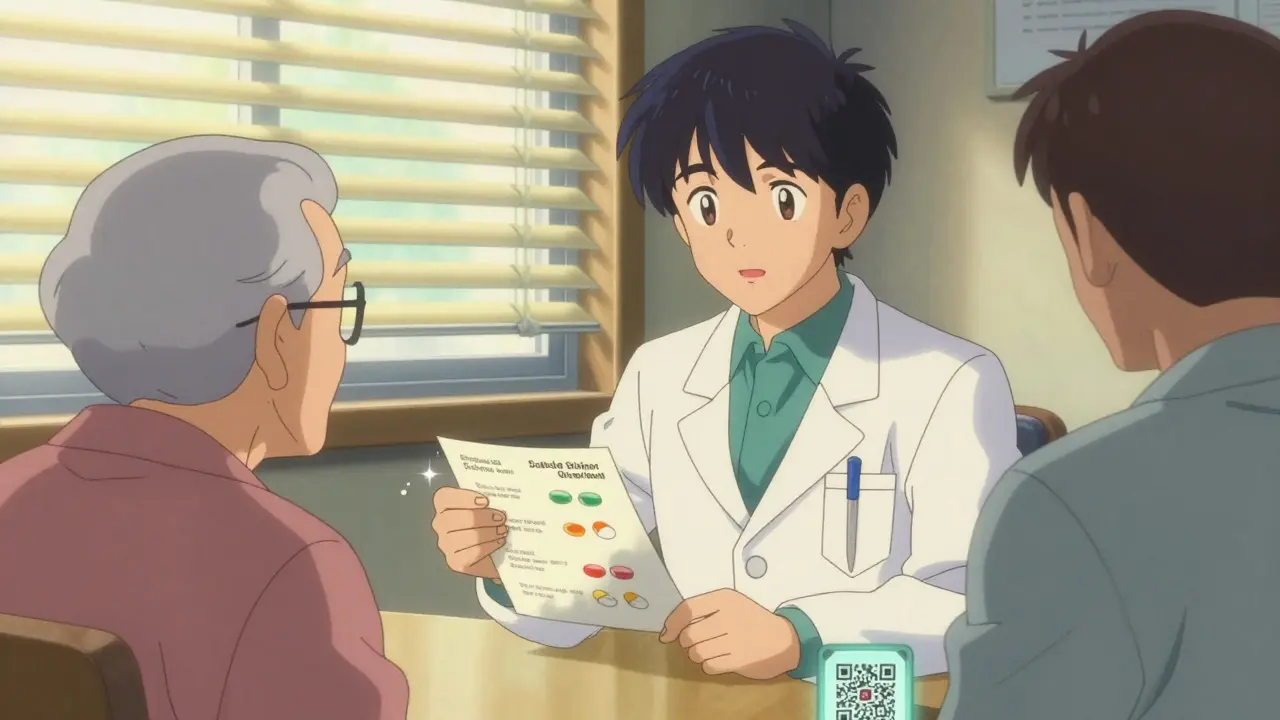
Generics Are the Norm-But Patient Trust Isn’t
The numbers don’t lie. Generic drugs make up over 90% of all prescriptions filled in the U.S. And they save patients an average of 21% on medication costs. But trust? That’s lagging. In Australia, pharmacists reported spending up to 15 extra minutes per patient explaining generics to those with dementia or mental illness. In Italy, patients openly doubted foreign-made generics. In the U.S., patients who’ve had bad experiences with one generic often refuse all future substitutions-even if they’re from the same manufacturer. The root cause? Lack of transparency. Patients don’t know how generics are approved. They don’t know the FDA inspects manufacturing plants the same way it does for brand-name drugs. They don’t know that the same companies often make both the brand and the generic version. When a patient sees "Made in India" on the bottle, they assume it’s lower quality. It’s not. But that’s the narrative they’ve absorbed.What’s Working? Clear, Simple, Consistent Communication
The most successful pharmacists aren’t the ones who know the most science-they’re the ones who know how to talk. A simple script can make a difference: "This is the same medicine as your old pill, just made by a different company. The FDA says it works just as well. It’s cheaper, so your copay is lower. If you’re worried, we can call your doctor." That’s it. No jargon. No data dumps. Just clarity. Some pharmacies now use printed handouts with before-and-after photos of pills. Others use QR codes that link to FDA videos explaining bioequivalence. A few have started including substitution notes in patient portals-sent directly from the pharmacy to the patient’s phone. These small tools reduce the burden on pharmacists and empower patients. The key insight? Patients are more likely to accept substitution if they feel included in the decision. When prescribers mention it during the appointment-"We’re switching you to a generic to save you money"-acceptance rates jump by 40%. But when pharmacists are left alone to explain it, the rate drops. Collaboration matters.
What Pharmacists Need
Pharmacists aren’t asking for more power. They’re asking for support. They need:- Clearer guidelines for NTI drugs-no more legal gray areas.
- Standardized patient education materials from health agencies, not just individual pharmacies.
- Time to counsel. Not 90 seconds. At least five minutes for high-risk or high-anxiety cases.
- Prescriber involvement. If doctors talk to patients about substitution, pharmacists don’t have to.
- Recognition. Substitution isn’t just a cost-cutting tool. It’s a clinical decision-and pharmacists are the ones making it safely every day.
Generic substitution isn’t broken. It’s under-resourced. The science is solid. The savings are real. But without better communication, better training, and better collaboration between prescribers and pharmacists, the system will keep putting the heaviest burden on the people who already have the least time.
Frequently Asked Questions
Can pharmacists legally substitute any generic drug?
Pharmacists can substitute generic drugs unless the prescriber writes "Do Not Substitute" or the drug has a narrow therapeutic index (NTI), like warfarin or levothyroxine. State laws vary, but most allow substitution if the FDA has rated the generic as therapeutically equivalent. Pharmacists must follow both federal guidelines and their state’s pharmacy board rules.
Why do generic pills look different from brand-name pills?
Generic drugs must contain the same active ingredient as the brand, but they don’t have to look the same. Trademark laws prevent generics from copying the exact shape, color, or imprint of brand-name pills. This is why a patient might get a white oval pill one month and a blue round one the next-it’s still the same medicine, just made by a different manufacturer.
Are generic drugs as safe as brand-name drugs?
Yes. The FDA requires generic drugs to meet the same quality, strength, purity, and stability standards as brand-name drugs. They’re tested in the same facilities and inspected under the same rules. Over 2,000 clinical studies have shown that generics perform just as well as their brand-name counterparts for the vast majority of patients.
Can I refuse a generic substitution?
Yes. By law, patients have the right to refuse a generic substitution and request the brand-name drug instead. Pharmacists are required to inform patients of this right-but many don’t. If you’re unsure, ask: "Can I get the brand-name version?" You may have to pay more, but you have the right to choose.
Why do some pharmacists hesitate to substitute for epilepsy or thyroid meds?
These are narrow therapeutic index (NTI) drugs. Even tiny differences in how the body absorbs the medicine can lead to serious effects-like uncontrolled seizures or thyroid storms. While the FDA says generics are bioequivalent, some pharmacists and clinicians prefer to avoid switching stable patients on these drugs unless absolutely necessary. It’s a precaution, not a rule.
Donna Fogelsong
March 25, 2026 AT 23:50Generics are a government scam. Same active ingredient? Sure. But the fillers? Totally different. I’ve seen patients crash after switching. It’s not bioequivalence-it’s corporate collusion. FDA inspections? Ha. They’re paid off. The real story? Big Pharma owns the FDA. You think your blood pressure med is safe? Think again. They’re testing on us. No one talks about this. I’m the only one with the courage to speak up.
And don’t even get me started on the ‘Made in India’ label. That’s not a pharmacy-it’s a biohazard lab. I’ve got cousins who work in pharma. They whisper about batch contamination. They don’t want to lose their jobs. But I’m not afraid.
They want you to trust. I want you to question. That’s the difference.
Sean Bechtelheimer
March 26, 2026 AT 00:24bro i had a generic for my thyroid and i swear i felt like a zombie for 3 weeks 😵💫
same dose. same thing. but the pill was a different shade of white. i thought i was dying. called my doc. they said ‘it’s fine’
but i knew. i just knew. 🤔
Seth Eugenne
March 27, 2026 AT 23:42I get where both sides are coming from. The science says generics are safe, and I believe that. But I also know how terrifying it is to wake up and your pill looks different-especially if you’ve been on the same med for years.
Pharmacists are doing heroic work under impossible conditions. They’re juggling insurance hoops, refill requests, and emotional patients-all while trying to keep someone alive.
A simple ‘this is the same medicine, just cheaper’ goes further than a 10-minute lecture on bioequivalence. We need to give them the time to do that. Not 90 seconds. Five minutes. Maybe even ten.
And yeah, doctors should mention it too. It’s not just the pharmacist’s job to educate. It’s a team thing.
rebecca klady
March 28, 2026 AT 09:29I’m a nurse and I’ve seen this firsthand. Patients panic because the pill changed color. Not because it’s ineffective-because it looks like a different drug. It’s psychological, not pharmacological.
My hospital started using those little pill comparison cards. Patients love them. No more panic calls. Just a quick glance. It’s dumb simple. Why doesn’t every pharmacy do this?
Namrata Goyal
March 28, 2026 AT 16:16oh please. america thinks generics are magic. in india we know better. brand drugs are better. period. generics? they’re made in backrooms with no quality control. i’ve seen people get sick from them. and now you want us to believe the fda? lol. they’re just corporate puppets. even the ‘same active ingredient’ is a myth. the bioavailability? totally different. i’m not fooled.
also why is everyone so obsessed with ‘cost savings’? money is not the point. health is. and health is not cheap.
Brandon Shatley
March 30, 2026 AT 00:57yeah i get it. generics are fine. but i’ve also seen people have weird reactions. not because the drug is bad, but because they’re scared. and fear changes how your body reacts. it’s real.
maybe we need to stop thinking of this as a science problem and start thinking of it as a trust problem. the science is solid. the trust? broken.
and yeah, pharmacists are doing way too much. they shouldn’t be therapists, but they are. we need to fix that.
Blessing Ogboso
March 30, 2026 AT 02:21As a Nigerian pharmacist working in Lagos, I’ve seen patients refuse generics because they’re ‘too cheap.’ They think if it’s inexpensive, it must be fake. We’ve had cases where patients paid triple for brand-name pills imported from the U.S.-only to find out later they were counterfeit.
Here, the issue isn’t just about perception-it’s about survival. We don’t have FDA oversight. We don’t have standardized labeling. So when someone says ‘trust the FDA,’ I smile politely. In my world, trust is earned through consistency, not regulation.
What works here? Face-to-face counseling. Showing the patient the blister pack. Letting them hold the bottle. Seeing the manufacturer’s name. Explaining that the same company that makes the brand also makes the generic. It’s not about science. It’s about human connection.
And yes, we need time. We need training. We need support. But we also need dignity. Pharmacists aren’t clerks. We’re frontline guardians. And we’re doing it with half the tools and twice the responsibility.
Let’s stop pretending this is just a U.S. problem. It’s global. And it’s not fixed by better labels. It’s fixed by better listening.
Jefferson Moratin
March 31, 2026 AT 19:38The real issue isn’t bioequivalence. It’s epistemology.
We’ve constructed a system where patients are expected to accept scientific authority without understanding its foundations. The FDA’s 80-125% range is not a proof of equivalence-it’s a statistical approximation. But we’ve turned that into dogma.
And yet, when a patient refuses a pill because it’s a different color, we call them irrational. But isn’t it rational to distrust a system that refuses to explain itself?
The pharmacist’s burden isn’t a failure of policy-it’s a failure of communication philosophy. We treat patients as recipients of information, not participants in meaning-making.
Perhaps the solution isn’t more handouts or QR codes. It’s a fundamental shift: from instruction to dialogue. From authority to humility.
Generics are not broken. Our relationship to knowledge is.
Caroline Dennis
April 1, 2026 AT 20:57NTI drugs = high-risk. No debate. But we’re still allowing automatic substitution in 47 states. That’s not policy. That’s negligence.
Pharmacists need clear, non-negotiable guidelines. Not ‘unless the prescriber says no.’ That’s a loophole. That’s a lawsuit waiting to happen.
And stop calling it ‘education.’ It’s risk mitigation. It’s clinical judgment. It’s not a customer service task. It’s medicine.
Zola Parker
April 3, 2026 AT 04:12so like… what if the government is using generics to control us? 🤔
think about it. cheaper pills = less money spent on healthcare = more people dependent on the system.
and don’t you think they want us docile? calm? compliant?
what if the different pill shapes are designed to make us doubt ourselves? to make us question our own perception?
just saying. 🧠👁️
florence matthews
April 4, 2026 AT 16:43my mom is from Mexico and she refuses all generics. not because she doesn’t trust science-but because she remembers when medicines in her village were fake. she saw people die from bad pills.
so when she gets a new pill? she holds it. turns it. smells it. checks the imprint.
she’s not paranoid. she’s experienced.
maybe we need to stop calling patients ‘misinformed’ and start listening to their stories.
their fear? it’s real. it’s history. not ignorance.
Kenneth Jones
April 5, 2026 AT 09:24Stop pretending pharmacists are saints. They’re just cashiers with white coats. They don’t care if you live or die. They just want to move the next script. And they’re paid to substitute. That’s their job. End of story.
Stop romanticizing them. They’re employees. Not heroes. And if you think they’re ‘overworked,’ then fire the CEO who’s making $12M a year while they’re stuck behind the counter.
Mihir Patel
April 5, 2026 AT 21:37OMG I JUST HAD THIS HAPPEN TO ME!! I switched to generic lisinopril and my face swelled up 😱 I thought I was having an allergic reaction!! I called the pharmacy and they were like ‘it’s the same drug’ but I KNOW MY BODY!! I went back to brand and boom-no swelling. So… what gives??
also the generic was pink?? who makes pink pills?? 🤨
Seth Eugenne
April 6, 2026 AT 21:51That’s a really important point, @8159. Swelling could be from inactive ingredients-not the active drug. Some generics use different binders or dyes. That’s not uncommon. But it’s also not tracked well. If you had a reaction, you should report it to MedWatch. You’re not alone. And your experience matters.
Pharmacists need better systems to flag these reactions. Not just ‘it’s the same drug.’ Real patient data matters. It’s not anecdotal. It’s clinical intelligence.