
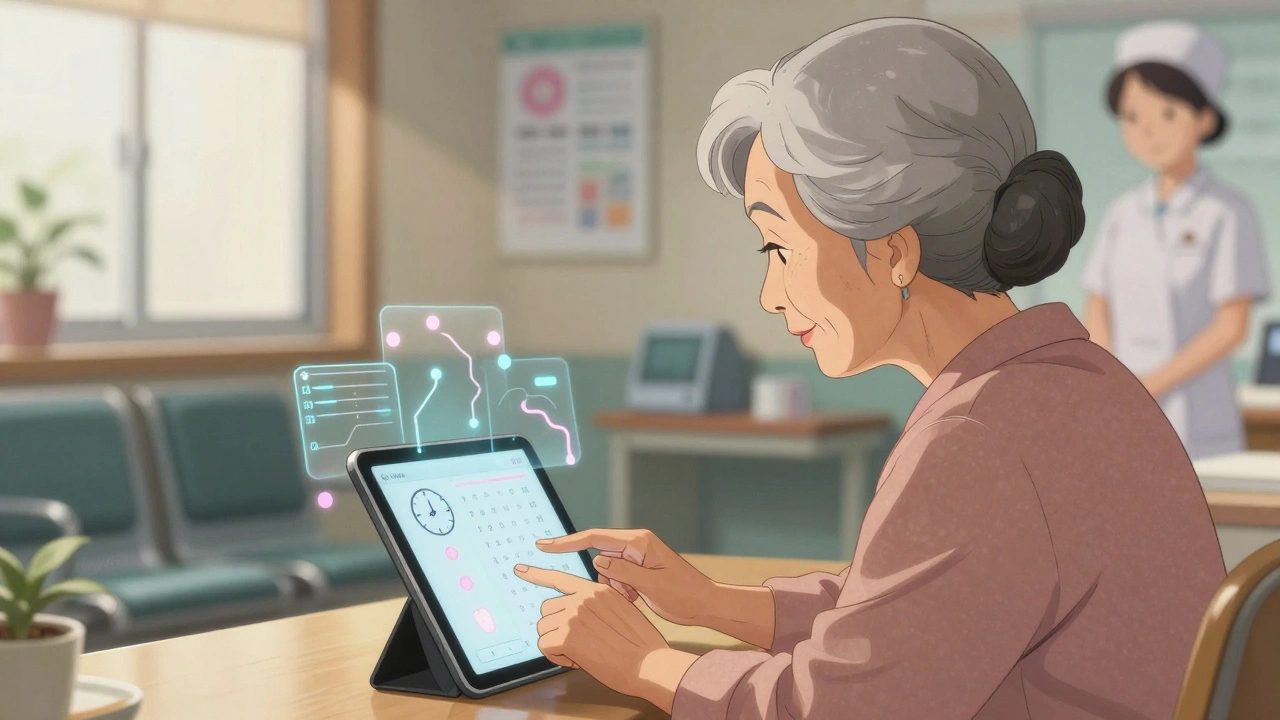
By 2025, catching cognitive decline before it turns into dementia isn’t just a good idea-it’s becoming standard care. The old paper-and-pencil tests like the MoCA and MMSE? They’re still around, but doctors are quickly moving past them. Why? Because they miss the early signs. Real change is happening with digital tools that catch tiny, invisible shifts in memory, attention, and decision-making-long before someone forgets their keys or gets lost driving home.
Why Traditional Screening Tools Are Falling Behind
The Montreal Cognitive Assessment (MoCA) was once the gold standard. It’s a 10-minute test with questions about drawing a clock, remembering words, and naming animals. But here’s the problem: it’s not sensitive enough. A 2023 meta-analysis found MoCA misses up to 30% of people with mild cognitive impairment (MCI), especially those in the earliest, preclinical stage. The Mini-Cog? Even simpler. Just three words and a clock drawing. But it doesn’t pick up on subtle delays in processing speed or decision-making-early red flags for Alzheimer’s.
These tools also rely on subjective scoring. One doctor might give a point for a slightly off clock drawing; another might not. They don’t measure how someone does a task-just whether they got it right. That’s like judging a runner’s form by only checking if they crossed the finish line. You miss the limp, the stagger, the hesitation.
And then there’s accessibility. Many older adults, especially those with vision or motor issues, struggle with paper tests. Holding a pencil, reading small print, or remembering instructions under pressure can skew results-not because of dementia, but because of arthritis, poor eyesight, or anxiety.
The Rise of Digital Cognitive Screening
Today’s best tools don’t ask you to remember five words. They watch how you do it.
Take Linus Health’s Digital Assessment of Cognition (DAC). It combines two simple tasks: drawing a clock digitally and recalling a list of words. But instead of just checking if the clock looks right, it analyzes how you drew it. How fast was your pen? Did you pause between strokes? Did you overshoot the numbers? These tiny movements-measured in milliseconds and millimeters-reveal neural delays invisible to the naked eye. Their machine-learning model, built from over 12,000 patient interactions, identifies MCI with 93.7% accuracy.
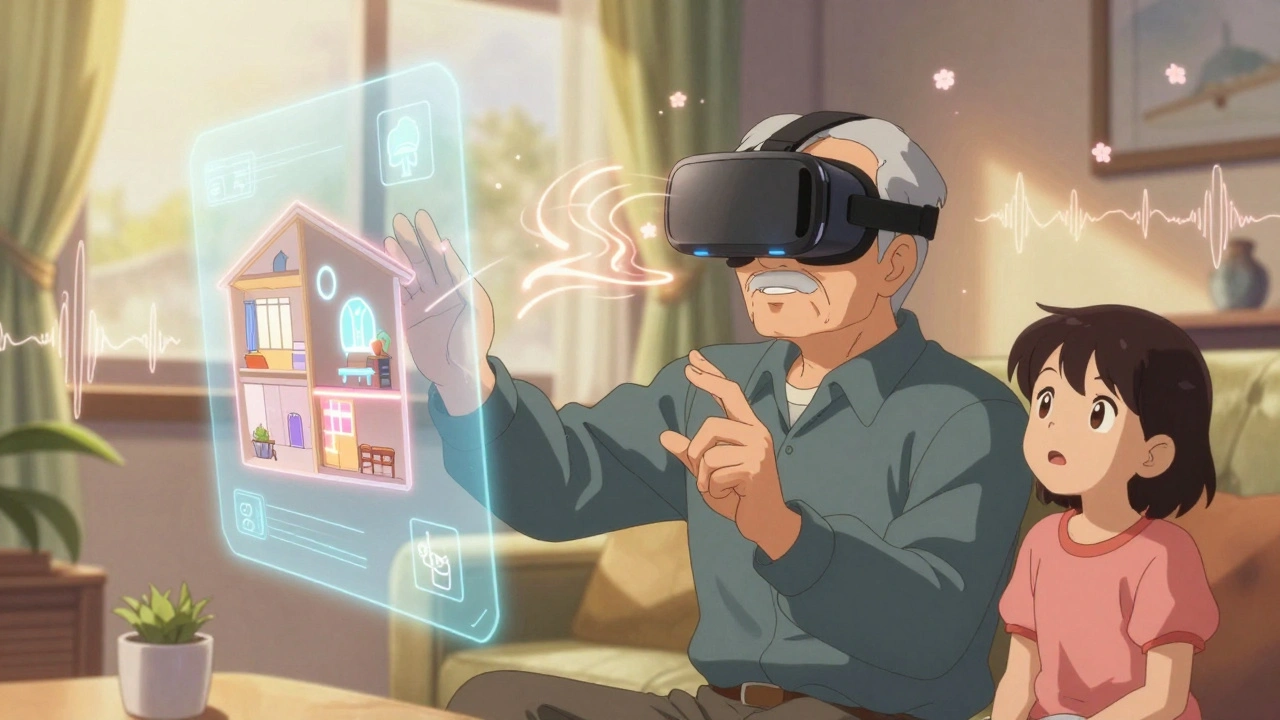
Then there’s the Virtual Reality-Based Cognitive Function Examination (VR-E). You put on a headset and navigate a virtual apartment, find objects, answer questions, and complete tasks. The system tracks your eye movements, reaction time, and path choices. In studies, it distinguished MCI from normal aging with 94.15% accuracy-far outperforming MoCA’s typical 80-85%. It doesn’t just test memory; it tests judgment, spatial awareness, and attention in real-world scenarios.
And it’s fast. The Rapid Online Cognitive Assessment (RoCA) takes under 7 minutes. No pen. No clipboard. Just a tablet or computer. Patients report less stress because there’s no doctor watching over their shoulder. One Reddit user, whose 78-year-old mother used Linus Health’s tool, said: “She completed it in the waiting room with no help. She didn’t even realize it was a test.”
What Makes Digital Tools More Accurate
Traditional tests measure outcomes. Digital tools measure process.
Take the digital Trail Making Test-Part B (dTMT-B). On paper, you connect numbers and letters in order. Simple. But the digital version records 12 different metrics: stroke velocity, hesitation time, path efficiency, and even how often you backtrack. These patterns tell doctors if the delay is cognitive (brain slowing down) or motor (hand shaking). That distinction matters. A 68-year-old with Parkinson’s might struggle to draw a clock-but not because their memory is failing. Digital tools separate the two.
Cleveland Clinic’s Cognitive Battery (C3B) uses similar logic. It’s not just about getting the right answer. It’s about how long it takes, how many attempts you make, and whether you self-correct. In validation studies, C3B was 18.3% more specific than Mini-Cog at spotting true MCI cases-meaning fewer false alarms.
These aren’t just fancy games. They’re clinically validated. Twelve digital tools now have FDA 510(k) clearance. Medicare started reimbursing them in 2025-at up to $45 per test. And 450 healthcare systems, up from just 120 in 2024, have adopted platforms like Linus Health or Cogstate.
How Doctors Are Using These Tools in Practice
It’s not about replacing the doctor. It’s about giving them better data.
At Cleveland Clinic, primary care doctors now run C3B during annual Medicare wellness visits. Medical assistants do the setup-no neurology training needed. Physicians get a dashboard showing trends: Is memory slowing? Is processing speed dropping? Is the patient’s performance deviating from their own baseline? One doctor said, “I had a patient who scored fine last year. This year, her drawing efficiency dropped 22%. That wasn’t a red flag on MoCA. But here? It was enough to order an amyloid scan.”
Integration with electronic health records (EHRs) is the key. Tools like RoCA and C3B auto-populate results into the patient’s chart. If a score falls below a threshold, the system flags it for the doctor’s review. No extra paperwork. No manual entry. That’s why adoption rates hit 85% within six months in clinics that implemented them properly.
Training is minimal. Doctors need 15 minutes. Staff need 20. The tools are designed for real-world use-simple icons, voice-guided instructions, large buttons. “Most patients love it,” says Dr. Brent Anstead. “They feel like we’re actually paying attention to their brain health.”
Challenges and Barriers
It’s not perfect.
Some older adults still struggle with touchscreens. One user on AgingCare.com wrote: “My dad failed the online test because he couldn’t figure out how to click. He’s not confused-he’s never used a tablet.” That’s a real problem. If digital tools only work for tech-savvy seniors, they widen health disparities. Studies show 78% of digital cognitive research underrepresents minorities and those with less education.
VR-E requires expensive headsets-around $2,500 each. That’s not practical for every small clinic. And while blood-based biomarkers for Alzheimer’s (like plasma p-tau217) are showing promise, they’re not yet widely available outside research centers. The National Institute on Aging says they’re “finally in reach,” but they’re not standard care yet.
Also, not all digital tools are equal. Some are academic prototypes with no clinical validation. Others are marketed as “brain games” with no medical backing. Look for tools with FDA clearance, peer-reviewed studies, and reimbursement codes. Avoid anything that sounds like an app you’d download for fun.
What’s Next: Blood Tests and Personalized Prevention
The next big leap isn’t just better screens-it’s combining them with biology.
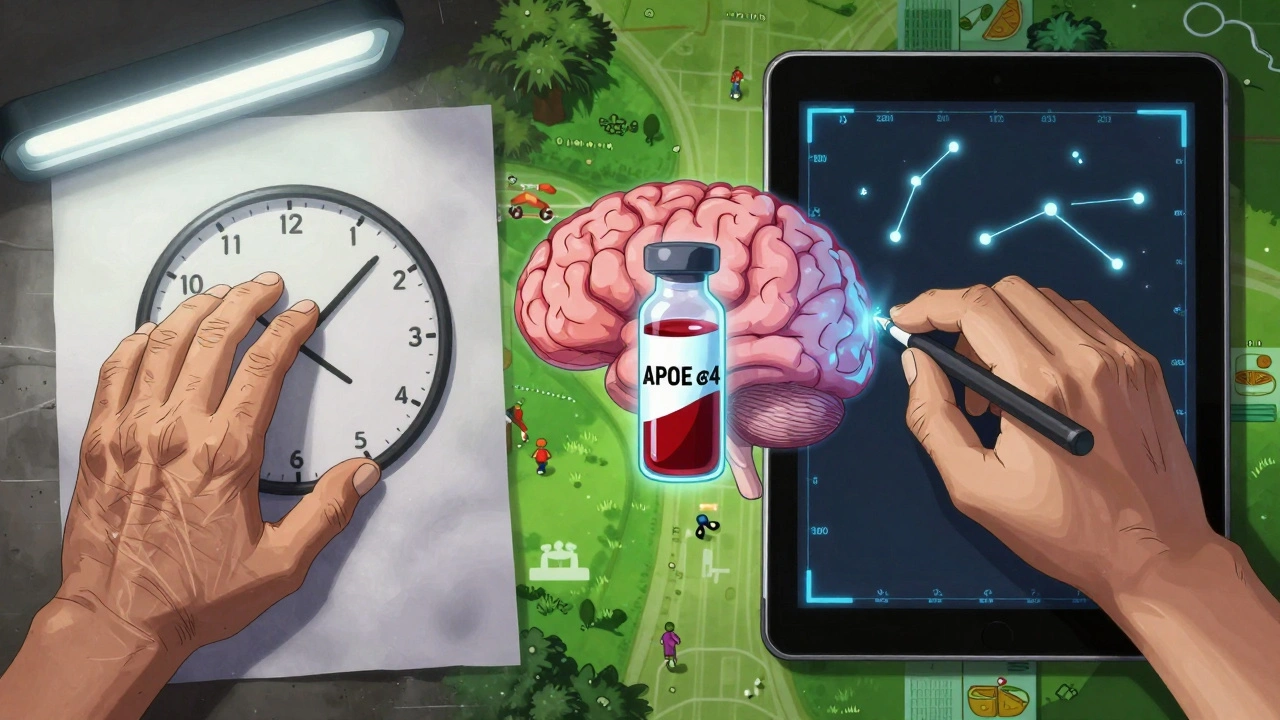
Researchers at Linus Health recently showed that combining digital cognitive data (DCR + dTMT-B) with a simple blood test for APOE ε4 status can predict amyloid buildup in the brain almost as accurately as a $5,000 PET scan. That’s huge. No radiation. No spinal tap. Just a finger prick and a 7-minute tablet test.
And it’s not just detection. Early intervention works. Lecanemab, a new Alzheimer’s drug, only slows decline if given in the MCI stage. Delay it by two years, and the benefit drops by half. That’s why screening isn’t just about diagnosis-it’s about timing. Catch it early, and you can act.
Doctors are now recommending lifestyle changes at the first sign of subtle decline: 150 minutes of weekly aerobic exercise, Mediterranean diet, sleep hygiene, and cognitive training. Some clinics are even offering personalized coaching. One patient, flagged for early MCI, started walking daily, joined a weekly bridge group, and improved her cognitive scores by 15% in six months.
What You Can Do Today
If you’re over 65, ask your doctor about cognitive screening during your next wellness visit. Don’t assume it’s included-ask specifically. Say: “Do you use digital tools like Linus Health or C3B to check cognitive health?”
If you’re a caregiver and your loved one is showing signs-forgetting appointments, struggling with bills, repeating questions-don’t wait for a crisis. Push for a screening. Many clinics now offer these tests during routine visits.
And if you’re healthy? Start now. Exercise. Sleep well. Stay socially active. These aren’t just good advice-they’re the best-known way to delay cognitive decline. The goal isn’t to avoid aging. It’s to keep your brain sharp as long as possible.
Final Thoughts
Cognitive decline isn’t inevitable. And it doesn’t have to sneak up on you. The tools to catch it early are here. They’re accurate. They’re fast. They’re getting better every year.
The question isn’t whether digital screening is better than MoCA. It’s whether you’re ready to use it before it’s too late.
Chris Wallace
December 1, 2025 AT 17:46Man, I’ve watched my uncle go through this. He’s 79, sharp as a tack until last year-then started mixing up grocery lists, forgetting where he parked. We did the MoCA at his doc’s office, and he aced it. But then we tried Linus Health’s app at home, and boom-his drawing speed was 30% slower than his baseline from last year. He didn’t even know he was being tested. Just thought he was playing a game. That’s the magic. No pressure, no judgment. Just data.
Doctors need this. Not because they’re bad, but because they’re overwhelmed. I get it. You’ve got 12 minutes per patient. How’re you supposed to catch a whisper of decline when the system’s screaming for paperwork? Digital tools don’t replace the doctor-they give the doctor a better ear.
And honestly? My uncle’s now on a walking group, cut out sugar, and does crosswords with his grandkids. His scores improved. Not cured. But slowed. That’s huge. We’re not talking about magic pills here. We’re talking about catching the crack before the whole wall falls.
I wish every senior had access. Not just the ones who can afford tablets or have tech-savvy kids. That’s the gap. The tech works, but the access doesn’t. We need low-cost kiosks in libraries, senior centers. Not just apps you have to download.
Also, the VR thing? Wild. My cousin’s a nurse and she said her patients who used VR-E actually looked forward to it. Like a mini-adventure. Who knew cognitive screening could feel like a video game? That’s the future. Not fear. Engagement.
And yeah, blood tests are coming. But right now? This is the bridge. Let’s not wait for perfection. Let’s use what works.
Michael Campbell
December 3, 2025 AT 00:38They’re using tech to spy on old people now. Next they’ll track your dreams.
Victoria Graci
December 4, 2025 AT 21:48There’s something deeply poetic about measuring a person’s cognition by the tremor in their pen stroke or the hesitation between keystrokes. We’ve reduced the soul’s whisper to milliseconds and millimeters-but isn’t that the most honest kind of science? It doesn’t ask ‘do you remember?’ It watches how you reach for memory, like a gardener watching the first curl of a seedling. No judgment. Just presence.
And yet… we still treat dementia like a moral failing. Like forgetting your keys means you’ve lost your worth. But what if the brain isn’t failing-it’s rearranging? Maybe the clock isn’t wrong, it’s just drawn in a different time zone.
These tools don’t just detect decline. They honor the quiet, invisible labor of aging. The effort it takes to tie your shoes when your fingers forget the script. The patience required to click a button when your hand doesn’t trust itself anymore.
Let’s not just build better screens. Let’s build a culture that doesn’t punish the mind for slowing down.
And for God’s sake, stop calling it ‘brain games.’ That’s not a test. It’s a conversation.
Saravanan Sathyanandha
December 6, 2025 AT 10:24As someone from India, I find this deeply encouraging. In our communities, cognitive decline is often dismissed as ‘just getting old’-no screening, no intervention. Families hide it. Elders feel ashamed. But digital tools? They’re silent witnesses. No stigma. No judgment. Just data.
Here, we have millions of seniors who’ve never used a smartphone. So yes, accessibility is a real issue. But imagine if we adapted these tools for voice-first interfaces-like asking them to recall a story instead of drawing a clock. Or using simple audio cues in regional languages.
And the cost? In rural clinics, a $2,500 VR headset is fantasy. But a tablet with a 7-minute app? That’s within reach. We just need government support, not just tech startups.
Also, I’ve seen how family caregivers burn out. If a tool can give them a clear baseline-‘your mother’s processing speed is stable’-that’s peace of mind. That’s not medicine. That’s love made visible.
We don’t need to copy the West. We need to adapt. Make it kinder. Make it ours.
alaa ismail
December 7, 2025 AT 21:46My grandma used the RoCA thing last month. Said it felt like a quiz on her phone. Didn’t even know she was being tested until the doc showed her the report. She was chill about it. Said, ‘Well, I guess my brain’s still working.’
Best part? No one yelled at her for drawing the clock wrong. No pressure. Just a tablet. I’m telling everyone.
Fern Marder
December 8, 2025 AT 12:56OMG I’m so glad this is happening 😭 I’ve been begging my mom’s doctor to do something for YEARS and he just says ‘she’s fine.’ Then she forgot my birthday. Again. This isn’t ‘normal aging’-it’s a medical issue. If they can catch it early, maybe she won’t forget who I am. Please don’t let this stay a luxury.
Carolyn Woodard
December 8, 2025 AT 21:32The paradigm shift from outcome-based to process-based cognitive assessment represents a significant epistemological advancement in neuropsychological diagnostics. The granularity of micro-motor temporal dynamics-stroke velocity, hesitation latency, path efficiency-enables differential diagnosis between neurodegenerative and neuro-motor etiologies with unprecedented specificity.
However, the ecological validity of these digital metrics remains contingent upon normative calibration across demographic strata. The current validation cohorts, while robust, exhibit significant underrepresentation of low-SES, non-English-speaking, and cognitively diverse populations, potentially introducing algorithmic bias that could exacerbate health inequities.
Furthermore, the integration of digital cognitive data with plasma biomarkers such as p-tau217 and APOE ε4 status constitutes a multimodal biomarker architecture that, while promising, requires longitudinal validation to establish predictive validity for clinical endpoints beyond amyloid burden.
Until standardized, interoperable, and ethically calibrated frameworks are adopted, these tools risk becoming technologically sophisticated instruments of differential screening rather than equitable public health interventions.
Allan maniero
December 10, 2025 AT 01:41I’ve been a GP for 32 years. I remember when we used to scribble on paper pads. Then came the computer. Then the EHR. Now this? It’s not about replacing us. It’s about giving us back our time.
I used to spend 10 minutes asking someone to draw a clock, then another 5 trying to interpret it. Now? I get a clean dashboard. I see trends. I see if Mrs. Jenkins’ drawing speed dropped 22% since last year. That’s not a red flag on MoCA. But it’s a scream on this system.
And the best part? My patients actually enjoy it. One guy said, ‘Doc, I didn’t know you cared about my brain.’ That hit me. We’re not just diagnosing. We’re saying: you matter.
Yes, some folks struggle with tech. That’s on us. We need to train staff to help. We need tablets with big buttons. We need voice-guided options. We don’t give up on people because they’re not fluent in smartphones. We adapt.
And if we can catch this early? We can give people years. Not just more pills. More time with their grandkids. More walks. More laughter.
This isn’t sci-fi. It’s care. And it’s here.
Anthony Breakspear
December 11, 2025 AT 23:08Let’s be real-this is the first time in my life I’ve seen brain health treated like heart health. We check cholesterol. We monitor blood pressure. Why? Because we know early action saves lives.
So why are we still treating the brain like a black box? Waiting until someone forgets their grandkid’s name? That’s not ‘old age.’ That’s preventable decline.
These tools? They’re not magic. But they’re the first real step toward making brain health part of routine care. No more ‘you’re fine’ when you’re not.
And if you’re over 65? Ask for it. Don’t wait. Your brain’s not a mystery-it’s a muscle. Use it. Track it. Protect it.
Also, if you’re a caregiver? You’re doing an amazing job. But you don’t have to do it alone. These tools give you proof. Proof that you’re not imagining things. Proof that your loved one needs help. And that’s power.
Zoe Bray
December 13, 2025 AT 01:12It is imperative to underscore that the clinical implementation of digital cognitive assessment platforms must adhere to stringent regulatory and ethical guidelines, including but not limited to HIPAA compliance, algorithmic transparency, and informed consent protocols. The integration of such tools into Medicare-reimbursed wellness visits necessitates rigorous validation of data privacy safeguards, particularly in light of the sensitive neurocognitive data being collected and transmitted.
Furthermore, the absence of standardized interoperability frameworks across vendors-including Linus Health, Cogstate, and C3B-presents a significant risk of data siloing, which may impede longitudinal tracking and continuity of care. Until a unified, open-data standard is adopted by federal health authorities, the scalability of these innovations remains fundamentally constrained.
It is therefore recommended that the Centers for Medicare & Medicaid Services (CMS) establish a certification pathway for digital cognitive screening tools, analogous to the FDA’s 510(k) clearance, to ensure only evidence-based, clinically validated platforms are deployed in primary care settings.
Girish Padia
December 13, 2025 AT 09:07My uncle got tested with one of these apps. He failed. Turned out he just didn’t know how to use a tablet. But the doctor said he had MCI. Now he’s on meds he doesn’t need. This is how they label people now-just because they’re bad with tech. Shame.
Saket Modi
December 14, 2025 AT 23:00So now we’re testing old folks’ brains with apps while they’re waiting to see the doc? Cool. Next they’ll scan your soul with a QR code. 😒
william tao
December 15, 2025 AT 10:40This is the most dangerous thing I’ve read all year. We are not living in a world where algorithms can diagnose dementia better than a human doctor. This is corporate overreach disguised as medicine. They’re not saving brains-they’re selling data. And you’re letting them.
MoCA may be outdated. But at least it’s not a surveillance tool. At least it doesn’t track your every micro-movement. At least it doesn’t turn your grandmother’s hesitation into a marketing profile.
And don’t tell me it’s ‘validated.’ Validation is just a word they use when they want to sell you something.
What’s next? Mandatory brain scans for Social Security? Facial recognition to detect ‘cognitive decline’ before you even speak?
Wake up. This isn’t progress. It’s control.
Victoria Graci
December 16, 2025 AT 23:47Chris, you said it best: we’re measuring the whisper, not the shout. But I’d add this-what if the quietest voices are the ones we’re missing? The ones who can’t afford tablets, who don’t speak English, who’ve never seen a touchscreen? Those aren’t just ‘gaps’ in data. They’re gaps in humanity.
What if the real breakthrough isn’t the algorithm-but the community health worker who sits with an elderly woman in her kitchen, speaks to her in Tagalog, and lets her draw the clock with a crayon on a napkin?
Maybe the best digital tool is a human hand holding a pen.