

Imagine waking up with your lips swollen, your tongue feeling thick, or your throat tightening - no hives, no itching, no obvious reason. You’ve been taking your blood pressure pill for years. You didn’t think it could do this. But it did. This isn’t an allergic reaction. It’s something far more dangerous and far more misunderstood: ACE inhibitor angioedema.
What Exactly Is ACE Inhibitor Angioedema?
ACE inhibitors are among the most common drugs in the world. Millions take them daily for high blood pressure, heart failure, or kidney disease. Names like lisinopril, enalapril, and ramipril are household terms in pharmacies. But behind their effectiveness lies a hidden risk: sudden, silent swelling that can block your airway.
This isn’t a typical allergy. You won’t get itchy skin or hives. Instead, fluid leaks into deep tissues - lips, tongue, throat, even the intestines - because the drug stops your body from breaking down a chemical called bradykinin. Bradykinin makes blood vessels leaky. When it builds up, you swell. And unlike allergic reactions, antihistamines, steroids, and epinephrine won’t help. They’re useless here. That’s why so many people end up in the ER multiple times before someone figures it out.
Why This Reaction Happens - And Who’s Most at Risk
ACE inhibitors work by blocking an enzyme that normally breaks down bradykinin. When that enzyme is turned off, bradykinin piles up. Your body has backup systems to clear it - enzymes like aminopeptidase P and DPP-4 - but not everyone’s backups work well. Some people have genetic variations that make these backup systems weaker. That’s why some folks swell after just a few days on the drug, while others don’t have a problem until they’ve been on it for 10 years.
And it’s not random who gets it. African Americans are two to four times more likely to develop this swelling than other groups. Women are affected about twice as often as men. People with diabetes who also take DPP-4 inhibitors (like sitagliptin) face a 4 to 5 times higher risk. The numbers aren’t small: out of every 100 people on ACE inhibitors, between 1 and 7 will have this reaction. With over 65 million Americans on these drugs, that’s tens of thousands of cases every year.
How It Looks - And How It’s Often Mistaken
Here’s what it usually looks like:
- Sudden swelling of the lips, tongue, or face - often painless
- Throat tightness, trouble swallowing, hoarse voice
- No hives, no itching, no rash
- No improvement after epinephrine or Benadryl
That last point is critical. Emergency rooms are flooded with patients who’ve been given epinephrine shots and antihistamines because the staff assumes it’s an allergic reaction. But if it’s ACE inhibitor angioedema, those treatments do nothing. They waste time. And time is what you don’t have if your airway is closing.
One patient in Bristol told me she went to the ER three times over six weeks. Each time, they gave her steroids and antihistamines. Each time, the swelling came back. Only when a new doctor asked, “Are you on a blood pressure pill?” did the pieces click. She’d been on lisinopril for eight years. No one ever connected the dots.

What to Do If You Think You’re Having It
If you notice sudden swelling - especially in your face, tongue, or throat - stop taking your ACE inhibitor immediately. Don’t wait. Don’t hope it goes away. Call 999 or go to the nearest emergency department. Tell them: “I think this is ACE inhibitor angioedema.” Say it out loud. Most doctors haven’t been trained to recognize it on first sight.
Once you’re in care, the only guaranteed fix is stopping the drug. But if your airway is in danger, doctors need to act fast. In severe cases, they may use:
- Icatibant - a drug that blocks bradykinin receptors. It works in 2 to 4 hours. Costs around $9,000 per dose in the U.S., but it’s the most effective option.
- C1-inhibitor concentrate - used for hereditary angioedema, but sometimes tried here.
- Fresh frozen plasma - contains enzymes that can break down bradykinin. Used off-label when other options aren’t available.
There’s no magic pill. No quick fix. But if you catch it early and stop the drug, most swelling fades within 24 to 48 hours. For some, mild swelling lingers for months - even after stopping the medication.
What Comes Next - Switching Medications Safely
Once you’ve had this reaction, you can never take an ACE inhibitor again. Not even once. Not even if you’re told it’s “safe” or “different.” The risk of a second episode is high - and it’s often worse than the first.
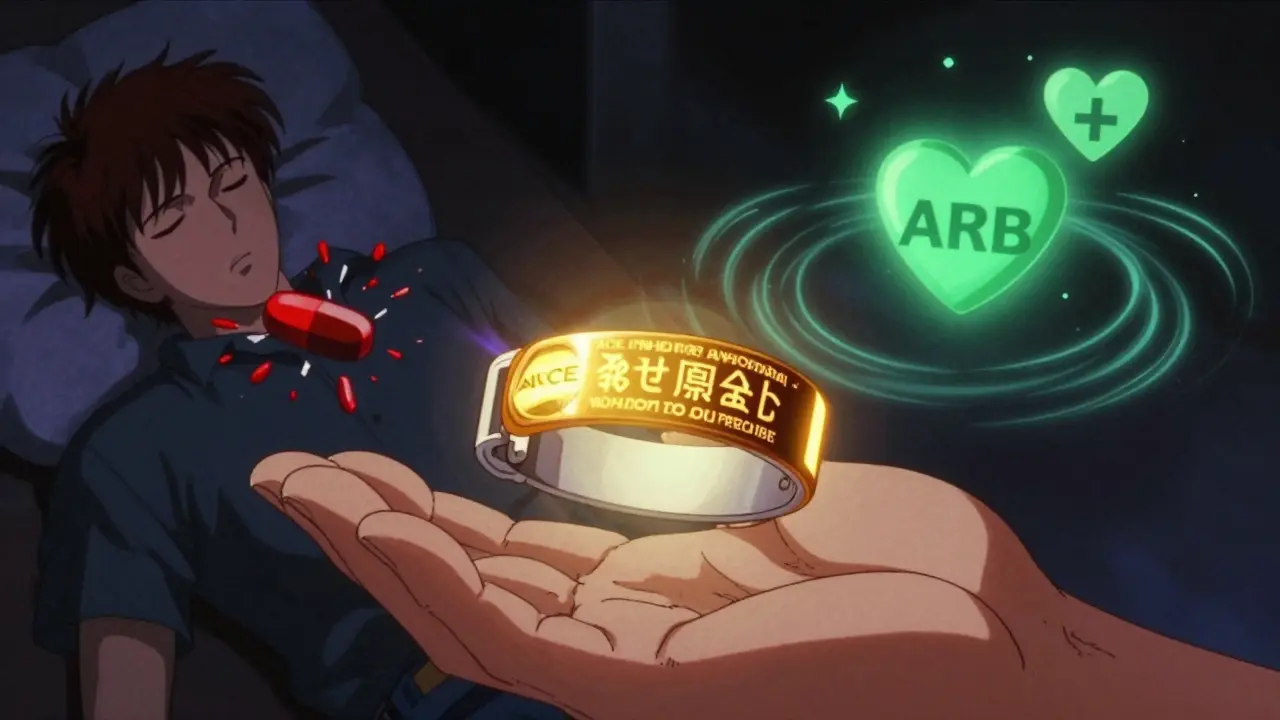
The usual replacement is an ARB - angiotensin receptor blocker. Drugs like losartan or valsartan. They work similarly but don’t affect bradykinin as much. The risk of angioedema with ARBs is about 10 times lower. But here’s the catch: 10 to 15% of people who had ACE inhibitor angioedema will get it again on an ARB. So switching isn’t foolproof.
Doctors need to monitor you closely in the first few weeks. And you need to know the signs. If you start swelling again, stop the new drug and go back to your doctor immediately.
Why So Many Cases Are Missed - And How to Prevent It
Studies show only about 55% of ER doctors correctly identify ACE inhibitor angioedema on the first visit. That means nearly half of patients get the wrong treatment. Why? Because it’s not taught well in medical school. Because it looks like an allergy. Because the patient says, “I’ve been on this pill for years - it can’t be that.”
But the data doesn’t lie. Half of cases happen within the first week. A third happen within the first year. And 20%? They show up after five, ten, even fifteen years. That’s why no one should assume they’re “safe” just because they’ve been on the drug for a long time.
There’s also a big gap in patient education. Only 42% of people who’ve had this reaction are told they must avoid all ACE inhibitors forever. That’s terrifying. Imagine being prescribed lisinopril again by a different doctor who doesn’t know your history.
That’s why medical alert bracelets are now recommended after a severe episode. Write “ACE Inhibitor Angioedema - Do Not Prescribe” on it. Keep a card in your wallet. Tell every new doctor. Make it part of your medical identity.
The Future - Genetic Testing and Better Treatments
Research is moving fast. A 2023 study found a specific gene variation (XPNPEP2) that triples your risk of this reaction. In the future, doctors may test for this before even prescribing an ACE inhibitor - especially for Black patients or women with a family history of swelling.
More affordable versions of icatibant are in development. Clinical trials are underway for new drugs that block bradykinin more effectively. The European Medicines Agency already recommends extra monitoring for high-risk groups. The FDA has added black box warnings to all ACE inhibitor labels since 2010. But awareness still lags behind science.
Dr. Bruce Zuraw, a leading expert in angioedema, predicts that within five years, genetic screening will be standard for high-risk patients. Until then, the best defense is knowledge - yours and your doctor’s.
Bottom Line: Know the Signs, Act Fast
ACE inhibitor angioedema is rare, but it’s real. It’s silent. It’s deadly. And it’s completely preventable - if you know what to look for.
If you’re on an ACE inhibitor and notice sudden swelling - especially in your face or throat - stop the drug. Go to the ER. Tell them exactly what you suspect. Don’t let them give you antihistamines and send you home. Demand they consider bradykinin-mediated angioedema.
And if you’ve had it once - never take an ACE inhibitor again. Ever. Your life depends on it.
Ashley Porter
January 26, 2026 AT 09:24Just had a patient come in last week with bilateral lip swelling after 12 years on lisinopril. No hives, no itching. ER gave her Benadryl three times. She almost intubated before her cardiologist caught it. This is a silent killer and no one talks about it enough. The bradykinin cascade is wild.
Conor Flannelly
January 27, 2026 AT 20:36Man, this hits different. I’m Irish, and we’ve got a ton of elderly folks on these meds because they’re cheap and effective. But nobody warns them. My uncle got this after 8 years - thought he was having a stroke. Took three ER trips before someone asked about his BP med. We need public health campaigns, not just doctor memos. This isn’t rare. It’s just invisible.
And the fact that ARBs aren’t safe either? That’s the real kicker. People think switching is a fix. It’s not. It’s a gamble. And no one tells you the odds.
I’ve seen folks on icatibant in Dublin - it’s like a miracle drug, but you need a specialist to even know it exists. Most GPs think it’s just an allergic reaction. We’re decades behind on this.
Also, the genetic angle? XPNPEP2? I read that paper. It’s not just Black patients - some Celtic variants show up too. We need screening, not just suspicion.
And why is it so expensive in the US? $9k per dose? That’s criminal. I’ve seen people in Cork get it for free through the HSE. Why can’t we fix that here?
Medical alert bracelets? Yes. Please. I’ve got one. It says ‘ACEi Angioedema - NO LISINOPRIL’ in bold. My mom still forgets to tell new doctors. She’s 74. She doesn’t get it.
And don’t get me started on how ER staff still default to epinephrine. It’s like they’re trained to treat allergies, not bradykinin storms. We need protocols. Not hope.
Also - why aren’t pharmacists asking? I’ve picked up lisinopril for my aunt for years. No one ever said, ‘Hey, this can make your face swell.’ Not once.
It’s not negligence. It’s ignorance. And ignorance kills.
Thanks for writing this. Someone needed to say it out loud.
Peter Sharplin
January 28, 2026 AT 08:17Just want to add: if you’re on an ACE inhibitor and you’ve ever had unexplained swelling - even mild - stop it. Now. Don’t wait for it to get bad. I had a tiny lip puff after 3 years on enalapril. Thought it was a cold sore. Went to urgent care. They gave me steroid cream. Took me 6 months to realize it was the med. I wish I’d known sooner.
Also - if you’re Black or a woman, please, please, please talk to your doctor about alternatives. This isn’t theoretical. It’s statistical. And it’s personal.
shivam utkresth
January 29, 2026 AT 16:33Bro, this is straight fire. I’m from India, and we’re swimming in ACE inhibitors here - cheap, accessible, prescribed like candy. No one even knows what bradykinin is. My cousin got tongue swelling after 5 years - they gave her antihistamines for a week. She almost choked on her own saliva.
And the ARB thing? Yeah, we’ve seen it. My uncle switched to valsartan and got swelling again. Doc said, ‘Oh, coincidence.’ Coincidence my ass.
Genetic testing? We need it here. We’ve got so many people with DPP-4 inhibitors on top of ACEi - it’s a perfect storm. Nobody’s connecting dots.
Also - why isn’t this on the pharmacy label? Like, right there next to ‘take with food’? A little icon? ‘Warning: May cause your face to swell like a balloon.’
And the cost of icatibant? In India, it’s $150. In the US? $9k. That’s not healthcare. That’s capitalism with a stethoscope.
Thanks for the heads-up. I’m printing this and handing it to my aunt’s cardiologist.
Ashley Karanja
January 30, 2026 AT 20:18This is such an important post - I’m a clinical pharmacist and I’ve seen this pattern so many times. The diagnostic delay is heartbreaking. We’re talking median time to diagnosis of 18 days - sometimes longer. And the worst part? Patients are often discharged with the same med because the ER didn’t document it properly. Then they come back. Again. And again.
There’s a huge gap in EHR systems too - no flag for ACEi angioedema history. No auto-alert when a new prescriber tries to write it. We need interoperable flags. Like how we flag penicillin allergies.
And the cultural component? In some communities, patients don’t question doctors. They take the pill. They don’t say, ‘This feels weird.’ That’s why education has to go beyond the clinic - community health workers, faith leaders, even barbershops and salons.
Also - icatibant is underutilized. It’s not just for hereditary angioedema. It’s FDA-approved for ACEi-induced. But most docs don’t know. We need grand rounds. We need journal clubs. We need it on every medical student’s OSCE checklist.
And yes - genetic screening. XPNPEP2 variants are common in African ancestry populations. We should be testing before prescribing. Not after the ER visit.
I’ve started carrying a laminated card in my wallet that says ‘ACEi Angioedema - STOP DRUG, CALL 911, ICATIBANT’ - and I give them to patients. Because if I don’t, who will?
Thank you for writing this. It’s not just information. It’s a lifeline.
John Wippler
February 1, 2026 AT 05:28Look, I used to be one of those people who thought ‘if it’s been working for 10 years, it’s fine.’ Then my sister got this. She woke up with a tongue like a balloon. No hives. No itching. Just… swelling. And the ER? They gave her Benadryl and sent her home. She came back two days later barely able to breathe.
That’s when I started digging. And I realized - this isn’t rare. It’s just buried under the noise of ‘allergic reactions.’
And the fact that ARBs aren’t safe? That’s the kicker. I thought switching was the fix. It’s not. It’s a 10-15% chance of recurrence. That’s like rolling dice with your airway.
But here’s the thing - knowledge is power. If you know the signs, you can save your life. Or someone else’s. That’s why I’m sharing this everywhere. Reddit, Facebook, my book club, my yoga class. Everyone needs to hear this.
And yeah - medical alert bracelets? Do it. I got one for my sister. It says ‘ACEi Angioedema - DO NOT PRESCRIBE.’ Simple. Clear. Life-saving.
We’re not just talking about meds. We’re talking about survival. And if you’re on one of these drugs - don’t wait for the swelling. Ask your doctor now. Ask today.
You’ve got nothing to lose. Everything to gain.
Conor Murphy
February 3, 2026 AT 02:56My grandma had this. She was on ramipril for 15 years. One morning her lips were like two sausages. She didn’t even feel pain. Just… thick. She went to the doctor, they said ‘allergy,’ gave her pills. She came back a week later with her tongue swollen. They finally figured it out after she cried and said, ‘I think it’s the BP pill.’
She’s fine now. But she’s terrified. And no one ever told her she can’t take it again. Not even her new doctor.
So I printed this out. Laminated it. Put it in her wallet. Told her to show it to every new doctor. No excuses.
Thanks for saying this. I needed to read it.
Patrick Merrell
February 3, 2026 AT 11:52Y’all are overreacting. This is just Big Pharma hiding the side effects. They don’t want you to know how dangerous these drugs are. They’re selling pills like candy. And now you’re scared of your own blood pressure med? Wake up. There’s a whole system here. ACE inhibitors? They’re not even the worst. Look at statins. Look at metformin. They’re all poison. You’re being manipulated.
And don’t even get me started on icatibant. $9,000? That’s a scam. The real cure is fasting, lemon water, and avoiding all pharmaceuticals. The body heals itself. You just need to believe.
Also - why are they testing genes? Next thing you know, they’ll be fingerprinting you before you get a prescription. This is the beginning of the medical surveillance state.
TONY ADAMS
February 4, 2026 AT 07:52Bro I got this. I was on lisinopril for 7 years. One day my lips got huge. I thought I ate a bad shrimp. Went to ER. They gave me steroids. Swelling came back. Again. Again. I finally figured it out myself. I stopped the pill. 24 hours later - poof. Gone.
Now I tell everyone. If you’re on a BP med and your face feels weird - STOP. Just stop. Don’t wait. Don’t ask. Just stop.
And if you’re Black? You’re basically playing Russian roulette. Don’t take the pill unless you’re ready to die.
George Rahn
February 4, 2026 AT 16:33It is a matter of profound national concern that the American medical establishment continues to tolerate such egregious lapses in pharmacovigilance. The fact that a drug with such a well-documented, life-threatening, and genetically predisposed adverse reaction remains ubiquitously prescribed without mandatory screening protocols constitutes a systemic failure of the highest order. One must ask: Where is the federal oversight? Where is the congressional accountability? The FDA’s black box warning is a symbolic gesture - a Band-Aid on a hemorrhage.
Moreover, the suggestion that ARBs serve as a safe alternative is not only scientifically dubious but ethically negligent. The recurrence rate of 10–15% is not a statistical footnote - it is a death sentence in waiting. The pharmaceutical industry, in collusion with academic institutions, has prioritized profit over human life. This is not medicine. This is commodified negligence.
It is time for a national moratorium on all ACE inhibitors until mandatory genetic screening is implemented. Until then, we are complicit in the slow, silent slaughter of our citizens.
Marian Gilan
February 5, 2026 AT 15:48theyre all lying. the swelling? its the chemtrails. the ACE inhibitors? theyre just a cover. the real cause is the 5g towers pumping bradykinin into your body. they dont want you to know. the hospital gives you benadryl so you dont notice the real problem. my cousin got it after he got his new iphone 16. same day. same swelling. coincidence? i think not.
theyre using this to track black people. thats why its more common. theyre testing on us. and the icatibant? its a mind control drug. its in the water. dont trust the doctors. theyre all in on it.
Peter Sharplin
February 7, 2026 AT 11:50Just read the conspiracy guy’s comment. I’m not even mad. I’m just… sad. We’ve got people who’ve been through this - real swelling, real fear, real near-death - and now someone’s turning it into a cartoon. That’s the real tragedy.
People like you? You’re the reason we can’t get this fixed. You make it harder for the real victims to be heard.