
When someone doesn’t take their medicine as directed, it’s called non-adherence, the failure to follow a prescribed medication plan. Also known as poor drug compliance, it’s not about being careless—it’s often about confusion, cost, side effects, or simply not feeling sick enough to bother. This isn’t a rare problem. Half of all people taking meds for high blood pressure, diabetes, or depression miss doses at some point. And it’s not just patients. Doctors, pharmacists, and even insurance companies play a role—sometimes without realizing it.
Medication adherence, the act of taking drugs exactly as prescribed, is affected by more than just willpower. Drug compliance fails when pills look different than expected, when side effects like dizziness or dry mouth show up, or when the cost jumps after a brand switches to a generic. Patient behavior, how people actually interact with their meds in daily life is shaped by routines, memory, trust, and even how the pharmacist explains things. A study from the CDC found that patients who didn’t understand why they were taking a drug were 3 times more likely to skip it. And if they’ve had a bad experience with a generic before—like a different pill shape or a new side effect—they might stop taking it altogether, even if it’s chemically identical.
It’s not just about forgetting. It’s about fear. Some people stop SSRIs because of brain zaps. Others skip blood thinners after reading about Ginkgo Biloba interactions. Elderly patients drop pills because they’re on ten different meds and can’t keep track. College students stash stimulants because they don’t want to be seen taking them. Each of these stories shows how non-adherence isn’t a single issue—it’s a chain reaction of design, communication, and human psychology.
What you’ll find below isn’t theory. These are real cases: patients who stopped tacrolimus because of tremors, others who mixed alcohol with warfarin without knowing the risks, people who skipped thyroid meds because calcium ruined absorption. You’ll see how side effects, drug interactions, and confusing labels all feed into the same problem. And you’ll find practical fixes—not just reminders, but real changes in how meds are packaged, explained, and supported by communities.
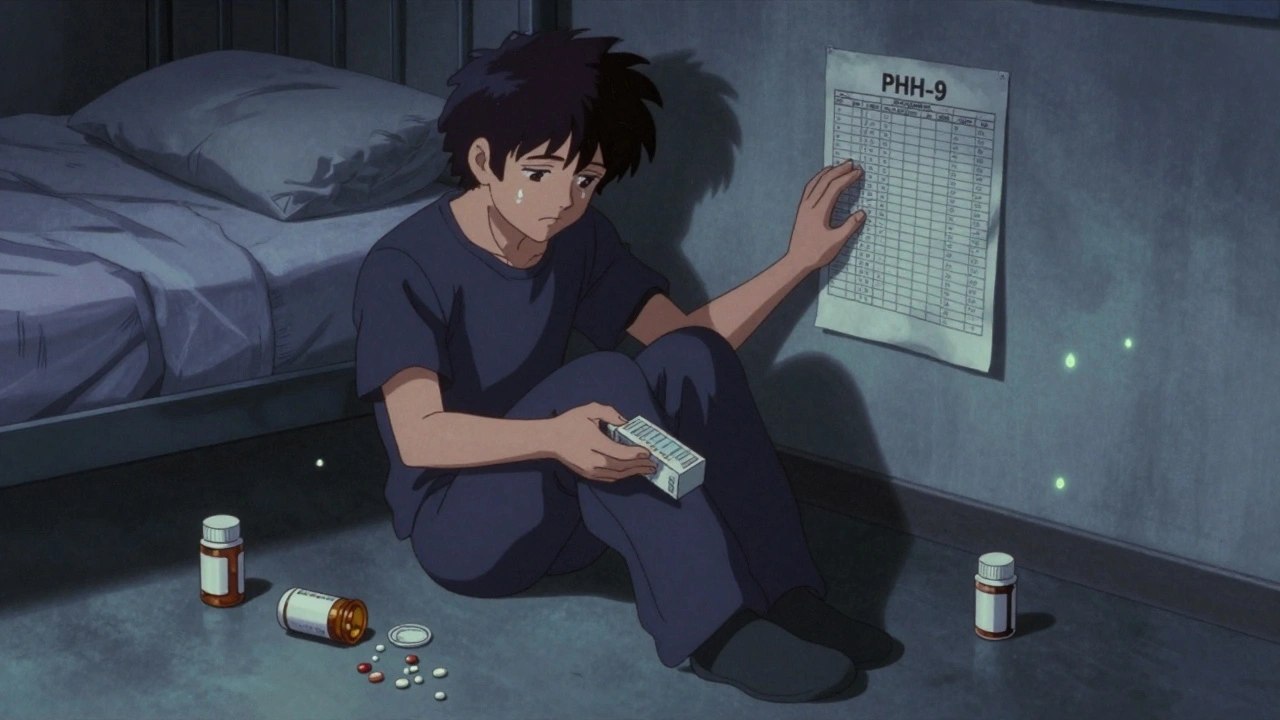
Depression significantly reduces medication adherence across chronic conditions. Learn how to recognize the signs, use proven screening tools like PHQ-9 and MMAS-8, and implement strategies that actually work to improve adherence.