
When you eat turkey, bananas, or dairy, you’re getting L-tryptophan, an essential amino acid your body can’t make on its own and must get from food or supplements. Also known as L-tryptophan, it’s the starting point for making two critical brain chemicals: serotonin, a neurotransmitter linked to mood and calm, and melatonin, the hormone that tells your body it’s time to sleep.
That’s why people take L-tryptophan supplements — not just for sleep, but for anxiety, depression, and even migraines. But it’s not magic. Your body needs other nutrients like vitamin B6, iron, and folate to turn L-tryptophan into serotonin. Without them, the supplement won’t work well. And here’s the catch: L-tryptophan competes with other amino acids to cross the blood-brain barrier. Eating carbs with it can help, because insulin clears the competition out of your bloodstream. That’s why a warm glass of milk before bed might actually help — it’s not just the tryptophan, it’s the carbs that make it work.
But there are risks. L-tryptophan can interact with antidepressants like SSRIs and SNRIs, raising serotonin levels too high — a condition called serotonin syndrome. That’s dangerous. It can also interfere with medications for Parkinson’s, migraine, and even some cold and allergy pills. The FDA banned L-tryptophan supplements in 1989 after a contaminated batch caused a rare, sometimes fatal illness called eosinophilia-myalgia syndrome. Today’s products are safer, but quality still varies. If you’re taking any meds, talk to your doctor before trying it. Don’t assume natural means safe.
What you’ll find below are real stories and science-backed guides on how L-tryptophan fits into the bigger picture of medication use. From how it interacts with thyroid drugs and blood thinners to why some people swear by it for sleep while others feel nothing, these posts cut through the noise. You’ll see how supplement use connects to drug safety, aging, and even how your body handles multiple medications over time. No fluff. Just what you need to know before you take it.
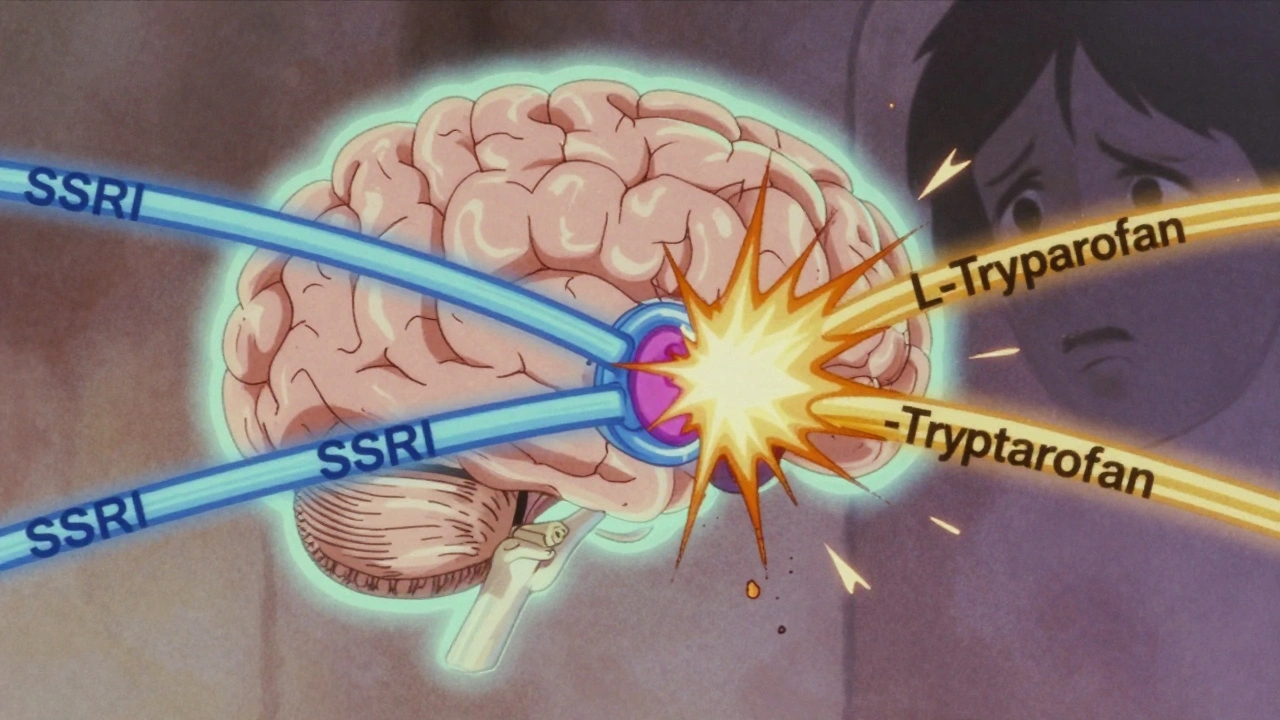
L-Tryptophan boosts serotonin, just like SSRIs. Together, they can trigger serotonin syndrome-a serious, sometimes fatal condition. Learn who’s at risk, what symptoms to watch for, and why most doctors won’t recommend this combo.