
When you pick up a generic pill, you assume it works just like the brand-name version. That trust comes from ANDA stability data, the rigorous testing required by the FDA to prove a generic drug stays safe and effective over time under real-world conditions. Also known as Abbreviated New Drug Application stability requirements, this data isn’t just paperwork—it’s the reason your generic medication doesn’t break down in your medicine cabinet or lose potency before the expiration date.
Without solid ANDA stability data, the legal pathway for generic drugs to enter the market, companies couldn’t get approval under the Hatch-Waxman Act, the 1984 law that created the modern generic drug system in the U.S.. This law lets generics skip expensive clinical trials—but only if they prove they’re identical in performance, and crucially, in stability. Stability testing checks how a drug holds up under heat, humidity, light, and time. It’s not about whether it works in a lab on day one—it’s whether it still works on day 365. The FDA requires data from at least three batches tested over 12 to 36 months under different conditions. If the active ingredient degrades by more than 5%, or if impurities spike, the application gets rejected. That’s why some generics never make it to shelves, even if they’re chemically identical.
Stability data also connects directly to bioequivalence, the proof that a generic drug delivers the same amount of medicine into your bloodstream as the brand. But bioequivalence alone isn’t enough. A drug can be bioequivalent at the time of manufacture and still become unsafe months later if its formulation isn’t stable. That’s why manufacturing flaws—like poor packaging or incorrect excipients—can lead to recalls, even for approved generics. You’ve probably seen news about overseas plants failing FDA inspections for cGMP violations. Many of those failures trace back to weak stability testing programs. Companies cut corners on stability studies to save money, and patients end up with pills that don’t work as promised.
What you get in your bottle isn’t just chemistry—it’s a promise backed by data. The ANDA stability data behind your generic medication ensures it won’t suddenly lose strength, turn toxic, or break apart in your pill organizer. It’s the invisible checkpoint between a cheap copy and a safe, reliable medicine. Below, you’ll find real stories and breakdowns of how this system works, where it fails, and what you should know about the pills you take every day.
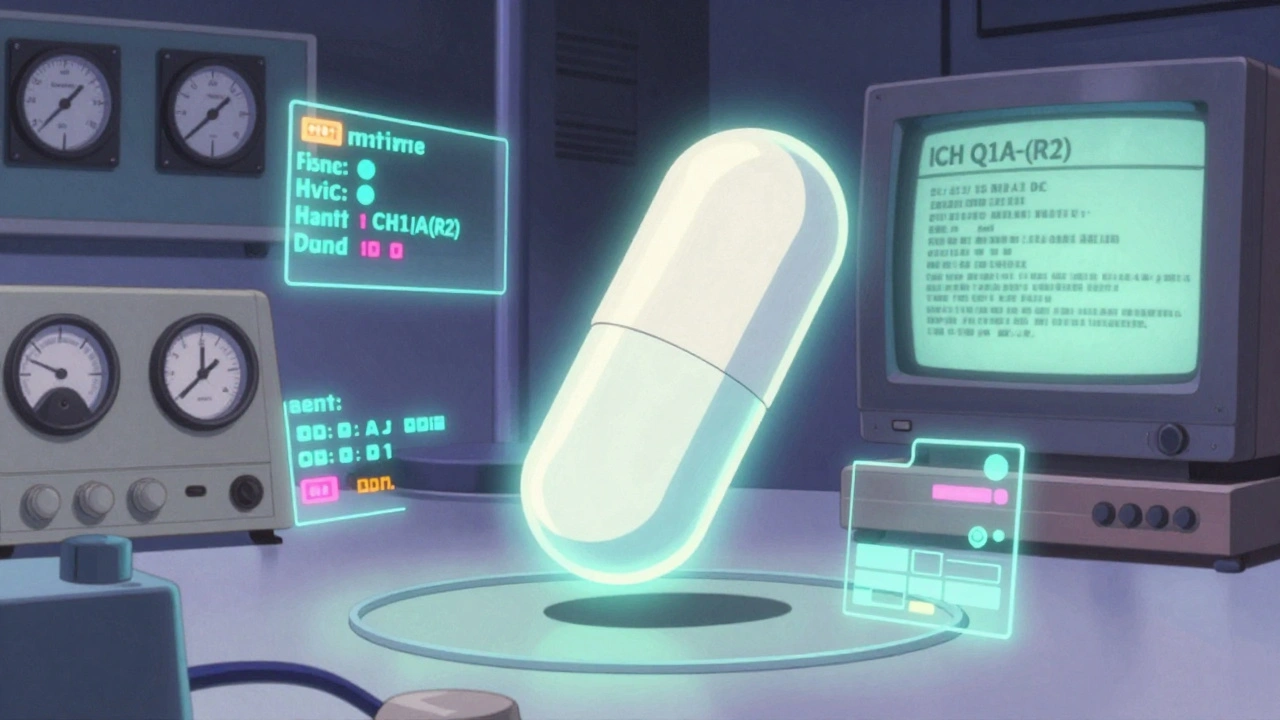
Learn the FDA's exact stability testing requirements for generic drugs, including batch size, testing schedules, container rules, common rejection reasons, and 2025 updates. Essential for manufacturers and regulators.