
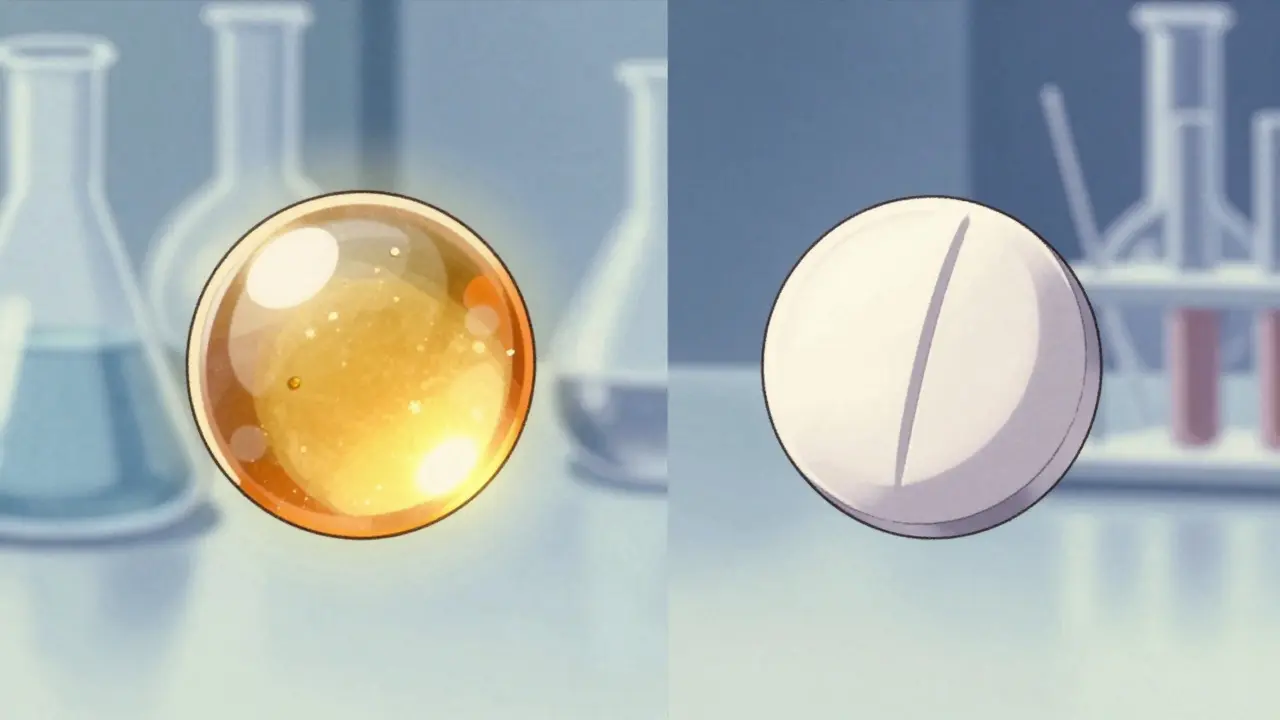
Have you ever looked at your prescription and wondered if that cheaper white pill is actually going to do the same job as the expensive branded one? It’s a fair question. When you’re taking medication for a serious condition, the last thing you want to worry about is whether the substitute will work. The short answer is yes, they do. But how can you be sure? The U.S. Food and Drug Administration (FDA) doesn’t just take manufacturers’ word for it. They enforce a rigorous, science-heavy system designed to prove that generic drugs are virtually identical to their brand-name counterparts in every way that matters.
This isn’t guesswork. It’s a legal and scientific framework established decades ago to balance patient safety with healthcare affordability. Today, generic drugs make up about 90% of all prescriptions filled in the United States. That’s billions of pills, liquids, and injections moving through pharmacies every year after year. If the system were flawed, we’d see widespread health crises. Instead, we see savings-roughly $313 billion annually for the American healthcare system. But behind those numbers lies a complex approval process that demands proof, not promises.
The Legal Foundation: The Hatch-Waxman Act
To understand how generics get approved, you have to look back to 1984. Before this year, brand-name drug companies held monopolies on their medications for long periods after patents expired. Patients paid high prices because there was no competition. Congress passed the Drug Price Competition and Patent Term Restoration Act, commonly known as the Hatch-Waxman Act. This law created a new pathway for generic manufacturers to bring drugs to market without repeating the massive, costly clinical trials that original developers had already completed.
The act introduced the Abbreviated New Drug Application (ANDA). Unlike a standard New Drug Application (NDA), which requires years of animal studies and human clinical trials to prove safety and efficacy from scratch, an ANDA relies on the FDA’s previous findings for the brand-name drug. The manufacturer simply has to prove that their version is equivalent. This “abbreviated” approach cuts development time and costs significantly, allowing companies to pass those savings on to patients while maintaining strict quality controls.
Bioequivalence: The Core Scientific Test
The heart of the FDA’s generic approval process is bioequivalence. This term sounds technical, but the concept is straightforward: does the generic drug enter your bloodstream at the same rate and to the same extent as the brand-name drug? If it does, it will produce the same therapeutic effect.
Manufacturers must conduct clinical studies, typically involving 24 to 36 healthy volunteers, to demonstrate this. The FDA looks at two key metrics:
- AUC (Area Under the Curve): This measures the total amount of drug absorbed into the body over time.
- Cmax (Maximum Concentration): This measures the peak level of the drug in the blood.
For a generic to be approved, the 90% confidence interval of the ratio between the generic and the brand must fall within a specific range: 80% to 125%. This might sound like a wide margin, but statistically, it ensures that any difference is clinically insignificant. In other words, the variation is so small that it won’t affect how the drug works in your body. For most drugs, this standard is more than enough to guarantee consistent results.
| Requirement | Standard | Purpose |
|---|---|---|
| Active Ingredient | Identical to brand | Ensures same pharmacological effect |
| Dosage Form & Strength | Same tablet/capsule size, mg count | Guarantees correct dosing |
| Bioequivalence Range | 80-125% confidence interval | Proves similar absorption rate |
| Route of Administration | Identical (oral, topical, etc.) | Matches delivery method |
| Inactive Ingredients | Safe quantities per FDA database | Allows for manufacturing differences without affecting safety |

Quality Control: Manufacturing and Inspections
Proving bioequivalence is only half the battle. The FDA also needs to ensure that every single pill produced meets the same high standards. This is where Current Good Manufacturing Practices (cGMP) come in. Codified in regulations 21 CFR Parts 210 and 211, these rules govern how drugs are made, processed, packed, and stored.
Generic manufacturers cannot cut corners. Their facilities undergo annual inspections by the FDA. These inspectors check everything from water purity to equipment calibration. They verify that the production process is validated, meaning it consistently produces batches that meet identity, strength, purity, and quality standards. For example, content uniformity must fall within 85-115% of the label claim, according to USP <905> standards. If a facility fails inspection, the FDA can halt production or refuse to approve the drug.
While active ingredients must be identical, inactive ingredients (like fillers, binders, or dyes) can differ. However, these must be present in safe quantities as defined by the FDA’s Inactive Ingredient Database. This database lists concentration limits for over 500 excipients across various routes of administration. So, while your generic ibuprofen might be a different color than the brand name, the filler used is rigorously tested for safety.
The Approval Timeline and Process
Getting a generic drug approved isn’t instantaneous. The process involves several distinct phases. First, the manufacturer submits the ANDA, which can contain 30,000 to 50,000 pages of documentation. The FDA conducts a 60-day filing review to determine if the application is complete. About 35% of initial submissions receive a “Refuse-to-File” letter due to major deficiencies, sending them back to square one.
If the application passes the filing review, it enters substantive review. Here, experts in chemistry, manufacturing, biopharmaceutics, and labeling scrutinize the data. The Generic Drug User Fee Amendments (GDUFA) program, reauthorized in 2022, sets performance goals for this timeline. Currently, the target is to issue a decision within 10 months for standard reviews. In fiscal year 2022, the FDA achieved a 91.3% success rate in meeting this goal.
The most common reasons for delays or rejection include inadequate bioequivalence studies (28%), manufacturing process issues (22%), and labeling discrepancies (18%). Resolving these issues can add 6 to 12 months to the timeline. Once approved, the drug receives a Therapeutic Equivalence Code, signaling to pharmacists that it can be substituted for the brand-name version.

Addressing Concerns: Narrow Therapeutic Index Drugs
Some patients and doctors worry about switching to generics, especially for drugs with a narrow therapeutic index (NTI). These are medications where small changes in blood concentration can lead to treatment failure or toxicity. Examples include levothyroxine for thyroid conditions and warfarin for blood thinning.
The FDA recognizes these concerns. In 2019, they published a list of NTI drugs requiring tighter bioequivalence criteria. For these specific products, the acceptance range shrinks from 80-125% to 90-111%. This stricter standard minimizes the risk of variability. While some physicians still express caution, expert analysis supports the safety of FDA-approved generics. A 2023 study by the IQVIA Institute examined 15 million patient records and found no statistically significant difference in clinical outcomes between brand and generic versions of common medications.
Adverse event reports also tell a reassuring story. According to the FDA’s Adverse Event Reporting System (FAERS), the rate of reported side effects per million prescriptions is nearly identical for generics (1.7) and brand-name drugs (1.6). This suggests that when problems occur, they are related to the active ingredient itself, not whether it came from a generic or brand manufacturer.
Why Generics Matter Beyond Cost
The push for generic drugs isn’t just about saving money; it’s about access. With the global generic pharmaceuticals market reaching $441.7 billion in 2023, the U.S. accounts for 42% of this volume. As major blockbuster drugs lose patent protection, generics provide affordable alternatives for millions. The FDA’s strategic plan prioritizes addressing drug shortages by expediting reviews for critical products. In 2023, 47 generic drugs designated for shortage received expedited review, with 12 approved within six months.
Furthermore, the FDA is evolving its processes to handle complex generics, such as inhalers and injectable emulsions, which pose greater bioequivalence challenges. The Complex Generic Drug Product Initiative aims to streamline approvals for these scientifically difficult products, ensuring patients have access to even specialized treatments at lower costs.
Are generic drugs always exactly the same as brand names?
They are therapeutically equivalent, meaning they contain the same active ingredient, strength, dosage form, and route of administration. However, inactive ingredients like colors or flavors may differ. The FDA ensures these differences do not affect safety or efficacy.
Why are generic drugs so much cheaper?
Generic manufacturers don’t have to repeat the expensive and time-consuming clinical trials required for brand-name drugs. They save hundreds of millions in research and development costs, allowing them to sell the drug at a fraction of the price while still making a profit.
Can I switch between different generic brands?
Yes. All FDA-approved generics for the same drug meet the same bioequivalence standards. Pharmacists often substitute between different generic manufacturers based on availability and cost, and this is considered safe for the vast majority of medications.
What is the ANDA process?
The Abbreviated New Drug Application (ANDA) is the regulatory submission generic manufacturers use to get FDA approval. It demonstrates that the generic is bioequivalent to the brand-name reference listed drug, relying on the FDA’s prior findings of safety and efficacy for the original product.
Do generic drugs have the same side effects?
Yes. Since the active ingredient is identical, the potential side effects are the same. Any minor differences in inactive ingredients are unlikely to cause adverse reactions unless you have a specific allergy to a dye or filler, which is rare.