

Pancreatitis Risk & Symptom Checker
Baseline Risk Profile
Select all factors that apply to you to estimate your baseline risk category.
Symptom Alert
Are you experiencing any of these symptoms while taking a GLP-1 agonist?
No symptoms selected. Stay vigilant.
Disclaimer: This tool is for educational purposes only and does not constitute medical advice. Always consult your healthcare provider for personal medical decisions.
It is rare to find a medical topic that has divided the scientific community as sharply as the link between GLP-1 receptor agonists (a class of drugs including Ozempic and Wegovy) and acute pancreatitis, an inflammation of the pancreas. On one side, you have massive real-world studies suggesting these life-changing medications are safe. On the other, you have alarming reports of increased risk that keep doctors hesitant. If you are taking or considering these drugs for type 2 diabetes or weight management, this uncertainty can be stressful. You want the benefits-better blood sugar control and significant weight loss-but you do not want to trade them for a painful, potentially dangerous condition like pancreatitis.
The truth is not black and white. The data is messy, contradictory, and constantly evolving. However, ignoring the risk is not an option, nor is panicking over it. What matters most is understanding your personal risk profile, knowing exactly what symptoms to watch for, and having a plan if things go wrong. This guide cuts through the noise to give you clear, actionable steps for monitoring your health and exploring alternatives if necessary.
Understanding the Debate: Are GLP-1 Drugs Causing Pancreatitis?
To understand the risk, we first need to look at how these drugs work. Semaglutide (Ozempic, Wegovy), liraglutide (Victoza, Saxenda), and tirzepatide (Mounjaro, Zepbound) mimic a natural hormone called glucagon-like peptide-1. This hormone tells your body to release insulin when you eat, slows down stomach emptying, and signals fullness to your brain. Because they act on the pancreas to regulate insulin, scientists have long worried they might irritate the organ or cause pressure changes in the pancreatic ducts, leading to inflammation.
However, recent high-quality research paints a confusing picture. In May 2025, a large study presented at Digestive Disease Week analyzed nearly one million patients and found that users of GLP-1 RAs had a 34% higher risk of acute pancreatitis within six months. That sounds scary. But right around the same time, another major study published in the *Journal of Clinical Medicine* looked at almost one million different patients and found no statistically significant increase in risk. In fact, their data suggested the lifetime risk was actually slightly lower for drug users compared to non-users.
Why the contradiction? It often comes down to patient selection. People who take these drugs already have conditions that predispose them to pancreatitis, such as obesity, type 2 diabetes, or high triglycerides. Some researchers argue the drugs are not causing the pancreatitis; rather, the underlying disease is. Other studies suggest the risk may be dose-dependent, meaning higher cumulative doses carry more risk. Until we have a definitive answer, the safest approach is cautious optimism: assume the risk is low but real, and stay vigilant.
Who Is Actually at Risk? Identifying Your Profile
Not everyone faces the same level of danger. Recent insights from the American College of Gastroenterology (ACG) help clarify who should be extra careful. If you fall into certain categories, your baseline risk is higher, which means starting a GLP-1 agonist requires closer monitoring.
- History of Pancreatitis: Surprisingly, new evidence suggests that having had pancreatitis in the past does not necessarily mean you will get it again while on these drugs. Dr. Robert Postlethwaite of UT Southwestern noted there is no strong evidence linking prior episodes to recurrence risk specifically caused by GLP-1 RAs. However, caution is still standard practice.
- High Triglycerides: If your triglyceride levels exceed 500 mg/dL, your risk is elevated regardless of medication. This is a metabolic issue that needs addressing before or alongside diabetes treatment.
- Alcohol Use and Smoking: Both alcohol consumption and tobacco use are major independent risk factors for pancreatitis. Combining these habits with GLP-1 therapy increases your vulnerability.
- Advanced Kidney Disease: Patients with chronic kidney disease face a higher risk profile when initiating these therapies.
Interestingly, some data suggests that having a BMI greater than 36 might actually be protective against drug-induced pancreatitis, possibly because the metabolic benefits of weight loss outweigh the inflammatory risks in severe obesity cases. This highlights why personalized medicine is crucial-you cannot rely on general statistics alone.

Monitoring Protocol: What to Watch For and When to Test
You do not need to run to the lab every week, but you do need a structured plan. The absolute best tool for early detection is your own awareness of symptoms. Pancreatitis does not usually announce itself subtly. It tends to hit hard and fast.
Here are the classic signs of acute pancreatitis that require immediate medical attention:
- Sudden, Severe Upper Abdominal Pain: This pain is often described as boring or piercing. It typically starts in the upper middle abdomen and can last for hours.
- Pain Radiating to the Back: About 55% of patients report the pain shooting through to their back. This is a hallmark symptom.
- Nausea and Vomiting: These often accompany the pain and do not provide relief even after vomiting.
- Worsening After Eating: Unlike heartburn, this pain often intensifies shortly after consuming food, especially fatty meals.
If you experience these symptoms, stop taking the medication and seek emergency care immediately. Do not wait to see if it passes.
Regarding blood tests, current guidelines from the American Diabetes Association recommend obtaining baseline serum lipase and amylase levels before starting treatment if you have a history of pancreatitis. For patients with multiple risk factors (such as high triglycerides plus smoking), consider getting lipase tested every three months during the first year of therapy. For low-risk patients, routine testing is generally unnecessary unless symptoms develop. Remember, normal blood tests do not completely rule out mild inflammation, so clinical judgment remains key.
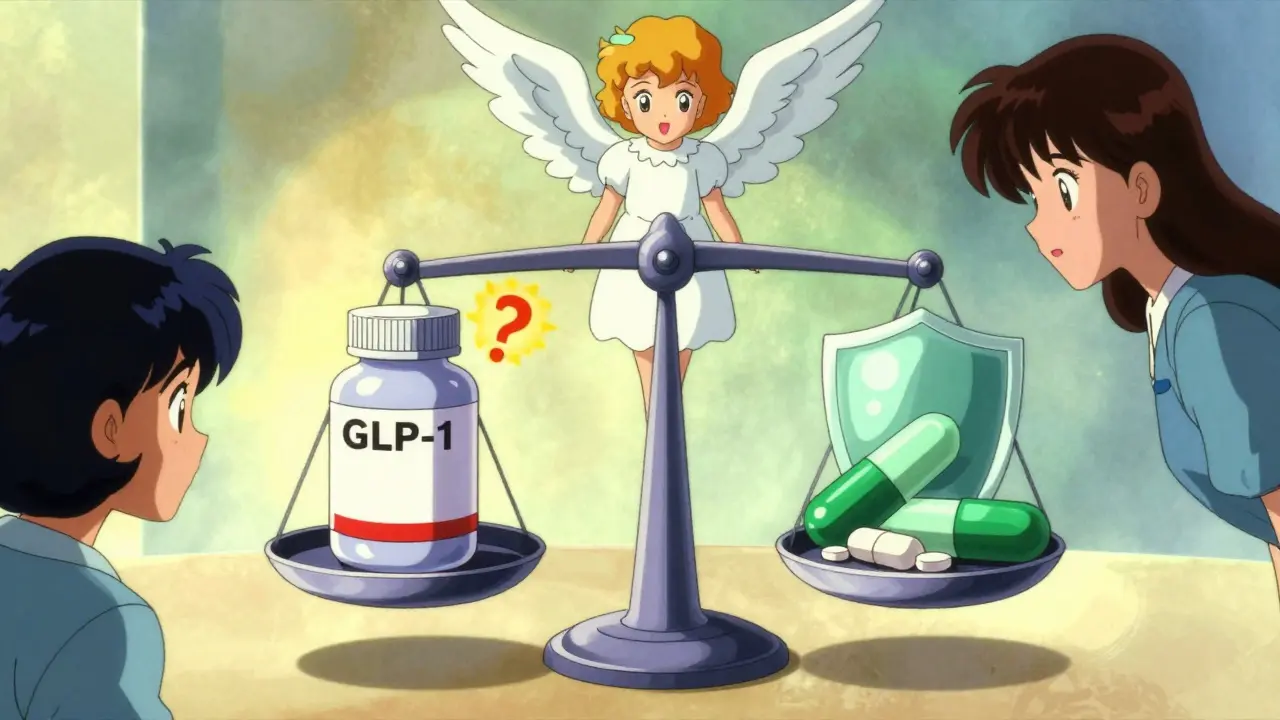
Alternatives to GLP-1 Agonists: Safer Options?
If your doctor determines that the potential risk of pancreatitis outweighs the benefits for you, or if you simply prefer to avoid the controversy, there are effective alternatives. Each has its own pros and cons regarding efficacy and side effects.
| Medication Class | Examples | Pancreatitis Risk Profile | Key Considerations |
|---|---|---|---|
| SGLT2 Inhibitors | Jardiance, Farxiga | Neutral to Protective | Recent studies suggest they may lower pancreatitis recurrence risk. Also protect heart and kidneys. |
| Metformin | Glucophage | Very Low (~0.15 per 1,000 patient-years) | First-line treatment for decades. Safe, cheap, but less potent for weight loss than GLP-1s. |
| DPP-4 Inhibitors | Januvia, Onglyza | Mixed | Saxagliptin carries a black box warning for pancreatitis. Sitagliptin appears safer. Neutral weight effect. |
| Bupropion-Naltrexone | Contrave | Low | Effective for weight loss. JAMA study showed significantly lower pancreatitis rates than GLP-1s. Contraindicated in seizure disorders. |
| Orlistat | Xenical | Minimal | Blocks fat absorption. Very low pancreatic risk but causes gastrointestinal side effects that lead to high dropout rates. |
SGLT2 inhibitors are currently gaining favor as a safer alternative for patients concerned about pancreatic health, especially since they offer similar cardiovascular benefits to GLP-1s. Metformin remains the gold standard for safety and cost, though it lacks the dramatic weight loss effects. If weight loss is your primary goal, bupropion-naltrexone is a viable option with a much cleaner safety record regarding the pancreas, provided you do not have a history of seizures or eating disorders.
Navigating the Future: Regulatory Stance and New Developments
Regulatory bodies like the FDA and the European Medicines Agency (EMA) continue to monitor this situation closely. As of January 2024, the EMA concluded that the benefits of GLP-1 RAs continue to outweigh the risks, maintaining the warning but not restricting use. The FDA has received over 1,800 adverse event reports related to pancreatitis since 2005, but establishing causality is difficult given the high background rate of pancreatitis in diabetic populations.
Looking ahead, the landscape is shifting toward precision medicine. We are moving away from viewing pancreatitis as a blanket "class-wide" concern to identifying specific subgroups at risk. Additionally, new formulations of GLP-1 analogs are in development that aim to reduce binding affinity to pancreatic receptors while maintaining glucose-lowering effects. While none have reached clinical trials yet, this research direction suggests that future iterations of these drugs may offer the same benefits with an even safer profile.
For now, the decision to stay on or switch from a GLP-1 agonist is a shared one between you and your healthcare provider. It involves weighing the profound benefits of improved metabolic health against a small, but present, risk. By staying informed, monitoring your symptoms, and choosing the right medication for your unique biology, you can navigate this complex terrain with confidence.
Can Ozempic cause permanent damage to the pancreas?
While acute pancreatitis can be severe and sometimes lead to chronic issues if not treated promptly, most cases of drug-induced pancreatitis resolve with discontinuation of the medication and supportive care. There is no conclusive evidence that GLP-1 agonists cause direct, permanent structural damage to the pancreas in asymptomatic users. However, recurrent episodes of any cause can lead to chronic pancreatitis, which is irreversible.
Should I stop taking my GLP-1 drug if I have a family history of pancreatitis?
A family history of pancreatitis is a risk factor, but it is not an automatic contraindication. You should discuss this with your doctor. They may choose to start with a lower dose, monitor your lipase levels more frequently, or consider an alternative medication like an SGLT2 inhibitor. Do not stop prescribed medication without medical advice, as uncontrolled diabetes poses its own serious risks.
Is tirzepatide (Mounjaro) safer than semaglutide (Ozempic) regarding pancreatitis?
Currently, there is insufficient head-to-head data proving one is safer than the other regarding pancreatitis. Tirzepatide is a dual GIP/GLP-1 agonist, which means it acts on two receptors. While some preclinical data suggests GIP activity might have protective effects on the pancreas, human clinical data is still emerging. The FDA requires ongoing post-marketing studies on tirzepatide's pancreatic safety, with results expected around 2027.
What are the symptoms of pancreatitis that differ from normal GLP-1 side effects?
Common GLP-1 side effects include mild nausea, bloating, and diarrhea. Pancreatitis pain is distinct: it is severe, constant, located in the upper abdomen, and often radiates to the back. It does not come and go with meals in the same way indigestion does, and it is not relieved by anti-nausea medication. If the pain is debilitating or prevents you from standing up straight, seek emergency care.
Does losing weight on GLP-1 drugs reduce the overall risk of pancreatitis?
Yes, indirectly. Obesity and metabolic syndrome are major risk factors for gallstones and hypertriglyceridemia, both of which are leading causes of pancreatitis. By promoting significant weight loss and improving lipid profiles, GLP-1 agonists may actually reduce the incidence of gallstone-related pancreatitis, potentially offsetting any direct drug-related risk. This is part of why many experts believe the net benefit is positive for most patients.