
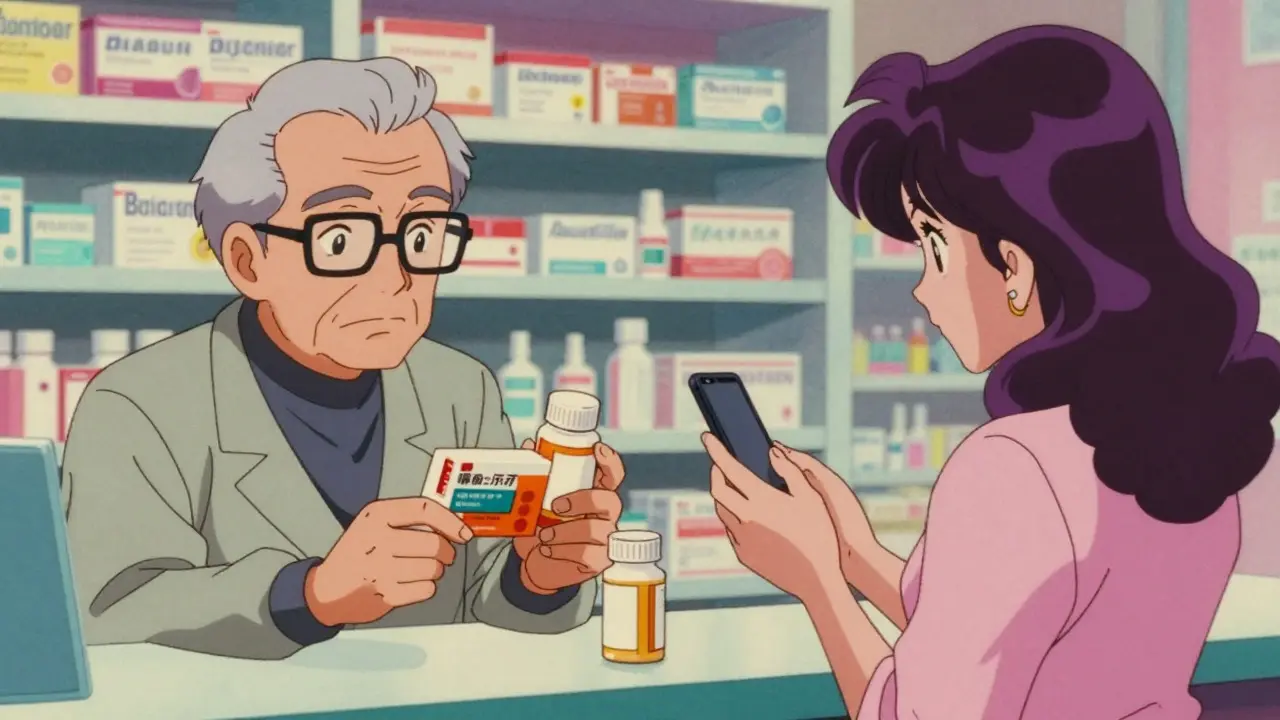
Why do you keep paying for the fancy logo when the plain box works exactly the same? It’s a question that baffles pharmacists and frustrates budget-conscious families. You walk into the pharmacy, your prescription is ready, but there’s a choice on the counter. One bottle has a name you recognize from TV ads. The other looks like a no-name alternative. They contain the exact same active ingredient. They are regulated to be bioequivalent. Yet, many of you still reach for the branded one. Or worse, you ask your doctor to override the generic substitution because you just don’t trust it.
This isn't just about being stubborn. It’s deeply psychological. And here is the twist: your age plays a massive role in how you see these pills. The way a twenty-year-old views generic medication is fundamentally different from how an eighty-year-old does. Understanding these generational divides is crucial for anyone navigating modern healthcare, whether you are a patient trying to save money or a provider trying to improve adherence.
The Trust Deficit Across Generations
At the heart of this issue is what researchers call the 'trust deficit.' Even though generic medications are required by law to match brand-name drugs in quality, safety, and strength, a significant portion of the population simply doesn’t believe it. Studies show that over a third of people view generics as less effective than their branded counterparts. But if you slice that data by age, the picture gets much more interesting.
For older generations, particularly Baby Boomers and the Silent Generation, brand names represent consistency and authority. These cohorts grew up during the golden age of pharmaceutical marketing. They watched television commercials that positioned specific brand names as the pinnacle of medical science. For them, the brand name wasn't just a label; it was a promise of efficacy. When they switch to a generic, they aren't just changing bottles; they feel like they are downgrading their care. This isn't irrational-it's conditioned behavior built over decades.
In contrast, younger generations like Millennials and Gen Z have grown up with the internet and high levels of health information access. They are often more skeptical of big pharma marketing. However, their skepticism goes both ways. While they might not blindly trust the brand, they also lack the long-term personal history with any single medication to build deep trust in the generic equivalent. Their attitude is often shaped by online forums and peer reviews rather than direct experience or traditional advertising.
Brand Loyalty vs. Cost Consciousness
Let’s talk about money, because that’s usually where the rubber meets the road. Generic drugs account for roughly 90% of prescriptions filled in the United States by volume, yet they make up only a fraction of total drug spending. That’s huge savings. But who cares most about those savings?
| Generation | Primary Driver | Attitude Toward Brands | Key Barrier to Generics |
|---|---|---|---|
| Silent Gen / Boomers | Trust & Consistency | High Loyalty | Fear of reduced efficacy |
| Gen X | Pragmatism | Moderate Skepticism | Side effect concerns |
| Millennials | Cost & Information | Low Loyalty | Online misinformation |
| Gen Z | Value & Transparency | Indifferent | Lack of familiarity |
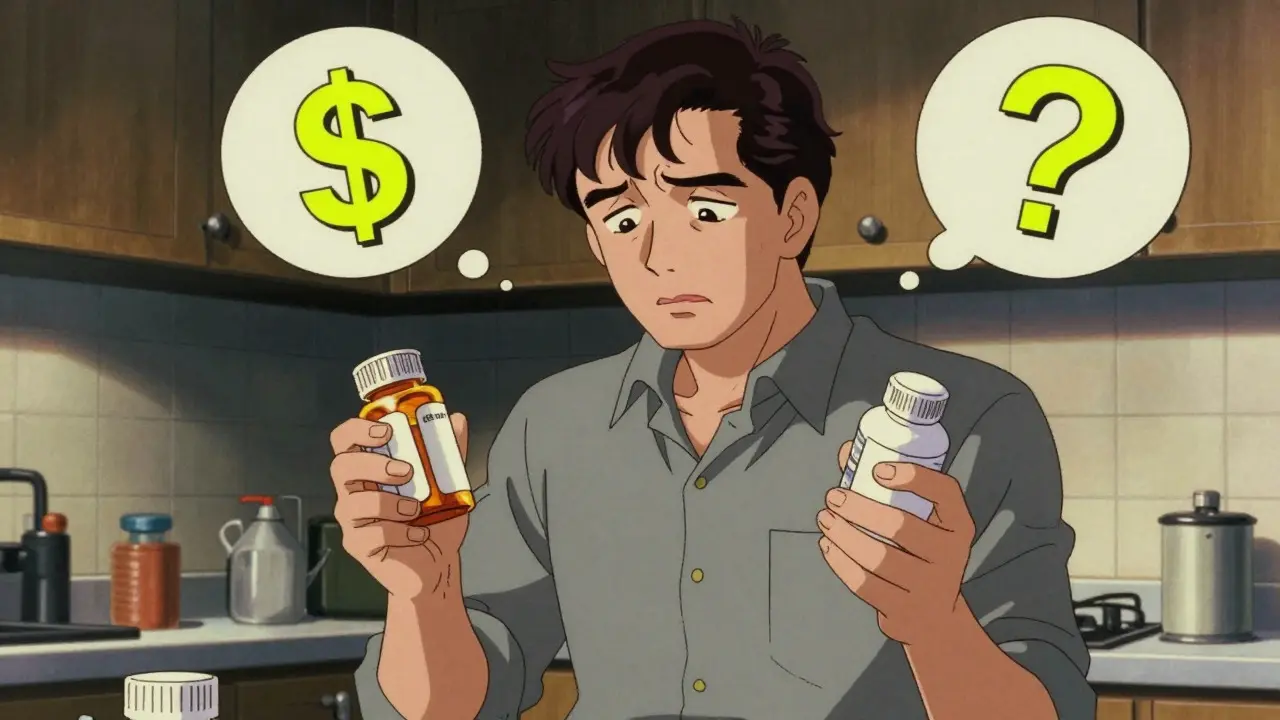
Baby Boomers often have fixed incomes or are approaching retirement. Financial pressure is real. Yet, studies indicate that even when faced with higher copays, older patients frequently request brand-name drugs. Why? Because the perceived risk of switching feels higher than the financial cost. They worry about subtle changes in how the pill dissolves or interacts with their body. This is known as the 'nocebo effect,' where negative expectations cause actual negative symptoms. If you think the generic won't work, your brain might convince your body that it doesn't.
Gen X sits in the middle. They are the sandwich generation, caring for kids and aging parents. They are pragmatic. They know generics work because they’ve likely used them for years without issue. Their barrier isn't usually trust in the science; it's fear of side effects. They are hyper-aware of their bodies' reactions and may attribute minor ailments to a recent switch to a generic, reinforcing the idea that 'the old brand was better.'
Millennials and Gen Z are different beasts entirely. They are cost-conscious, yes, but they are also information-driven. They will Google their symptoms before they talk to a doctor. For them, the barrier isn't nostalgia for a brand; it's confusion. With so much mixed information online-some saying generics are perfect, others claiming hidden dangers-they often default to whatever their doctor prescribes without questioning it. They don't have the brand loyalty of their elders, but they also haven't developed a strong, independent preference for generics yet.
The Role of Health Literacy and Experience
Here is a critical factor: health literacy. This isn't just about reading skills; it's about understanding how the healthcare system works. Older adults often have higher 'subjective knowledge'-they feel confident because they've been taking meds for decades. But their 'objective knowledge'-understanding current regulations on bioequivalence-might be outdated. They remember when generics were looser in regulation (decades ago), and that memory sticks.
Younger people have higher digital health literacy. They can look up the FDA approval status of a drug. But they lack the lived experience. A twenty-five-year-old might not understand why an older relative insists on a specific brand of blood pressure medication. To the young person, it's just chemistry. To the older person, it's their daily stability.
This gap creates friction in doctor-patient relationships. A young doctor might casually prescribe a generic, assuming it's a no-brainer. An older patient might leave the office feeling unheard, believing the doctor is cutting corners. The solution isn't just education; it's communication tailored to the generation.
How Communication Shapes Perception
You can change minds, but you have to speak the right language. Research shows that 'framing' matters immensely. If you tell someone a generic is 'just as good,' it sounds defensive. If you frame it positively-as 'cost-saving without compromise'-it lands better. But even that needs tweaking by age.
For older patients, emphasize continuity and rigorous testing. Show them the data. Explain that the manufacturer must prove the generic performs within a tight margin of the brand. Use analogies they understand, like comparing it to store-brand groceries that meet the same USDA standards. Acknowledge their past experiences but gently update their facts.
For younger patients, lean into transparency and value. They appreciate knowing *why* the price difference exists (patents expired, no marketing costs). They respond well to clear, concise data and apps that track their spending. Don't bore them with regulatory jargon; give them the bottom line: same result, lower cost, more money for other things.
Healthcare providers need to stop using a one-size-fits-all script. Ask questions. 'Have you tried this brand before?' 'What worries you about switching?' Listen to the answer. If it's a Boomer, address the trust issue. If it's a Millennial, address the cost-benefit analysis. Personalized communication bridges the generational divide.
Breaking Down the Myths
Let’s clear up some common misconceptions that fuel these attitudes across all ages:
- 'Generics use cheaper ingredients.' False. The active ingredient is identical. Inactive ingredients (fillers, dyes) may differ slightly, but they must meet strict safety standards. Only rare allergies to specific fillers are a concern.
- 'Brands are tested more rigorously.' Misleading. Brands undergo full clinical trials. Generics undergo bioequivalence studies, which are highly stringent. The FDA requires proof that the generic delivers the same amount of active ingredient into your bloodstream at the same rate.
- 'I feel different on generics.' Often psychological. As mentioned, the nocebo effect is powerful. Placebos can heal; nocebos can harm. If you expect a generic to fail, you might notice every minor ache and blame the pill.
Understanding these myths helps you navigate conversations with family members or your own doctor. If your grandparent refuses a generic, don't argue with emotion. Share the facts calmly. If you're hesitant yourself, ask your pharmacist to explain the specific formulation. Knowledge reduces fear.
Future Trends in Generic Acceptance
As Gen Z enters the workforce and starts managing their own health, we may see a shift toward greater generic acceptance. They are less tied to brand heritage and more focused on value and sustainability. However, the rise of personalized medicine and biologic drugs (which are harder to replicate than simple chemical generics) might complicate this trend. Biosimilars-the generic version of biologics-are facing similar trust hurdles, especially among older patients with chronic conditions like arthritis or Crohn's disease.
Policymakers are also pushing harder. In countries like China, centralized procurement policies have drastically increased generic usage by forcing hospitals to buy them. In the US, insurance plans increasingly incentivize generics through lower copays. These structural changes help, but they don't erase the psychological barriers. Until we address the generational mindset gaps, the trust deficit will remain.
Are generic medications really the same as brand-name drugs?
Yes. By law, generic medications must have the same active ingredient, dosage, safety, strength, route of administration, and intended use as the brand-name drug. They must also meet the same quality and performance standards. The main differences are often in inactive ingredients like colors or flavors, which rarely affect efficacy.
Why do older people prefer brand-name medications?
Older generations often have stronger brand loyalty due to decades of exposure to pharmaceutical marketing. They associate brand names with higher quality and reliability. Additionally, they may have experienced looser regulations in the past, leading to lingering skepticism about newer generic products despite current strict bioequivalence standards.
Can generics cause different side effects?
While the active ingredient is the same, slight variations in inactive ingredients (fillers or binders) can occasionally cause issues for individuals with specific allergies or sensitivities. However, for the vast majority of patients, side effect profiles are identical. Any perceived difference is often due to the nocebo effect, where negative expectations influence physical sensation.
How can I convince my elderly parent to try a generic?
Approach the conversation with empathy, not logic alone. Acknowledge their trust in the brand. Explain that the generic undergoes rigorous testing to ensure it works the same way. Offer to monitor their response closely for the first few weeks. Sometimes, involving their doctor or pharmacist in the explanation adds credibility and reassurance.
Do younger generations trust generics more than older ones?
Generally, yes. Younger people are less influenced by brand legacy and more by cost and online information. However, they may lack the personal experience to fully trust any medication type. Their acceptance is often driven by financial necessity and digital health literacy rather than deep-seated confidence in the product itself.
What is the 'nocebo effect' in relation to generics?
The nocebo effect occurs when negative expectations lead to negative outcomes. If a patient believes a generic drug is inferior, they may report more side effects or reduced effectiveness, even if the drug is chemically identical to the brand. This psychological phenomenon highlights the importance of positive framing and patient education.
Are biosimilars the same as generic drugs?
Not exactly. Biosimilars are similar to generic drugs but are used for biologic medications, which are complex proteins made from living cells. Because they are harder to copy perfectly, biosimilars must demonstrate 'high similarity' rather than exact equivalence. They face similar trust barriers, especially among older patients with chronic conditions.