
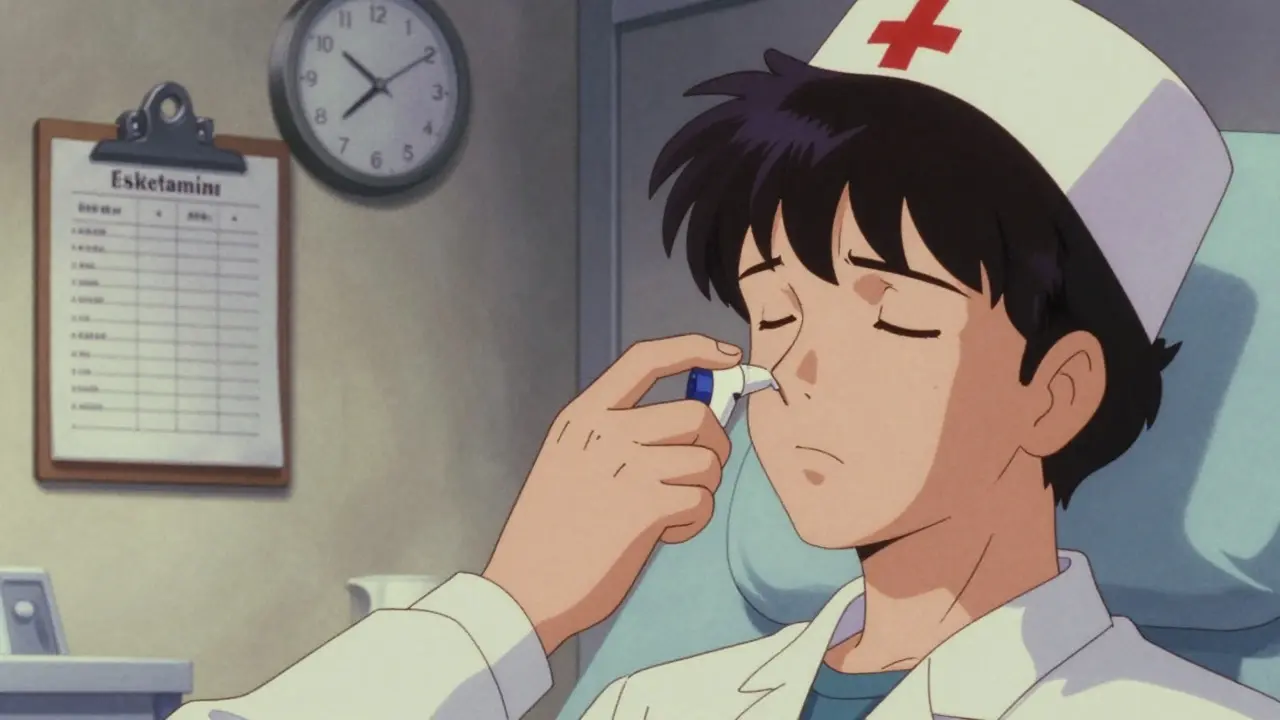
Esketamine Safety & Dosing Simulator
Enter your baseline vitals and select a dosage to simulate potential acute reactions during the first hour of treatment.
Based on average trial data increases of 14–23 mmHg systolic and 7–16 mmHg diastolic.
- Dream-like state / time distortion
- Muffled hearing
- Detachment from surroundings
Imagine waking up from a dose of medication feeling like you are floating outside your own body. For many patients with treatment-resistant depression, this is the reality of using esketamine nasal spray. Known by its brand name Spravato, this drug was approved by the FDA in 2019 as a breakthrough for those who haven't found relief from standard antidepressants. But it comes with a catch: you can't just take it at home. The intense side effects, specifically dissociation and sudden blood pressure spikes, require strict medical supervision.
If you or a loved one are considering this therapy, understanding exactly what happens during those two hours of monitoring is crucial. It’s not just about waiting; it’s about knowing what to expect so that the experience feels manageable rather than frightening. This guide breaks down the mechanics of the drug, the specific risks involved, and how healthcare providers keep you safe.
What Is Esketamine and How Does It Work?
Esketamine is a derivative of ketamine, but it works differently than traditional antidepressants. While most common drugs target serotonin or norepinephrine, esketamine acts on the NMDA receptor. Think of the NMDA receptor as a gatekeeper for glutamate, a chemical messenger in the brain. By blocking these receptors, particularly on inhibitory neurons, esketamine triggers a wave of excitatory activity that helps reset neural pathways associated with mood.
This mechanism allows for rapid action. Unlike oral antidepressants that can take four to six weeks to show effects, esketamine often begins working within hours. However, because it affects fundamental brain signaling, it also produces acute physical and psychological changes. The drug is available in three doses: 28 mg, 56 mg, and 84 mg per spray. Most adults start at the lower end and adjust based on response and tolerance. The bioavailability is roughly 48%, meaning nearly half of the dose enters your bloodstream after nasal administration, reaching peak levels in just 20 to 40 minutes.
Understanding Dissociation: More Than Just Feeling Weird
Dissociation is the most talked-about side effect of esketamine. In clinical trials, over 56% of patients reported some level of dissociation, compared to less than 14% in placebo groups. But what does that actually feel like? Patients often describe it as a dream-like state where time distorts, sounds become muffled, and there is a sense of detachment from one's body or surroundings.
It is dose-dependent. A higher dose (84 mg) leads to more intense symptoms than a lower dose (56 mg). Typically, these feelings peak around 40 minutes after the spray is administered and fade within two hours. While usually temporary, severe cases can include hallucinations or a complete loss of awareness of the environment. To manage this, clinics use standardized tools like the Clinician-Administered Dissociative States Scale (CADSS) to objectively measure severity. If dissociation becomes overwhelming, rescue medications such as benzodiazepines are available, though they are rarely needed-only about 1.2% of treatments require intervention.

The Blood Pressure Spike: A Transient but Real Risk
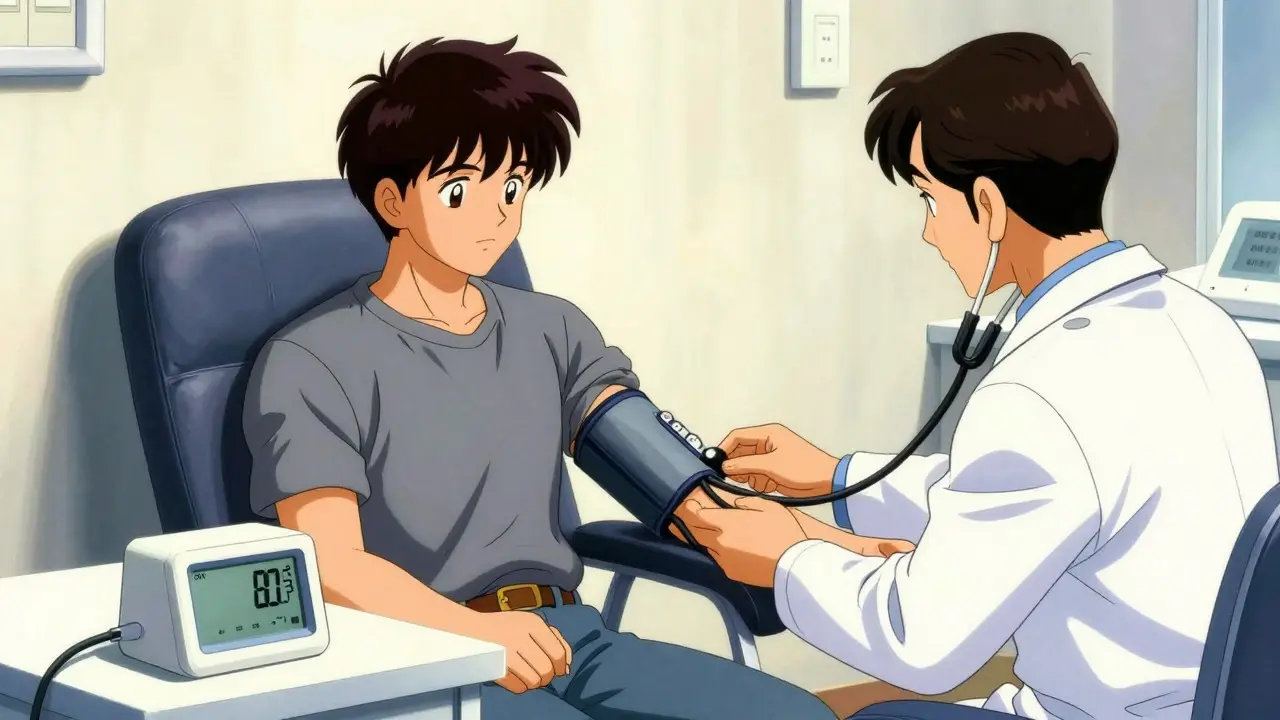
Your cardiovascular system reacts quickly to esketamine. Within five minutes of administration, systolic blood pressure can rise significantly. In pooled trial data, maximum mean increases ranged from 14 to 23 mmHg for systolic pressure and 7 to 16 mmHg for diastolic pressure. About 33% of patients experienced hypertension during treatment, defined as a reading of 140/90 mmHg or higher.
For most people, this spike is asymptomatic-you might not even notice it without a cuff on your arm. However, for individuals with pre-existing heart conditions, uncontrolled hypertension, or a history of aneurysms, this transient surge carries risk. That is why screening is critical. If your baseline blood pressure is above 160/100 mmHg, you are generally considered unsuitable for the therapy until it is controlled. The good news is that these elevations are short-lived, typically returning to baseline within two hours as the drug metabolizes.
The REMS Program: Why You Can’t Take It Home
Because of these acute effects, the FDA mandated a Risk Evaluation and Mitigation Strategy (REMS) program. This means esketamine cannot be dispensed for home use. You must receive the treatment in a certified healthcare facility equipped to handle emergencies.
The protocol is rigorous:
- Certified Settings: Only trained providers in designated centers can administer the drug.
- Two-Hour Observation: You must stay in the clinic for at least two hours after each dose.
- Vital Sign Checks: Blood pressure and heart rate are monitored every 5-10 minutes initially, then less frequently as the peak effect passes.
- Patient Agreement: You sign a document acknowledging the risks and committing to the monitoring schedule before each session.
Practical Insights: What Patients and Providers Say
Real-world experiences highlight the importance of preparation. Many patients report that anxiety about the "weird" feelings makes the first few sessions harder. Clinics have found that providing detailed education before the first dose reduces patient anxiety scores by 32%. Knowing that the floaty feeling will pass in an hour makes it much easier to relax.
From a provider perspective, the logistics are demanding. A typical session takes two hours and 15 minutes: 15 minutes for assessment, 5 minutes for administration, and two hours for monitoring. Staff training is mandatory, with initial certification taking two hours and annual refreshers required. Despite the effort, 95% of certified centers adhere strictly to the two-hour rule, recognizing that early discharge poses unnecessary risks.
| Parameter | Low Dose (28 mg) | Standard Dose (56 mg) | High Dose (84 mg) |
|---|---|---|---|
| Dissociation Incidence | ~40% | 53.6% | 61.3% |
| Peak Plasma Time | 20-40 mins | 20-40 mins | 20-40 mins |
| Blood Pressure Impact | Moderate | Significant | High |
| Monitoring Intensity | Standard | Standard | Enhanced Vigilance |
Future Directions and Accessibility Challenges
While the current model is effective, it creates access barriers. Rural areas have far fewer certified centers than urban ones, leaving many patients with long travel distances. Recent data suggests that for stable patients, the monitoring period might eventually be shortened to one hour, which could increase clinic capacity. Additionally, digital health companies are developing remote monitoring tools that track vital signs via wearables, potentially allowing for hybrid care models in the future.
For now, the structured in-clinic approach remains the gold standard. It balances the profound therapeutic benefits of rapid-acting antidepressant therapy with the necessary safety nets for managing dissociation and cardiovascular fluctuations. As research continues, the goal is to make this life-changing treatment accessible to more people without compromising safety.
How long does the dissociation last after taking esketamine?
Dissociation typically peaks around 40 minutes after administration and resolves completely within 1.5 to 2 hours. Most patients find the effects diminish with repeated treatments.
Can I drive home after my esketamine appointment?
Yes, provided you have completed the mandatory two-hour observation period and your vital signs and mental status are stable. However, because sedation and dizziness can persist slightly, it is often recommended to have a ride arranged just in case.
Who should avoid using esketamine nasal spray?
Patients with uncontrolled hypertension (over 160/100 mmHg), a history of intracranial hemorrhage, aneurysm, or arteriovenous malformation are generally contraindicated. Pregnant women should also consult their doctor carefully due to limited safety data.
Is esketamine addictive?
While esketamine is related to ketamine, the risk of abuse is low when used under the strict REMS protocol. Because it is only administered in a clinic and not taken home, the potential for recreational misuse is significantly minimized compared to other substances.
How soon will I feel better from my depression?
Many patients report noticeable improvements in mood within 24 hours of the first dose. Full therapeutic benefits often build over the first week or two of regular treatments, complementing the ongoing effects of oral antidepressants.