
When you wake up tired even after eight hours in bed, sleep fragmentation, the frequent, often unnoticed interruptions that break up deep sleep cycles. It's not just tossing and turning—it’s your brain briefly waking up dozens of times a night, stopping you from reaching the restorative stages of sleep. You might not remember these moments, but your body does. And over time, this silent disruption adds up.
Sleep fragmentation isn’t a standalone condition—it’s a symptom hiding in plain sight. It’s tied to sleep disorders, conditions like sleep apnea, restless legs, or chronic pain that pull you out of deep sleep, and it makes insomnia, the struggle to fall or stay asleep feel worse even when you’re not lying awake. It also messes with your circadian rhythm, your body’s internal clock that controls when you feel alert or sleepy. When that rhythm gets thrown off, your hormones, metabolism, and even your immune system suffer.
People with arthritis, chronic pain, or thyroid issues often report poor sleep—not because they can’t fall asleep, but because their sleep keeps breaking apart. The same goes for older adults, where changes in brain chemistry and nighttime bathroom trips create constant micro-wakings. Even stress and alcohol, which seem like they’d help you relax, can fragment your sleep without you realizing it.
You don’t need a sleep study to suspect it. If you’re always tired, moody, foggy-headed, or struggling to focus—even after what feels like a full night’s rest—you’re likely dealing with sleep fragmentation. It’s not about quantity. It’s about quality. And fixing it starts with spotting the hidden patterns: Do you wake up gasping? Do your legs twitch? Do you reach for caffeine by 10 a.m.? These aren’t just annoyances—they’re clues.
The posts below dig into how medications, supplements, aging, and other health conditions quietly sabotage your sleep. You’ll find real-world guides on how pain meds, thyroid drugs, alcohol, and even common supplements like quercetin or calcium can interfere with your deepest sleep stages. No fluff. Just what works, what doesn’t, and what you should ask your doctor next time you mention your tiredness.
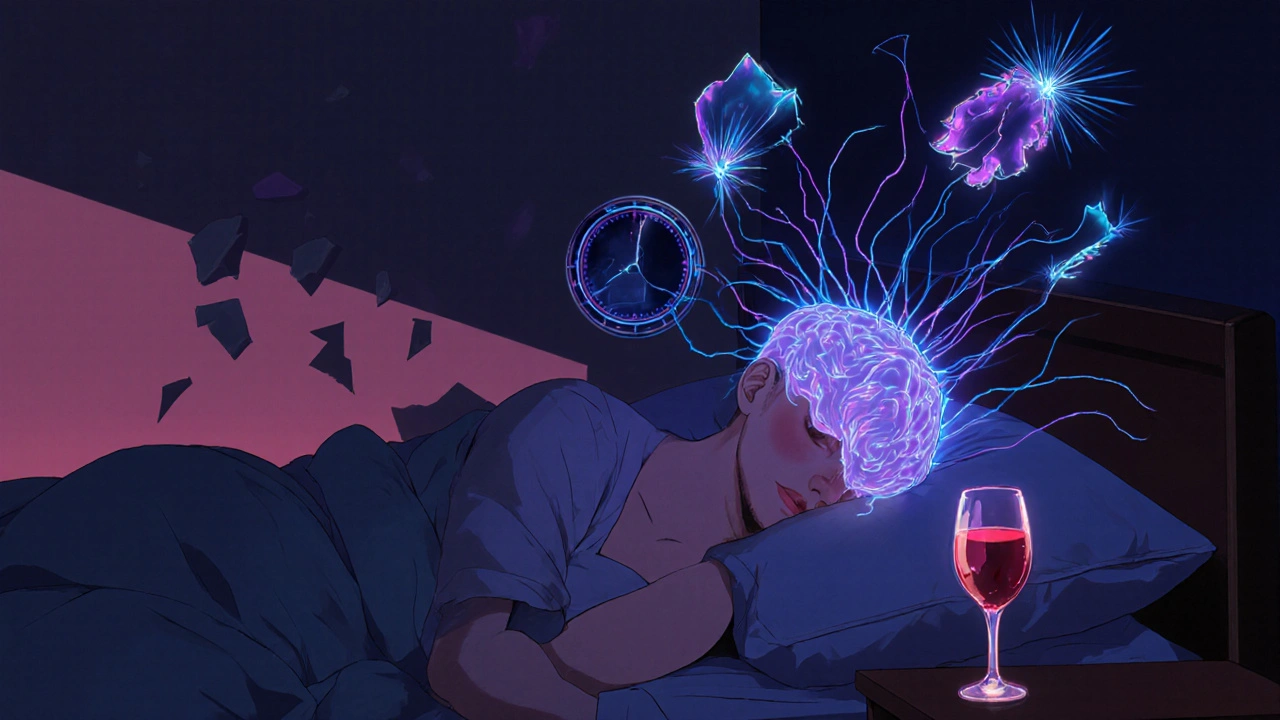
Alcohol may help you fall asleep faster, but it fragments your sleep, worsens apnea, and leaves you tired the next day. Learn how even one drink disrupts your brain’s natural sleep cycle and what to do instead.