
When you pick up a prescription, the prescription labels, the printed instructions and warnings on your medication bottle. Also known as drug labels, they're not just legal paperwork—they're your safety guide. Most people glance at the name and dose, then toss the label aside. But skipping the fine print can lead to dangerous mistakes: mixing pills that shouldn't be taken together, missing critical warnings about food or alcohol, or even taking the wrong medicine entirely. These labels are designed to protect you, not just to satisfy pharmacy rules.
Behind every prescription label, the printed instructions and warnings on your medication bottle. Also known as drug labels, they're your safety guide. are layers of information that connect directly to your health. The dosage tells you how much to take, but the drug interactions, how one medication affects another in your body section warns you about risks—like how warfarin and OTC cold meds can cause dangerous bleeding, or how alcohol changes your INR levels. The pill identification, visual and text details that help confirm you’re taking the right medication includes color, shape, and imprint codes—key for spotting counterfeit pills or confirming you got the generic version. And the pharmacy instructions, specific directions from your pharmacist about timing, storage, or special warnings often contain advice your doctor didn’t mention—like taking a pill with food to avoid stomach upset or keeping it away from heat.
These labels don’t exist in a vacuum. They’re tied to real-world issues: patients mixing up similar-looking pills, older adults missing doses because the print is too small, or young adults sharing prescriptions because they don’t understand the risks. That’s why so many posts here focus on reading labels correctly—whether it’s spotting hidden NSAIDs in cold medicine, checking for QT-prolonging interactions with antibiotics, or confirming you’re taking the right generic version of Wellbutrin. Prescription labels are the first line of defense against medication errors, and understanding them means you’re no longer just following orders—you’re an active partner in your care.
Below, you’ll find real stories and practical guides that break down exactly what those tiny print warnings mean, how to spot red flags, and what to do when something doesn’t add up. No fluff. Just clear, actionable info to help you take your meds safely—every single day.
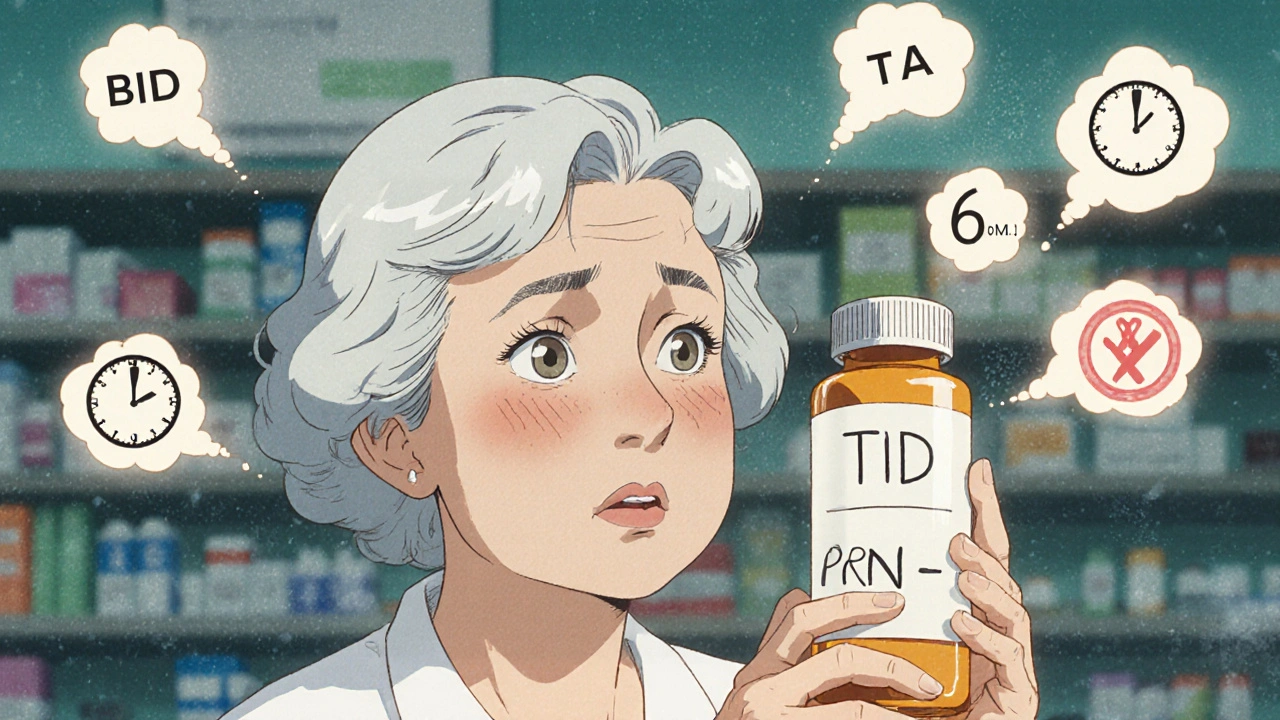
Learn what BID, TID, and PRN really mean on your prescription label, why timing matters, how to avoid dangerous mistakes, and what’s changing by 2026. Take control of your meds with simple, clear steps.